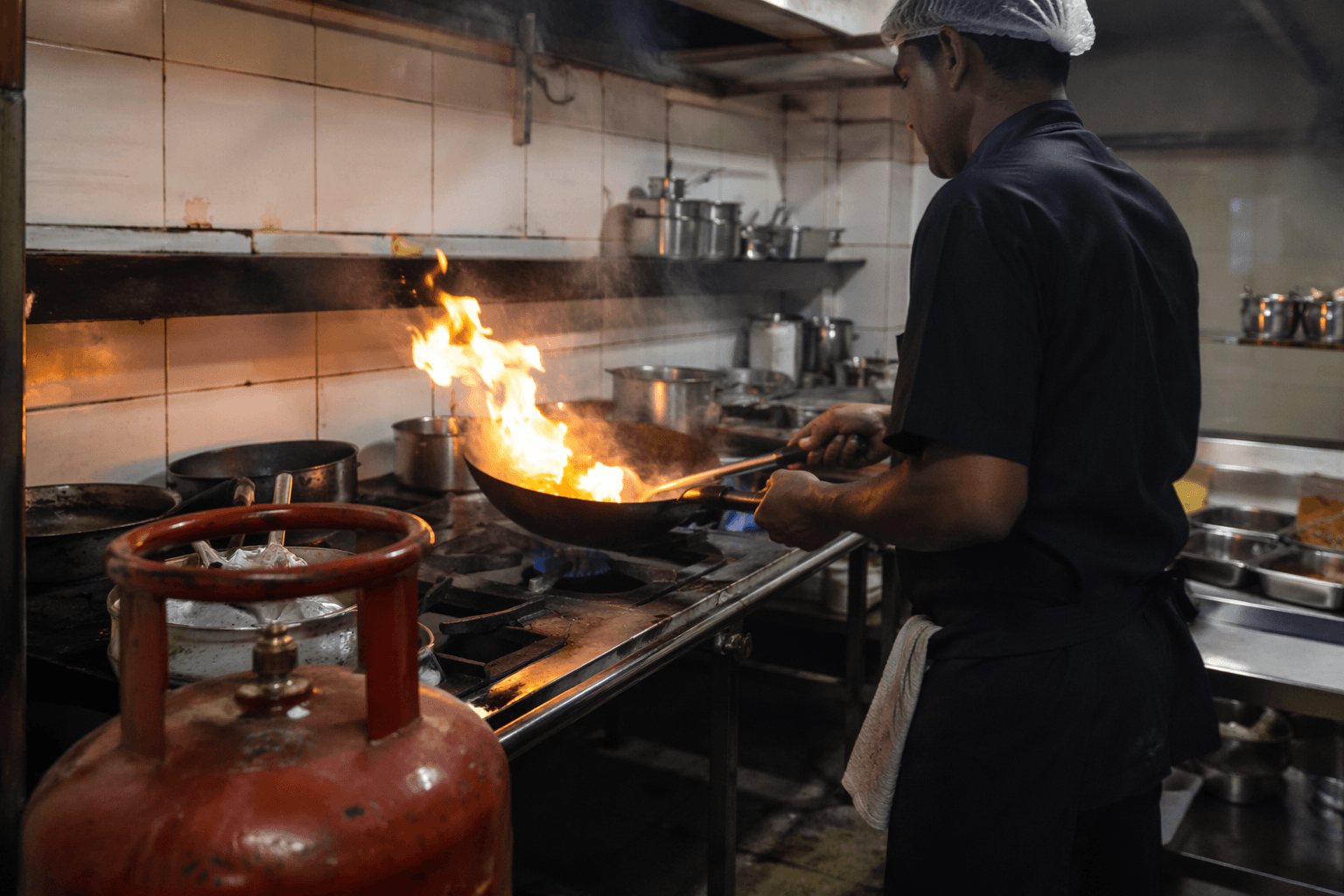
OSHA warns restaurant kitchens face heat danger year-round
Restaurant kitchens can trigger heat illness even in mild weather, and OSHA says managers need hourly checks, water, breaks, and a written plan.
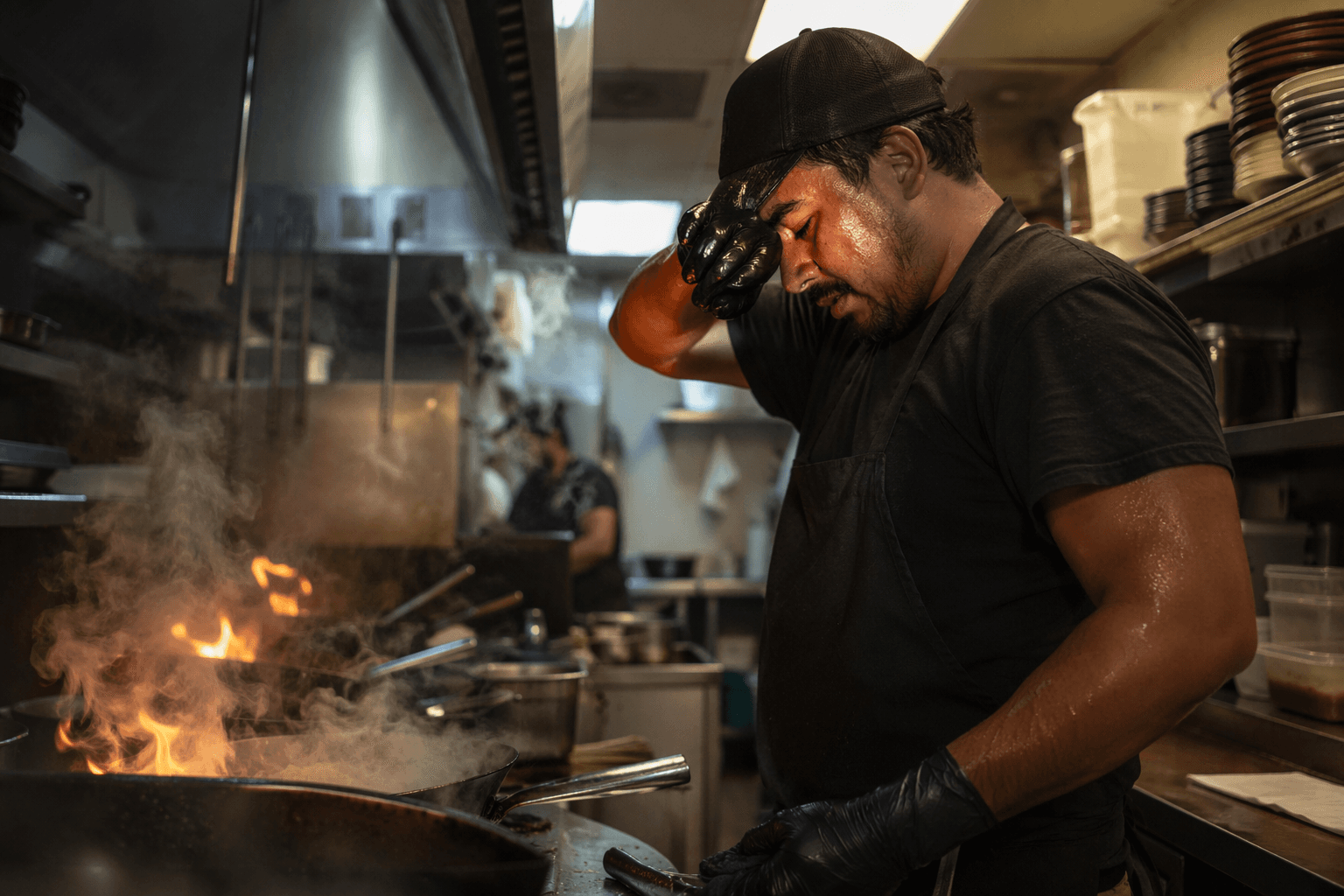
The hottest job in a restaurant is not always the line in July. Fryers, ovens, grill stations, dish rooms, prep areas, loading zones, heavy uniforms, and a fast pace can push cooks and dishwashers toward dehydration and overheating long before the weather outside feels extreme.
Why restaurant heat is a year-round hazard
OSHA’s heat guidance makes a basic point that restaurants still too often treat like a summer-only problem: heat-related illness can happen indoors or outdoors. In commercial kitchens, excessive heat can lead to heat stress illnesses such as heat exhaustion and heat stroke, and the risk changes with the shift, the equipment being used, the humidity in the building, and how long workers have been on their feet.
That matters in restaurants because heat builds through routine operations, not just through bad weather. A busy lunch rush, a full grill line, a broken fan, or a dish area with steam and little airflow can turn a normal shift into a dangerous one. Workers who have not recently spent time in warm environments are especially vulnerable, which is why new hires and people coming back after time off need extra protection from day one.
Where the risk is highest inside a restaurant
The hottest spots are usually the places where heat, steam, and motion stack up at once. Fryers and ovens create direct radiant heat. Grill lines and sauté stations add open flame and constant body movement. Dish rooms can trap steam, and prep areas and loading zones can become hot when equipment, doors, and poor ventilation all work against the crew.
That is why a restaurant should think about heat the way it thinks about knives or slips: by location, not just by season. A host stand near the kitchen pass, a cashier stuck near a hot service corridor, or a prep cook under fluorescent lights in a room with little airflow may not look like the obvious danger zone, but OSHA’s guidance is built around exactly that kind of hidden exposure. If the room feels oppressive, the crew is already paying a cost in water loss, fatigue, and reduced concentration.
The warning signs that matter before someone goes down
Workers need to recognize the early signs before a heat emergency turns into a collapse. The clearest red flags are dizziness, fainting, nausea, muscle cramps, unusual fatigue, and confusion. In a restaurant, those symptoms can be easy to miss because people are trained to push through pain, keep the ticket times moving, and avoid looking like they cannot handle the rush.
That culture is exactly why heat safety has to become part of daily operations. Someone who feels “off” may still try to finish a shift, refill a station, or hold down the front desk without saying anything. If the crew knows what heat stress looks like, the response can start early, with water, a cool-down break, a fan adjustment, or reassignment before the problem escalates.
What employers should have in place before the first order prints
OSHA recommends a written heat illness prevention plan, and for restaurants that should be as normal as the opening checklist. The plan should spell out who watches temperatures, who checks on workers, where water is kept, how breaks are triggered, and what to do when someone shows symptoms. It should also cover training for both workers and supervisors so nobody has to guess what counts as a real warning sign.
The agency’s food-services guidance says to monitor temperatures, humidity, and workers’ responses to heat at least hourly. That is an important detail for kitchens, because the heat load can swing dramatically from one part of the shift to the next. A lunch rush, a broken hood, a packed dish pit, or a humid afternoon can change the conditions quickly enough that a morning check is no longer useful by midshift.
- enough drinking water, within easy reach of the line
- real rest breaks, not just a slower pace when business allows
- shaded or cooled recovery space where workers can actually recover
- extra supervision for new workers who are still acclimating
- a culture that treats heat complaints as safety issues, not laziness
Employers should also build in the basics that keep heat from becoming an injury:
That last point matters in restaurants, where workers often hesitate to step off the line. A cook, dishwasher, server, or host should be able to ask for water or a short cool-down without being treated like they are slacking off. If management only notices heat when someone collapses, the operation has already failed.
How federal and state rules are starting to catch up
Heat safety is moving from common-sense advice toward formal regulation. On July 2, 2024, the Biden administration announced a proposed federal workplace heat standard and said it could protect about 36 million workers in indoor and outdoor jobs. OSHA then published the proposal in the Federal Register on August 30, 2024, and the rule would apply to indoor and outdoor work settings under OSHA jurisdiction, including places like kitchens.
California moved even faster. On June 20, 2024, the California Division of Occupational Safety and Health’s Standards Board approved a standalone indoor heat rule, and California said it applies to most indoor workplaces, including restaurants, when indoor temperatures reach 82°F. At 87°F, added protections kick in. The state said the rule took effect after Office of Administrative Law approval on July 23, 2024, making California the first state with a dedicated indoor heat standard.
For restaurant workers, that shift matters because it turns a vague hazard into a concrete compliance issue. It also gives managers a clearer standard to follow before summer, during summer, and long after the season changes.
The evidence from kitchens says this is not theoretical
The research backing all of this is not abstract. A CDC-stacks study measured indoor and outdoor heat index conditions in eight freestanding take-away service kitchens over three days, showing that food-service environments can generate serious heat exposure even in ordinary operations. A separate NIOSH-linked study measured full-shift indoor WBGT and other conditions in ten New York City public school kitchens, underscoring how sustained kitchen work can create risk across an entire shift.
Survey data from the Harvard Shift Project adds the worker experience to the lab measurements. Among retail and food service workers, 37% reported heat-related headaches in the past year, 34% reported fatigue, and 24% reported nausea. Restaurant and fast-food workers were among those especially affected, which lines up with what many kitchen crews already know from experience: when the room gets hot, the body pays first, and productivity follows.
What actually changes now
The practical takeaway is simple. Heat prevention in restaurants should start before service, not after someone is already struggling on the line. That means checking the room, watching the crew, keeping water close, and making sure the people closest to the heat have permission to slow down long enough to stay safe.
Restaurants run on urgency, but safety has to be part of the rhythm too. In a kitchen, the difference between a hard shift and a medical emergency is often one missed warning sign and one manager who waited too long to act.
This article was produced by Prism’s automated news system from verified source data, official records, and press releases, then run through automated quality and moderation checks before publishing. The system is built and supervised by the people who set the standards it runs under. Read our full AI policy.
Did this article answer your question?