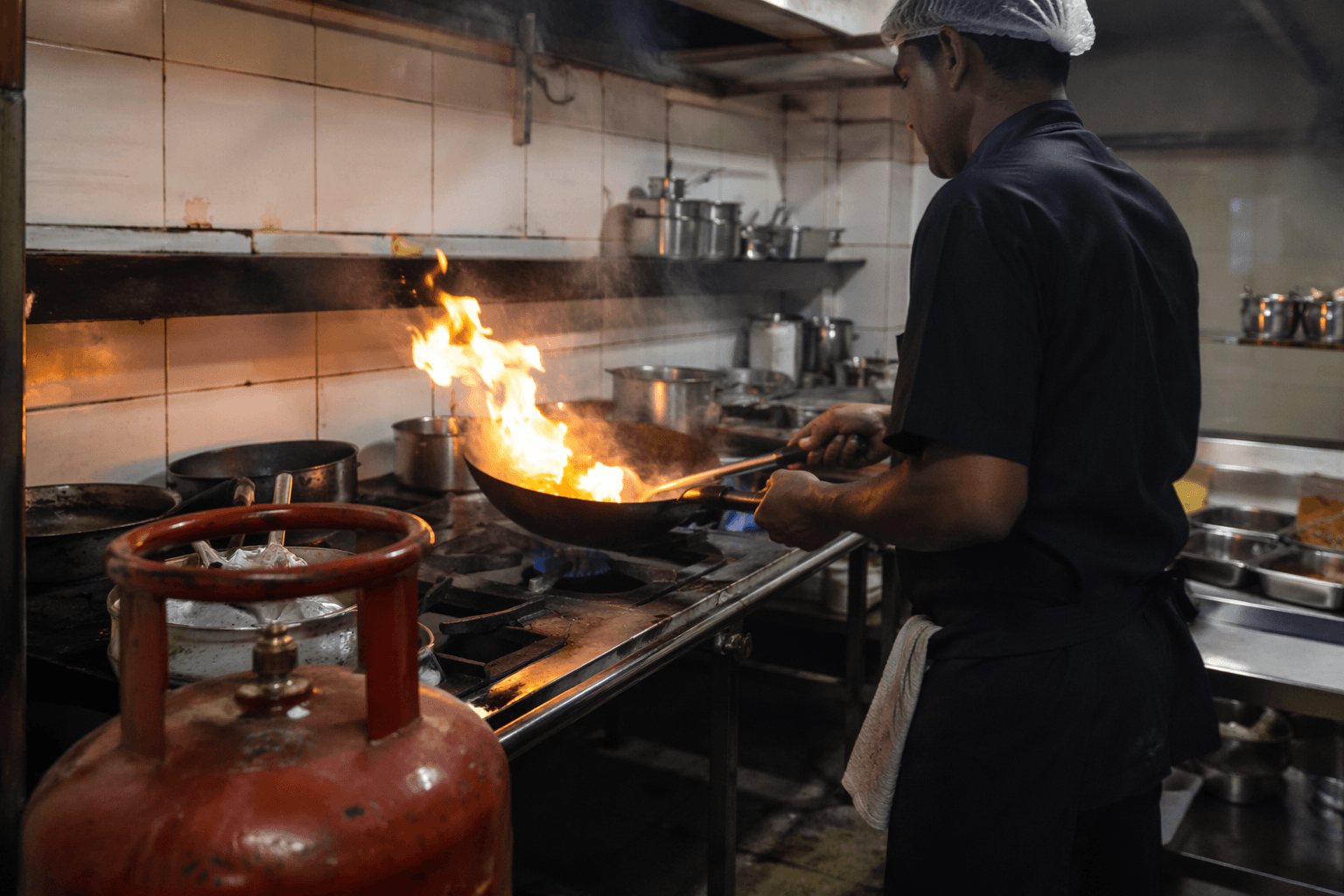
OSHA warns restaurants on kitchen hazards beyond cuts
Restaurants lose money when “routine” kitchen hazards sideline workers. OSHA says the real risks include burns, shocks, entrapments, and amputations, not just cuts.

The hidden cost of a bad shift in the kitchen
A slicer guard left off, a frayed cord near the prep sink, or a fryer splash that sends a cook to urgent care can do more than injure one worker. In a restaurant already running lean, it can blow up the whole floor: a missed shift, a scramble to cover stations, a higher workers’ compensation bill, and another reason a short-staffed crew burns out faster. OSHA’s food-service guidance is a blunt reminder that the kitchen’s biggest hazards are not limited to knife cuts.
The agency says kitchen equipment in food service brings a wider set of risks: hot surfaces that can burn, sharp objects that can cut and lacerate, walk-in freezers that can trap workers, frayed electrical cords that can shock workers, and unguarded equipment that can lead to amputations. That list reads like a safety manual, but for managers it is also a staffing warning. Every one of those hazards can take a line cook, prep cook, dishwasher, or baker off the schedule for days, if not longer.
Why the obvious hazards are not the only ones that matter
Knife injuries get the most attention because they are easy to picture. OSHA’s machine-guarding guidance says commercial dough mixers, meat slicers, and similar equipment can catch workers in rotating blades and other moving parts and cause amputations, strangulations, burns, cuts, and broken bones. In other words, the danger is not just the blade itself. It is the force, movement, and pinch points around the machine that can turn a normal task into a serious injury in seconds.
That matters in a restaurant where speed is built into the job. A cook who reaches around a guard to keep tickets moving, or a dishwasher who tries to clear a jam without shutting equipment down, is often making a judgment call under pressure. OSHA’s point is that those judgment calls should not be left to improvisation. Employers are supposed to assess tasks to identify hazards and provide the right personal protective equipment, which means the safety plan has to match the actual job, not the fantasy version of a quiet, perfectly staffed kitchen.
Gloves, mitts, and the wrong kind of “protection”
One of the most practical parts of OSHA’s guidance is also the most overlooked: glove choice has to fit the task. OSHA specifically points to oven mitts for hot items and steel mesh or Kevlar gloves for cutting tasks. That is a useful reminder for any kitchen that keeps a pile of generic gloves in a drawer and calls it a program.
A glove that protects against a slicer is not the same glove that should be used to pull hotel pans or pans from an oven. The wrong protection can slow workers down, reduce dexterity, and still leave them exposed. For managers, that means the safer move is not just buying PPE, but training people on which protection goes with which station, which task, and which piece of equipment. For workers, it gives a clear basis to say a task is being done with the wrong gear before someone gets hurt.
Electrical problems and lockout failures are a kitchen problem, not a maintenance footnote
OSHA also stresses electrical safety, and that is not abstract in a cramped kitchen where cords, plugs, and equipment get banged around during a rush. A damaged cord near a wet floor or a broken plug behind a prep table can become a shock hazard fast. If the equipment is still being used because the shift is already short, the risk compounds: one unsafe setup can affect everyone working around it.
The same logic applies to cleaning and maintenance. When workers are expected to clear jams, clean blades, or wipe down equipment without proper shutdown procedures, the kitchen is one bad hand placement away from a serious injury. That is why reporting exposed cords, missing guards, and broken parts has to be treated as a normal part of the job, not as complaining. In a restaurant with constant turnover, that reporting culture often determines whether hazards are caught early or become the reason a worker is gone for weeks.
The injury numbers show this is not rare
The federal injury data backs up what restaurant crews already know. In 2019, full-service restaurants had 8,110 cases of cuts and lacerations that resulted in days away from work, according to the U.S. Bureau of Labor Statistics. That worked out to 23.6 cases per 10,000 full-time workers, compared with 7.1 across all private industry workers.
BLS also found that workers in food services and drinking places had higher rates of cuts, lacerations, punctures, and thermal burns than workers across private industry overall. That matters because these are not dramatic, once-in-a-career events. They are common enough to shape staffing, overtime, and morale. A kitchen that keeps absorbing small injuries ends up with bigger operational problems: fewer reliable people on the schedule, more managers covering stations, and more pressure on the staff who stay.
Why California’s training materials make this a management issue, too
California’s restaurant safety materials, developed through the California Division of Occupational Safety and Health and the California Department of Industrial Relations, make the business case plainly: employers and employees can benefit from lower employee turnover, reduced lost time, reduced workers’ compensation costs, and increased productivity and profit. That language is not just bureaucratic polish. It reflects how quickly safety failures spill into labor costs.
California’s restaurant safety training materials also cover a wider range of hazards than kitchen equipment alone. The tips include preventing burns, cuts, slips and falls, ergonomic hazards, robberies and assaults, emergencies, and injuries on the job. That broader approach is important because restaurant risk rarely comes one at a time. A worker who is already tired from understaffing is more likely to get hurt reaching for a hot pan, rushing a prep job, or stepping around a spill.
What the floor should look like when safety is taken seriously
A safer restaurant does not need theatrical safety slogans. It needs a system: inspect the line, replace damaged gear quickly, train staff to report hazards, and stop treating injuries as the price of doing business. Managers should be looking for the hazards OSHA names most directly, especially hot surfaces, exposed cords, missing guards, and equipment that can trap or catch a hand.
For line staff, the practical takeaway is simple: use the right protection for the right hazard, and speak up when the tool is wrong or the equipment is unsafe. For managers, the payoff is equally simple: fewer injuries, fewer missed shifts, less workers’ compensation exposure, and less churn in an industry that can barely afford to lose another body to an avoidable incident. In restaurants, kitchen safety is not a side issue. It is staffing, payroll, and survival, all at once.
This article was produced by Prism’s automated news system from verified source data, official records, and press releases, then run through automated quality and moderation checks before publishing. The system is built and supervised by the people who set the standards it runs under. Read our full AI policy.
Did this article answer your question?