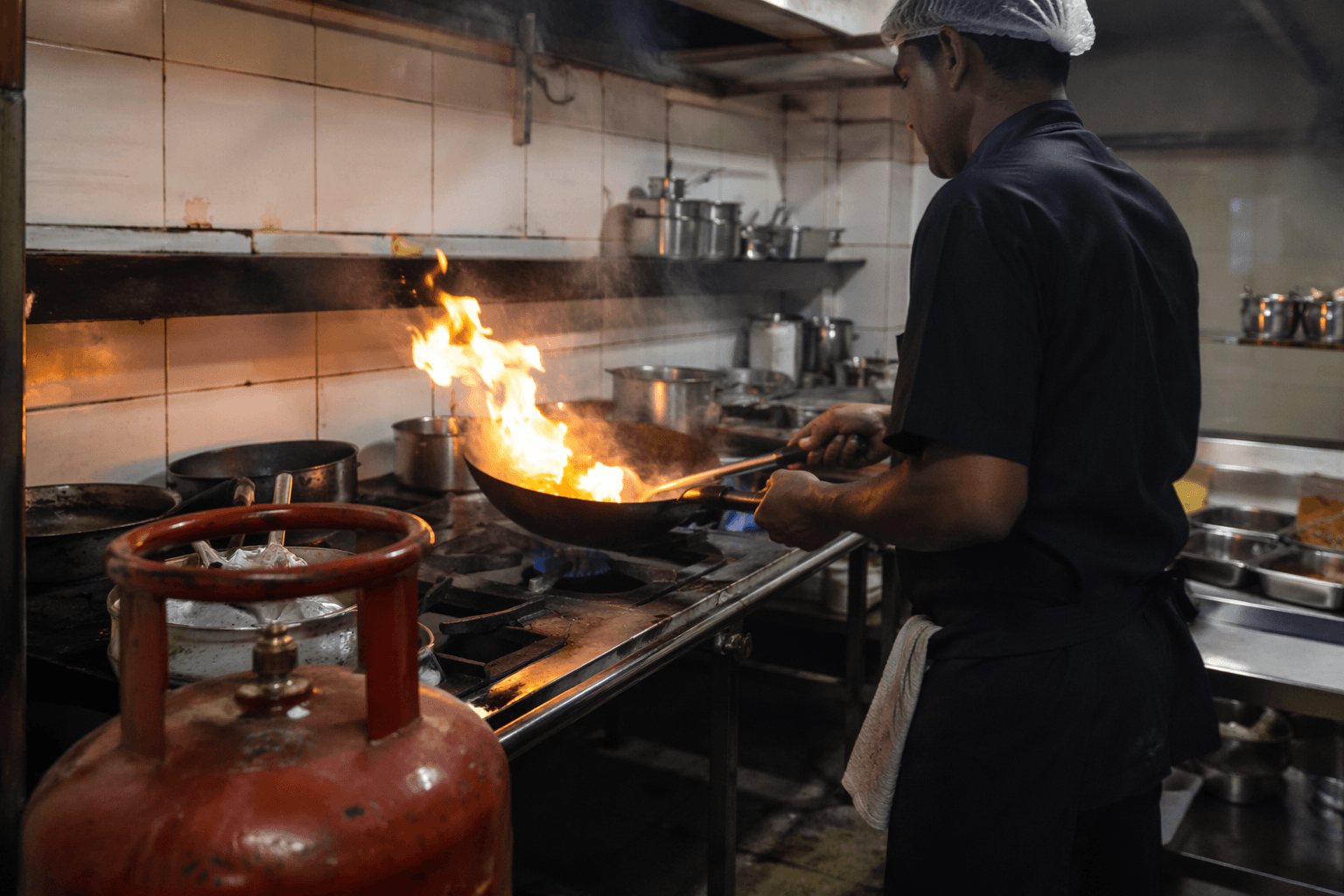
OSHA warns restaurants on teen safety and common kitchen hazards
OSHA says 11.6 million people work in restaurants and other eating and drinking businesses, and nearly 30% are under 20, putting teen safety at the center of the industry’s daily hazards.
OSHA says restaurants and other eating and drinking businesses employ 11.6 million people in the United States, and nearly 30% of those workers are under 20. That makes the line, the dish pit and the prep area a high-risk workplace for teenagers as well as adults, with the same cluttered floors, hot equipment and rushed pace shaping what happens when a shift goes wrong.
The agency’s restaurant safety materials list the hazards workers know well: deep-fat fryers, burns, strains and sprains, fire hazards, heat hazards, slips, trips, falls and electrical hazards. OSHA says young workers can run into slippery floors covered with oil, water or food, and that danger becomes sharper when a fall can send someone into or onto hot surfaces or liquids. In restaurants where a wet pass, a crowded expo line or a fryer station can change by the minute, that warning lands as a practical one, not a theoretical one.
OSHA’s food-service ergonomics guidance points to another routine injury path that often gets treated as part of the job. Repeated lifting, reaching, chopping, scooping, transporting equipment, moving carts, pouring from heavy pots or containers, and standing on hard floors can lead to musculoskeletal disorders, including tendonitis, carpal tunnel syndrome, tenosynovitis, bursitis, rotator cuff injuries and back disorders. The agency recommends changes that are basic but often skipped in understaffed kitchens: adjust work heights, rotate workers through tasks, use anti-fatigue mats and provide shoes designed for prolonged standing.

The leave rules matter when those hazards turn into an injury or an illness that makes a shift impossible. The Department of Labor says there are currently no federal legal requirements for paid sick leave. Under the Family and Medical Leave Act, eligible workers can take up to 12 workweeks of unpaid, job-protected leave in a 12-month period with continued group health benefits, but eligibility generally requires 12 months of employment, 1,250 hours worked in the prior 12 months and a worksite with at least 50 employees within 75 miles. When FMLA leave ends, the worker must be restored to the same or a virtually identical position, and the leave can run at the same time as employer-paid leave.
Missing a shift can also trigger pay questions beyond leave law. The Labor Department says some state and local scheduling rules require on-call pay or reporting pay when an employer cancels a shift or cuts scheduled hours, a point that matters in restaurants built on thin staffing, tipped wages and volatile schedules. A July 2025 National Partnership for Women & Families report said nearly 73 million workers live in 18 states that block local paid sick-day standards, and said working while sick costs the U.S. economy $273 billion a year. OSHA said employers reported 2.5 million nonfatal workplace injuries and illnesses in private industry in 2024, with a recordable-case rate of 2.3 cases per 100 full-time equivalent workers, the lowest in the series going back to 2003. For restaurant workers, the message is blunt: a wet floor, a burned hand or a bad back is not just a safety problem, it is a pay problem, a scheduling problem and sometimes a job-protection problem too.
This article was produced by Prism’s automated news system from verified source data, official records, and press releases, then run through automated quality and moderation checks before publishing. The system is built and supervised by the people who set the standards it runs under. Read our full AI policy.
Did this article answer your question?