Restaurant menu prices slow to 3.5% annual gain in May
Menu prices cooled to a 3.5% annual gain, but diners are still spending less and restaurants face pressure to protect margins, staffing and tips.

Restaurant menu prices rose 0.3% in May and were up 3.5% from a year earlier, the slowest annual pace of menu-price growth in 16 months. For cooks, servers and managers, that slowdown does not mean the pressure is gone; it means restaurants are trying to hold prices in a market where guests are still sensitive to the tab and operators have less room to raise wages, add shifts or absorb a rough night.
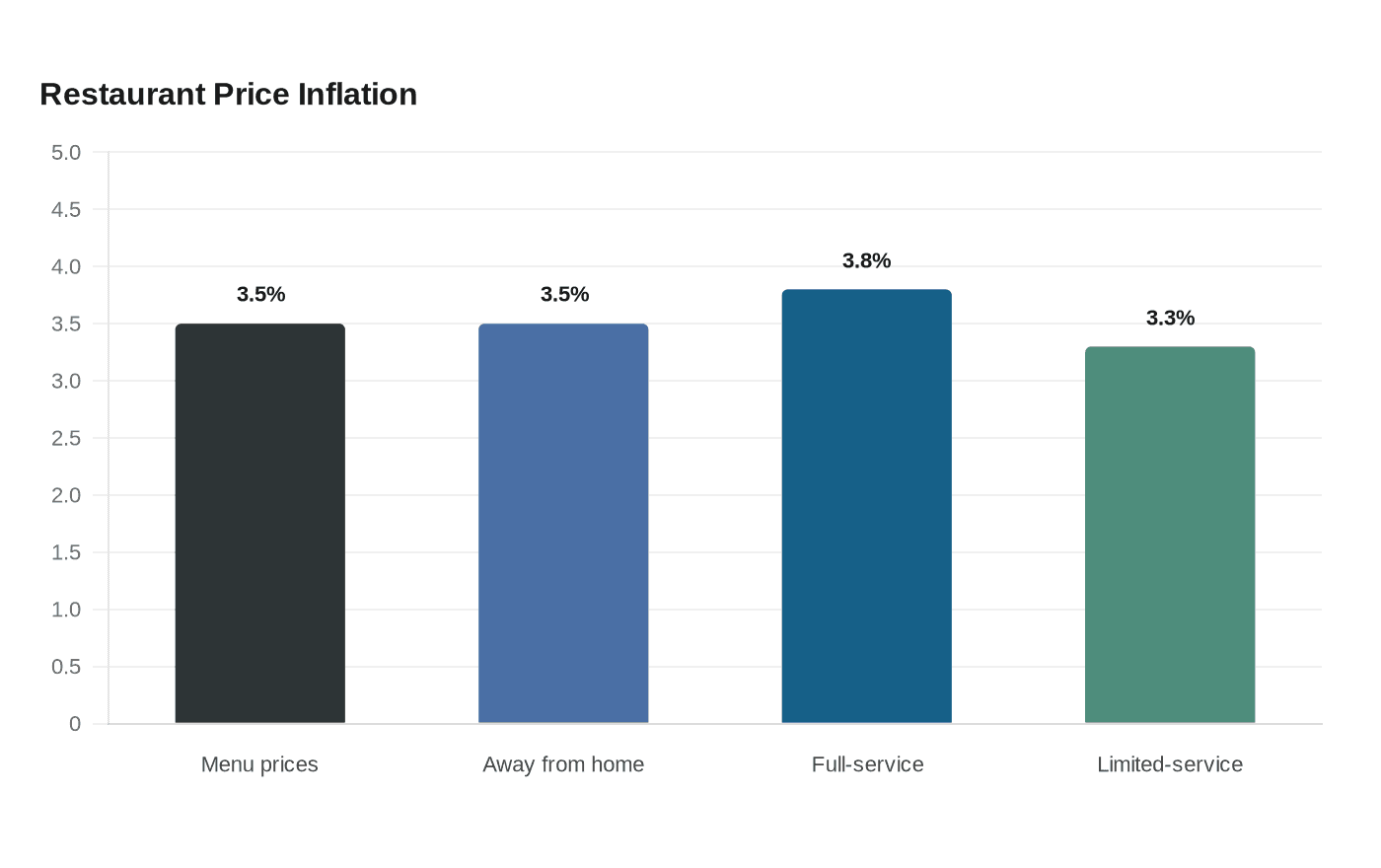
The broader inflation picture stayed sticky. Consumer prices rose 0.5% in May and were up 4.2% from a year earlier, while energy prices jumped 3.9% and accounted for more than 60% of the monthly increase. Food prices overall climbed 3.1% over the past 12 months, with the food-away-from-home index up 3.5%. Full-service meals rose 3.8% and limited-service meals 3.3%, a sign that both ends of the dining market are still carrying higher costs.
At the grocery store, the pace was softer: food-at-home prices rose just 0.1% in May after a 0.7% increase in April, averaging a 0.3% monthly gain so far in 2026. Even so, grocery prices are still up 2.7% over the last 12 months, and restaurant inflation remains well below its 8.8% peak in March 2023. That gap matters on the floor because diners are comparing a burger basket or pasta special against what they can make at home, and many are choosing cheaper entrees, skipping appetizers or cutting back on add-ons.
The National Restaurant Association’s June 2 consumer survey showed 56% of consumers had dined out in the past week, but 36% said they were spending less at restaurants than the quarter before. The association said more consumers are trading down and ordering fewer extras, which can hit check averages and tip pools even when the dining room still feels busy. Its 2026 State of the Restaurant Industry report projected $1.55 trillion in total restaurant and foodservice sales, with real sales growth of 1.3%, underscoring how modest the industry’s outlook was even before the latest inflation data.
This article was produced by Prism’s automated news system from verified source data, official records, and press releases, then run through automated quality and moderation checks before publishing. The system is built and supervised by the people who set the standards it runs under. Read our full AI policy.
Did this article answer your question?