RestaurantsWork spotlights career paths beyond the next shift
RestaurantsWork makes restaurant careers visible, from hourly roles to management, with salary, posting, and geography data that can show a real path forward.
The dead-end feeling in restaurant work often comes from not being able to see the next rung. RestaurantsWork is built to make that rung visible, showing hourly workers, managers, and operators where jobs sit, what they pay, and what skills can carry someone forward.
What RestaurantsWork actually does
RestaurantsWork is an interactive tool from the National Restaurant Association Educational Foundation and the National Restaurant Association, and it is not a job search engine. Instead, it gives job and career insights plus industry workforce economic data for job seekers, business owners, workforce development organizations, and economists.
That distinction matters for restaurant workers. A search engine tells you what is open right now, but RestaurantsWork is designed to help you compare roles, see career pathways, and understand how restaurant work varies by geography. It also includes jobs-by-geography views that show current job postings and average salary by region, which can be more useful than vague advice about “moving up” when you are trying to decide whether to stay on a server track, pursue shift lead work, or move toward management.
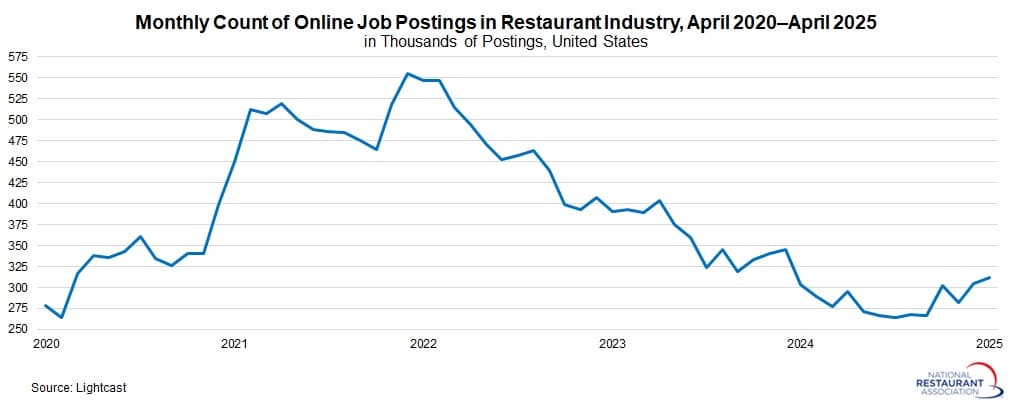
The data and visualizations behind the site come from Lightcast under contract with the National Restaurant Association Educational Foundation and the National Restaurant Association. In practice, that means the platform is meant to turn labor-market information into something a worker can use, not just something an analyst can study.
Why that matters for hourly workers
Restaurant workers hear a lot about hustle, flexibility, and “opportunity,” but too often those words are used to paper over instability, burnout, and turnover. RestaurantsWork pushes in the opposite direction by making the ladder visible. If you are a host, server, line cook, or bartender, the question is not just whether you can survive the current shift. It is whether your current job can lead to the next one with better pay, more responsibility, or a different schedule.

That is where the site’s career-path framing becomes useful. It helps you compare openings across regions and look at how different markets treat restaurant labor. A worker in one city may find more openings for shift leads or kitchen supervisors, while another market may offer more room in training, corporate support, or broader foodservice operations.
The site also helps managers and operators. When workers can see a future inside the company or the industry, they are more likely to stay. In an industry known for high turnover, that matters as much as any hiring campaign.
How to use it to map a real next step
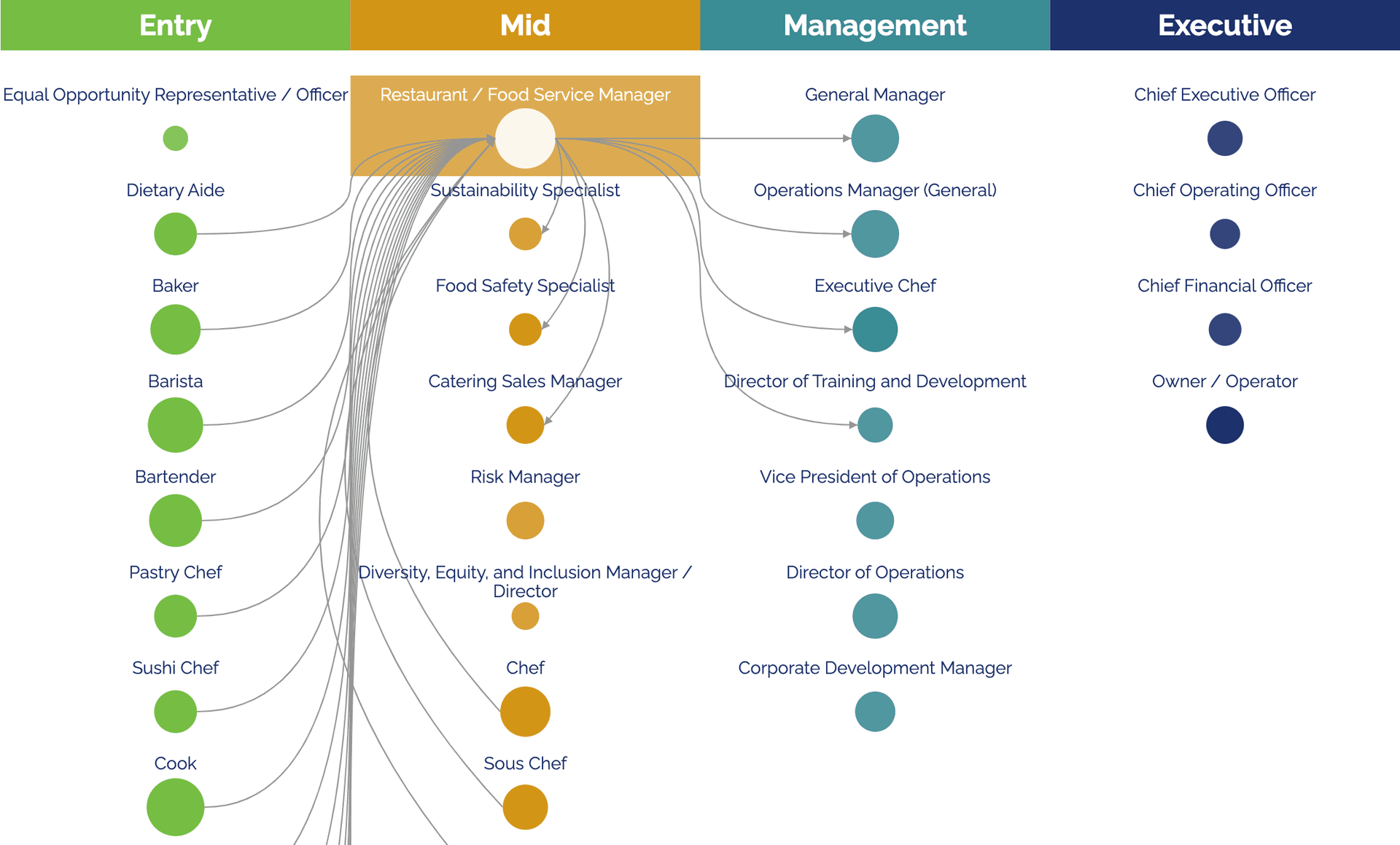
For a worker trying to move beyond the next shift, RestaurantsWork works best as a practical guide to roles and local demand. Start with the job you already know, then compare the next two levels up. A host can look at shift lead openings and see what those jobs pay in the region. A server can do the same with assistant manager or training roles. A line cook can use the platform to explore kitchen management or other supervisory pathways.
A simple way to use the site is to think in three steps:
1. Identify the job you already do.
2. Look at the role one step up, then the role after that.
3. Compare current postings and average salary in your area before deciding whether to stay put, transfer, or retrain.
That matters because the restaurant industry does not have just one ladder. Some workers move from the dining room into shift leadership, then into general management. Others move from the kitchen into kitchen management, then into training or broader operational roles. The point is not that every path is fast. The point is that the path can be seen.
The numbers show a big labor market, not a cul-de-sac
The industry backdrop is large enough to support those moves. The National Restaurant Association says restaurants and foodservice are the nation’s second-largest private-sector employer, with 15.7 million jobs, or 10% of the total U.S. workforce. Of those, 12.5 million jobs are at eating and drinking places, and about 3.2 million are foodservice jobs in other sectors.
The growth outlook is also broad. Association materials say restaurant and foodservice employment is projected to grow in every state between 2022 and 2032. Texas is projected to add 255,000 restaurant jobs over that period, California 241,500, and Florida 186,700. Nevada, Utah, North Carolina, and Georgia are projected to post 20% restaurant employment growth from 2022 to 2032.
For workers, those numbers matter because they suggest there will continue to be movement inside the sector, not just churn at the bottom. For operators, they are a reminder that labor competition is not easing up. If jobs are growing, retention depends on whether employees can see advancement without leaving the industry entirely.
The money story is not only at the top
Restaurant work has long been treated as a short-term stopover, but the pay distribution tells a more complicated story. A 2020 National Restaurant Association analysis found that restaurant jobs with annual income between $45,000 and $74,999 increased 84% from 2010 to 2018. That is the kind of figure that cuts against the old assumption that restaurant careers are only about entry-level pay.
The message for workers is straightforward: there are more middle-income roles in the industry than many people realize, and those roles are part of the same ecosystem as the hourly jobs that feed the business. The message for managers is just as clear: if workers cannot see how to move toward those roles, they will look elsewhere.

Training is becoming part of the ladder
The Foundation has also tied advancement to training, noting in November 2024 that apprenticeship is helping fuel career and leadership development across the restaurant workforce. That is important because advancement in restaurants is rarely just about time served. Leadership, business skills, and formal training increasingly shape who gets promoted and who stalls out.
That is where RestaurantsWork fits into the broader picture. It does not replace training, certification, or apprenticeship. It helps workers and employers understand why those tools matter. If a server wants to move into management, or a cook wants to move into leadership, the site can help show where the local openings are and what kinds of jobs sit beyond the current role.
A better way to think about restaurant work
Restaurant jobs are still physically demanding, fast-moving, and often unforgiving. Staffing shortages, burnout, and turnover have made that clear across the industry. But the labor market is too large, too diverse, and too active to treat every hourly role as a dead end.
RestaurantsWork gives workers a way to see the next step before they quit in frustration. It shows that restaurant work can be a ladder, not a flat floor, and that can change how a host, a server, or a line cook thinks about the job in front of them. In an industry where people are often told to endure without a map, that kind of visibility is not cosmetic. It is leverage.
This article was produced by Prism’s automated news system from verified source data, official records, and press releases, then run through automated quality and moderation checks before publishing. The system is built and supervised by the people who set the standards it runs under. Read our full AI policy.
Did this article answer your question?