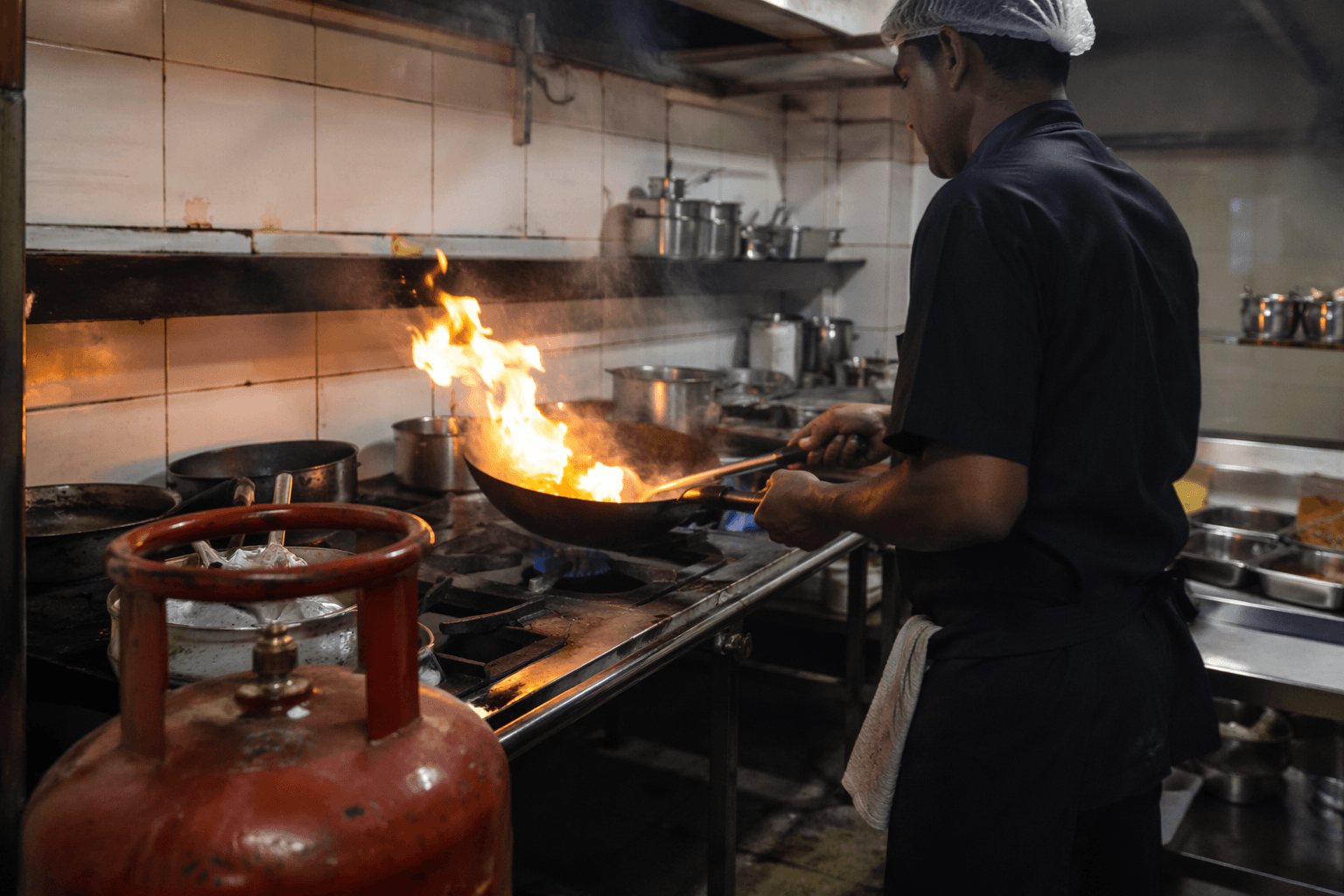
ServSafe Manager certification helps restaurant workers advance careers
ServSafe Manager is still a real ladder rung in many kitchens, but only when restaurants need someone to own safety, compliance, and training.

Why ServSafe still matters on the line
A ServSafe Manager card will not magically turn a line cook into a manager, but it still changes how a restaurant sees that worker. In a kitchen where a bad cooler read or a cross-contamination mistake can snowball into an inspection issue, the credential signals something practical: you understand the rules that keep guests safe and the operation out of trouble.
That is why the certificate still shows up as a promotion signal in restaurants. A cook who knows temperature control, cross-contamination, time and temperature abuse, and cleaning procedures is more useful to the kitchen than someone who only moves fast. A shift lead or manager with that knowledge can also train new hires and answer health-inspection questions without guessing.
What the credential actually requires
ServSafe makes the path fairly clear. First, workers and employers are told to check state and local regulatory requirements, because food-safety rules and certification needs vary by jurisdiction. Then they choose the training and exam format that fits their schedule, with options that can be online or classroom-based, and the materials and exams are available in multiple languages.
The Manager credential itself is built around a short, defined process. ServSafe says the online course is 8 hours long, the exam has 90 questions and a 2-hour time limit, and the certification is valid for 5 years. It is also ANAB-accredited, which matters in a field where employers often want a credential that is easy to recognize and easy to verify.
A familiar credential in a crowded industry
ServSafe says more than 4 million foodservice professionals have been certified through its food protection manager exam. It also says its training and certification are recognized by more federal, state, and local jurisdictions than any other food safety certification. That kind of reach is part of why the credential still matters to workers trying to move from station work into supervisory roles.
For restaurant employees, the value is not prestige for its own sake. It is that the certification can substitute for a lot of vague talk about readiness. You do not need a culinary degree to build credibility in a kitchen; you need the right training, the right exam, and enough knowledge to keep the line moving without making unsafe shortcuts.
When ServSafe changes the job and when it does not
In some restaurants, the certificate is treated as a hard requirement for anyone who wants to step into a shift lead or manager role. That is where it becomes more than a box to check. It can determine who gets put in charge when the room is busy, who gets trusted to train others, and who gets the responsibility of responding when a health inspector asks to see the person who understands the operation’s food-safety controls.
In other places, especially kitchens dealing with staffing shortages and high turnover, the certification may be less of a promotion key and more of a baseline expectation. The worker still has to prove they can lead, solve problems, and keep standards up under pressure. But even there, the credential helps because it tells management that the person on the line can handle more than speed and volume.
Why the public-health stakes are not abstract
This is not just an internal restaurant policy issue. The CDC estimates that about 1 in 6 Americans, or 48 million people, get sick from a foodborne illness each year. It also estimates 128,000 hospitalizations and 3,000 deaths annually in the United States, and says foodborne illnesses cost the country about $17.6 billion per year.
The restaurant connection is impossible to ignore. The CDC says more than half of all foodborne illness outbreaks in the United States are associated with restaurants, delis, banquet facilities, schools, and other institutions. That is the real reason ServSafe remains a practical credential for cooks, shift leads, and aspiring managers: the people on the line every day are often the ones most likely to catch a problem before it becomes a health-inspection issue or an outbreak.
What restaurant workers should take from it
For a worker trying to move up, ServSafe Manager is most useful when the next step is about responsibility, not just title. If the job involves opening or closing a station, coaching newer staff, handling food-safety questions, or taking on more supervisory duties, the certification can make that transition easier to justify.
It is also a reminder that good restaurant work is not only about pace. A strong kitchen depends on people who can keep food at safe temperatures, prevent cross-contact, clean correctly, and understand how those habits affect the whole operation. In that sense, ServSafe is still one of the clearest next-step credentials in the industry, especially for workers who want their experience on the line to count toward something bigger.
This article was produced by Prism’s automated news system from verified source data, official records, and press releases, then run through automated quality and moderation checks before publishing. The system is built and supervised by the people who set the standards it runs under. Read our full AI policy.
Did this article answer your question?