Starbucks layoffs aim to fix margins, boost future investment
Starbucks trimmed 1,100 support roles and 627 stores as margins sank to 2.9%, leaving baristas to absorb a turnaround built on leaner overhead.

Starbucks’ margin repair started far from the café counter, with 1,100 support partner roles cut and several hundred more open and unfilled positions eliminated as Brian Niccol pushed the company deeper into its Back to Starbucks reset. For baristas, shift supervisors, and store managers, the real question was not the Wall Street framing around future investment. It was whether the savings would show up as better staffing and smoother shifts, or as more pressure to do more with less.
The company said those February cuts did not affect in-store teams or store hours, but Starbucks was already reshaping the floor experience. It said it had added coverage hours in more than 3,000 stores and set a four-minute wait-time goal in cafés, a target that can only be met if labor is deployed more tightly and the handoff between register, espresso bar, and pickup stays clean. Starbucks also removed the non-dairy milk upcharge and brought back the condiment bar and cup writing, small changes that can improve the customer experience but also add steps to already busy shifts.
The financial backdrop was harsh. Starbucks said its fiscal 2025 GAAP operating margin contracted 1,150 basis points year over year to 2.9%, with the drop tied to restructuring costs, store-closure costs, simplification of the support organization, inflation, and Back to Starbucks investments, largely in labor hours. The company said it closed 627 stores as part of its restructuring plan, and more than 90% of those closures were in North America. On the ground, that kind of portfolio pruning usually means fewer locations to spread labor across, tighter oversight on the stores that remain, and more scrutiny on whether each café is producing enough sales to justify its staffing.
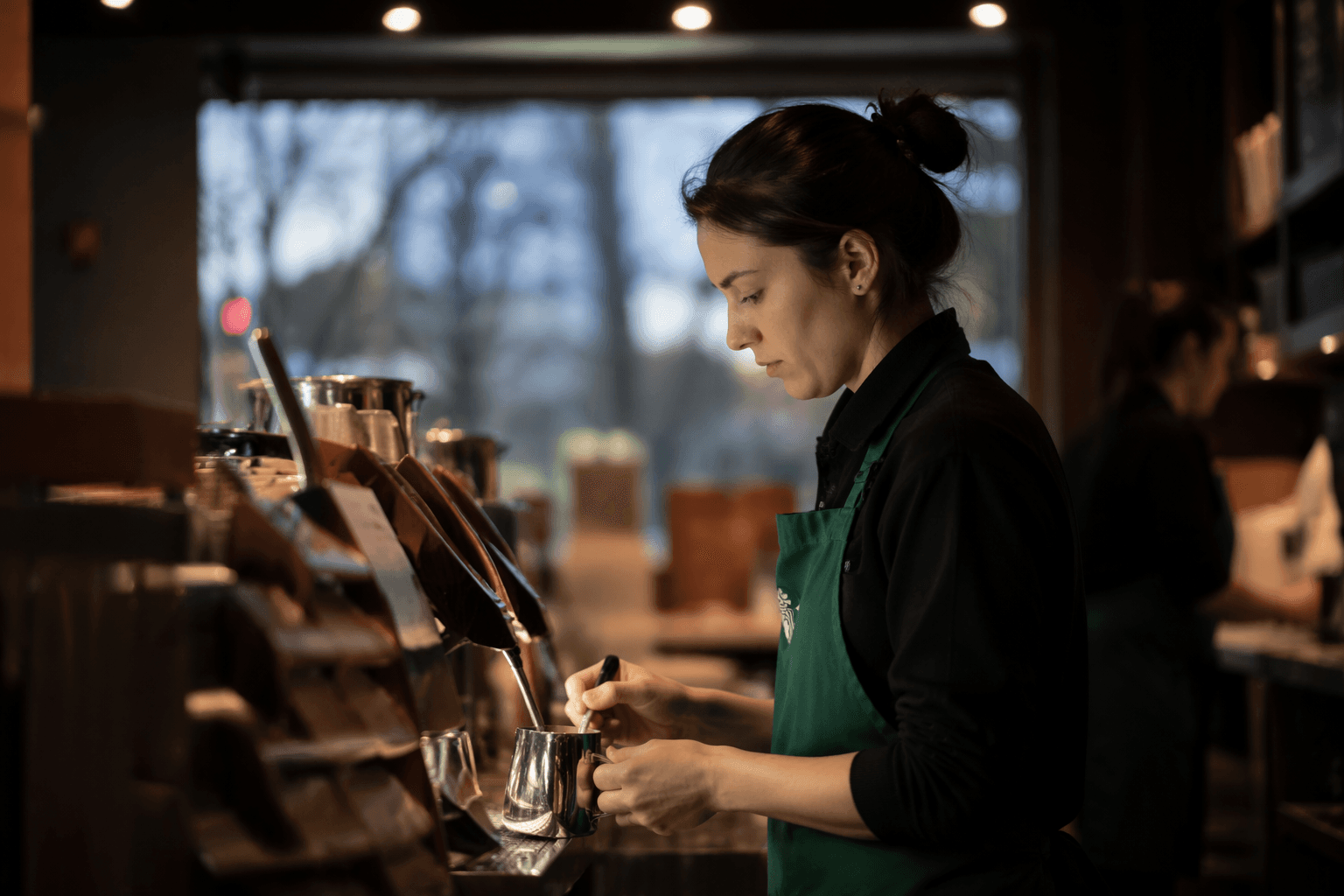
Niccol has said Starbucks drifted from its core and had an opportunity to make the store experience better for partners and customers. The company has paired that message with a goal of promoting internally for 90% of retail leadership roles over three years, a promise that could matter to shift supervisors and assistant managers if it leads to real advancement instead of a thinner ladder. For workers, the margin story is simple: if Starbucks is cutting overhead to fund a reset, the payoff will be measured in hours, staffing, training, and whether each shift feels more manageable or just more tightly controlled.
This article was produced by Prism’s automated news system from verified source data, official records, and press releases, then run through automated quality and moderation checks before publishing. The system is built and supervised by the people who set the standards it runs under. Read our full AI policy.
Did this article answer your question?