Toast IQ data shows restaurant operators use AI for sales and inventory
Toast IQ handled millions of restaurant AI threads in early 2026, and 47% were about sales and revenue, not hype about replacing staff.

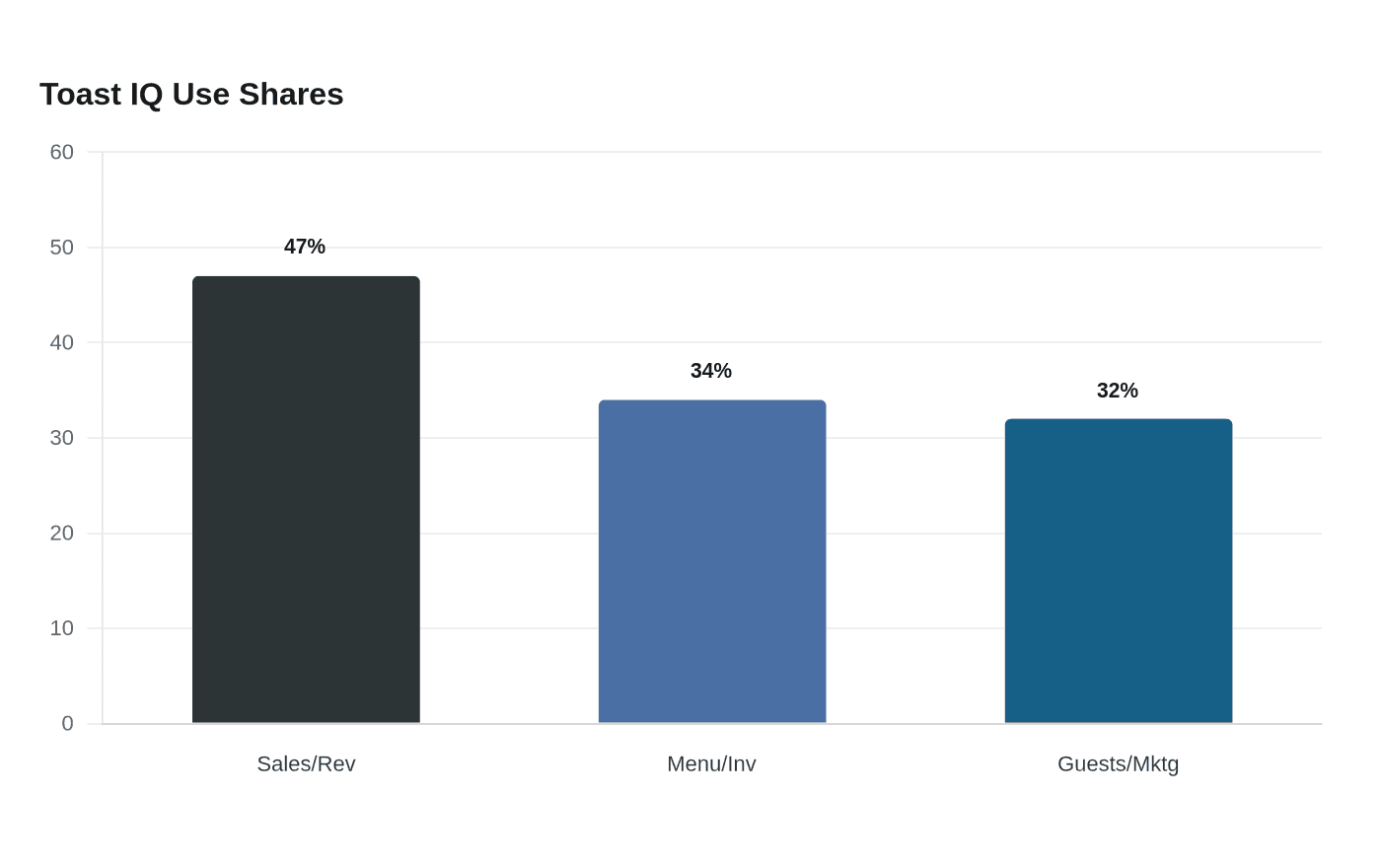
Toast said restaurant operators used its Toast IQ assistant for millions of threads in the first quarter of 2026, with sales and revenue driving 47% of the conversations across more than 125,000 restaurants. The next-biggest uses were menu and inventory at 34% and guests and marketing at 32%, a pattern that shows managers reaching for AI as a quick operating tool tied to real store data rather than as a vague strategy engine.
The most common prompts were practical ones: operators asked for short daily briefings, year-in-review summaries, menu refresh ideas and sales variance breakdowns. Far fewer queries were about local events or weather, and only 1% involved forecasting or planning. That matters in restaurants, where the workday often turns on what sold last night, what still has to be prepped and where labor is going to be tight by dinner rush.

The operator questions that came after the basics were even more revealing. More than a quarter of prompts were tied to menu optimization, and 13% focused on labor costs and efficiency. In a restaurant, those are the pressure points that shape everything from prep lists to pars and cut times. If a manager uses the chatbot to spot a weak-selling item, trim waste or rework a schedule before service, the time savings land with the people running the floor, not just the office. If the same data gets used only to squeeze labor, the burden shifts back onto servers, cooks and bartenders who are already trying to cover more with fewer hands.
Toast also said fine dining generated 29% more threads than fast casual, and usage was strongest in Florida, Arizona and Georgia. That lines up with a simple reality of restaurant management: the more moving parts a place has, the more valuable a fast data pull becomes before a pre-shift meeting, at a handoff between lunch and dinner, or in an end-of-day recap. Operators at higher-complexity spots appear to be leaning hardest on AI for the kind of quick read that used to take a manager digging through reports and chatting with the kitchen.
The data also suggested that restaurant staff are still getting used to talking to a chatbot as if it were a coworker. Toast said some users even typed please and thank you into the assistant. That is not proof of transformation; it is a sign that the technology is still finding its place in a workplace built on human judgment, short-staffed shifts and constant recalculations.
This article was produced by Prism’s automated news system from verified source data, official records, and press releases, then run through automated quality and moderation checks before publishing. The system is built and supervised by the people who set the standards it runs under. Read our full AI policy.
Did this article answer your question?