TOGO'S expands next-gen restaurants with faster, standardized training
TOGO's said its new 3.0 stores cut onboarding to three positions, while kiosks and pay-first ordering push crews to work faster and more uniformly.

TOGO's is redesigning restaurant work around a tighter, more standardized operation, and that changes what it takes to train, staff and move food at the counter. The sandwich chain said it is expanding its next-generation 3.0 model with Franchise FastLane, built on pay-first ordering, kiosks and a combi oven that supports a broader hot sandwich menu.
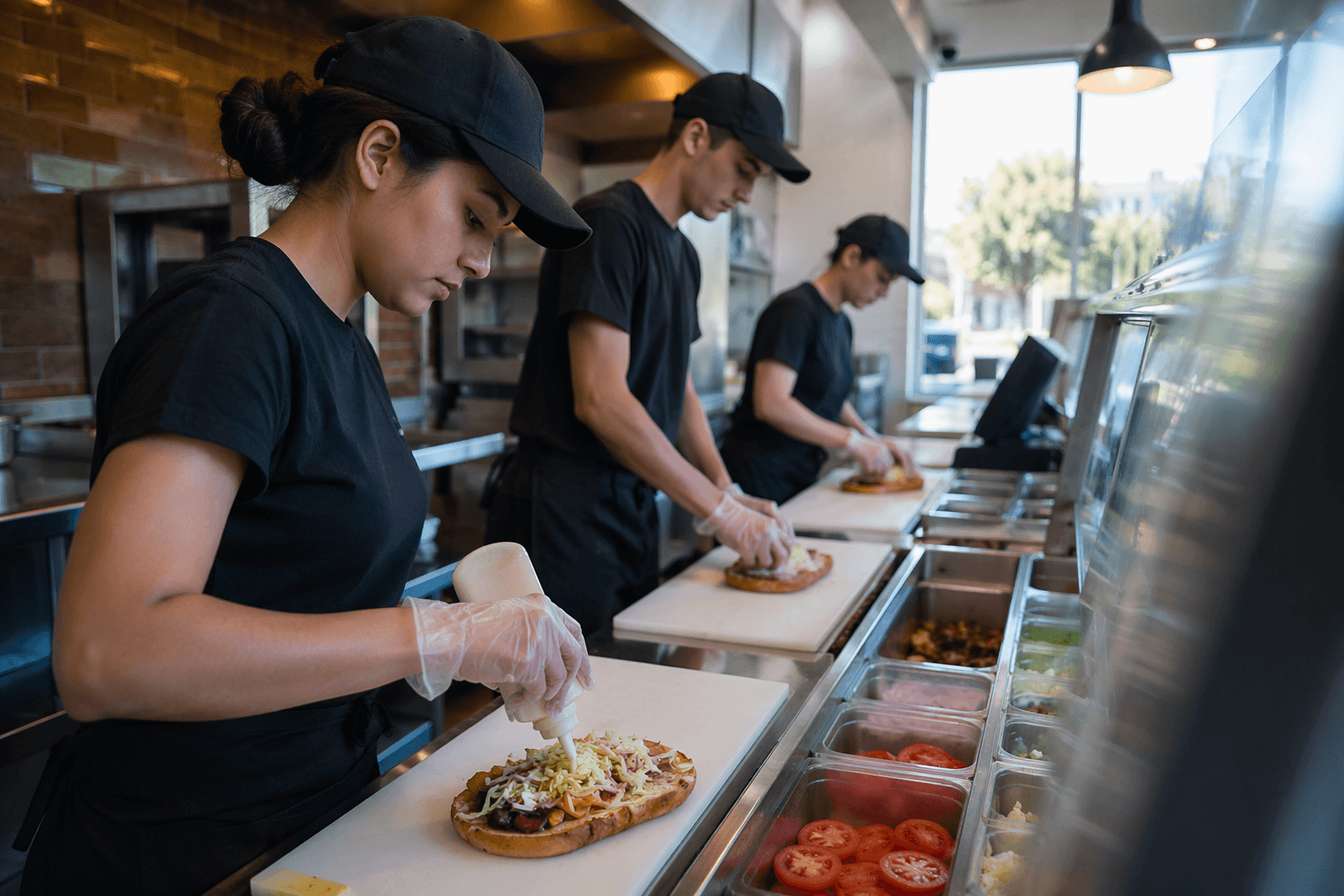
For cooks, counter staff and shift leads, the most notable change is the training setup. TOGO's said the 3.0 format uses a streamlined three-position training model meant to make onboarding faster and more efficient. That kind of simplification can help a new hire learn the line sooner, but it also narrows the job into a smaller set of repeatable tasks, with less room for improvisation and more dependence on a standardized pace.
The company is betting that this kind of operating model can also support better store economics. TOGO's said its 3.0 locations have produced higher average unit volumes than legacy stores, which helps explain why it is leaning into the format for future growth. In fast casual, that usually means more output expected from a store without necessarily adding proportional labor hours, a tradeoff managers know well when labor is tight and turnover stays high.
The shift also reflects how technology is being used on the restaurant floor. Kiosk ordering and pay-first service can reduce time spent at the register and make the order flow more predictable, while a combi oven can standardize cooking for a wider menu. For workers, that can mean clearer station responsibilities and fewer moving parts during a rush. It can also mean tighter service rhythms, because the speed promise now depends on both the software and the crew keeping up with it.
That is the broader labor story inside TOGO's next-gen push. The company is presenting a future in which growth, workflow and training are designed together, not separately. For restaurant workers, the question is whether that makes the job easier to learn, or simply faster, more measurable and more demanding.
This article was produced by Prism’s automated news system from verified source data, official records, and press releases, then run through automated quality and moderation checks before publishing. The system is built and supervised by the people who set the standards it runs under. Read our full AI policy.
Did this article answer your question?