UK Govt Eyes Factory Farm Expansion Despite Pollution Fears
UK ministers are rewriting planning rules to fast-track factory farm approvals over local objections; restaurants that advertise high-welfare sourcing now face a credibility reckoning.

A seventh McDonald's opened near a school after UK planning authorities overrode a local council refusal. That same logic is now being applied at a far larger scale: to the factory farms that supply the meat on British restaurant menus.
Ministers have been rewriting the National Planning Policy Framework, the document that governs all planning decisions in England, to make it easier to build and expand intensive livestock operations. Documents obtained under the Freedom of Information Act show the draft framework raises the bar for refusing applications on environmental grounds, narrows the scope for local authorities to adopt stricter standards, and adds new weight to "domestic food production" as a basis for overriding community objections. A new emphasis on "better accommodation for livestock" has been folded in as well, framed as a welfare measure but drawing immediate skepticism from critics who note planning conditions cannot guarantee lower stocking densities will be maintained long-term.
The changes follow sustained industry lobbying. The National Pig Association called on the government to address what it described as the "sometimes disproportionate" influence of national campaign groups on local planning outcomes, arguing that organized opposition had turned applications into tools for intimidation of individual farmers.
Nineteen organizations pushed back on March 10, signing an open letter warning the revised framework "risks embedding decades of industrial livestock land use in rural and Green Belt locations without adequate scrutiny." The signatories included The Vegan Society, Foodrise, and Plant-Based Health Professionals UK. Professor Paul Behrens of the University of Oxford added a food security dimension, warning that intensive livestock systems "actively undermine the natural foundations of food production" by degrading soil health and clean water.
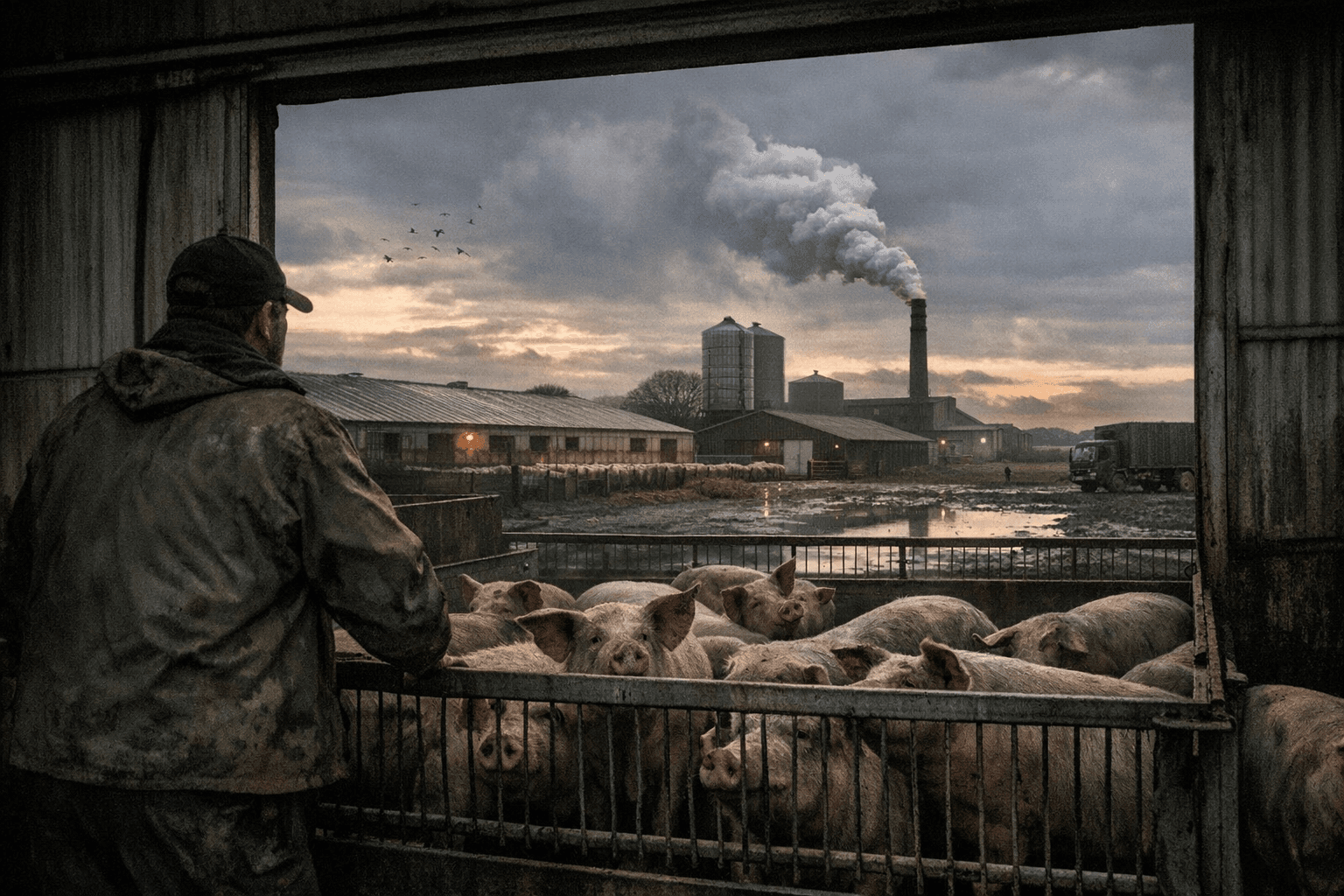
The restaurant supply chain implications are not theoretical. The number of livestock megafarms in Britain has grown by one-fifth since 2016. The country's 30 largest facilities, known in campaigner circles as the Dirty Thirty, hold combined capacity for more than 11 million chickens. Intensive agriculture is already the leading source of river pollution in the UK. And in the weeks before this policy shift, several restaurant chains quietly withdrew from the Better Chicken Commitment, the voluntary welfare standard that underpins much of the high-welfare sourcing language on UK menus.
Cranswick PLC, one of the country's largest chicken and pig producers, offers a preview of what looser scrutiny enables. Farms in its network breached environmental regulations at least 90 times before a Norfolk megafarm application was rejected in April 2025. Under a revised NPPF that raises the threshold for environmental refusal, applications like that one are likely to land differently.
For procurement teams, the immediate task is asking the right questions before a supplier's planning situation becomes a headline. Find out whether any facility in the supply chain has pending expansion plans contingent on the new NPPF language, whether existing welfare certifications remain valid under higher stocking densities, and whether any current environmental permits are under active enforcement review. Supplier contracts negotiated now should include audit-trigger clauses tied to regulatory notices, not just certification renewals. Any menu language referencing "responsibly sourced" or "high-welfare" British meat should be reviewed against permit status, not just the certification body's stamp.
Forty percent of UK cropland already goes to growing animal feed, and three million tonnes of soy are imported annually to sustain existing livestock numbers. Scaling that system under weakened planning scrutiny is not a distant policy abstraction. For the kitchen doing prep behind the counter right now, it's a sourcing decision hiding inside someone else's planning approval.
Know something we missed? Have a correction or additional information?
Submit a Tip