$60 Tip Called Insufficient Sparks Wider Debate Over U.S. Tipping Culture
A viral receipt showing a $60 tip called insufficient reignited the debate over whether America's tipping system, built on a $2.13 hourly wage, is sustainable.

A receipt shared online showing a $60 tip labeled "not enough" cut through the usual tipping noise this week, igniting a backlash that reached well beyond the restaurant floor. Social media influencers weighed in swiftly, arguing that servers shouldn't be structurally dependent on tips approaching 50 percent of a bill to survive. The moment landed on an industry already crackling with tension over pay, guest expectations, and what the tip line on a receipt actually means in 2026.
The numbers behind the outrage tell the story more plainly than any comment thread. The federal tipped minimum wage sits at $2.13 an hour, a figure that has not moved since 1991. Employers in states that allow a tip credit can legally pay that rate as long as tips bring a worker up to the federal floor of $7.25 an hour. On a slow Tuesday lunch shift, the math is unforgiving. Tips aren't a bonus for servers in most of the country; they are the wage.
That structural reality gets lost every time a receipt goes viral. The average tip at full-service restaurants tracked at 19.4 percent in Q1 2025, according to LendingTree's analysis of Toast point-of-sale data. That's the industry baseline, and it has drifted upward over decades: researcher Michael Lynn's 2025 longitudinal analysis found that the average restaurant tip percentage rose from roughly 15 percent in the 1970s and 1980s to 19 to 20 percent today, with the old benchmark of "15% for adequate, 20% for great" shifting to "18% for adequate, 20 to 22% for great." A $60 tip, depending on the bill size, could be well above that range, or it could represent a fraction of what a table actually ran. Context the viral clip typically omits.
Guests are growing increasingly aware, and increasingly resistant. A 2025 Bankrate survey found that 41 percent of Americans think tip culture is "out of control." The generational split inside that number is sharper still. Forty-nine percent of Boomers typically tip at least 20 percent at sit-down restaurants, compared to just 16 percent of Gen Z, a three-to-one difference. The same Pew data shows 84 percent of Boomers always tip restaurant servers, versus 43 percent of Gen Z. That isn't simply a generational attitude gap; younger diners came of age watching tip prompts appear at checkout counters, coffee windows, and self-service kiosks, a phenomenon that has quietly reshaped how all tips are perceived. A 2023 Pew Research Center survey found that 72 percent of U.S. adults say they are being asked to tip in more situations than before.
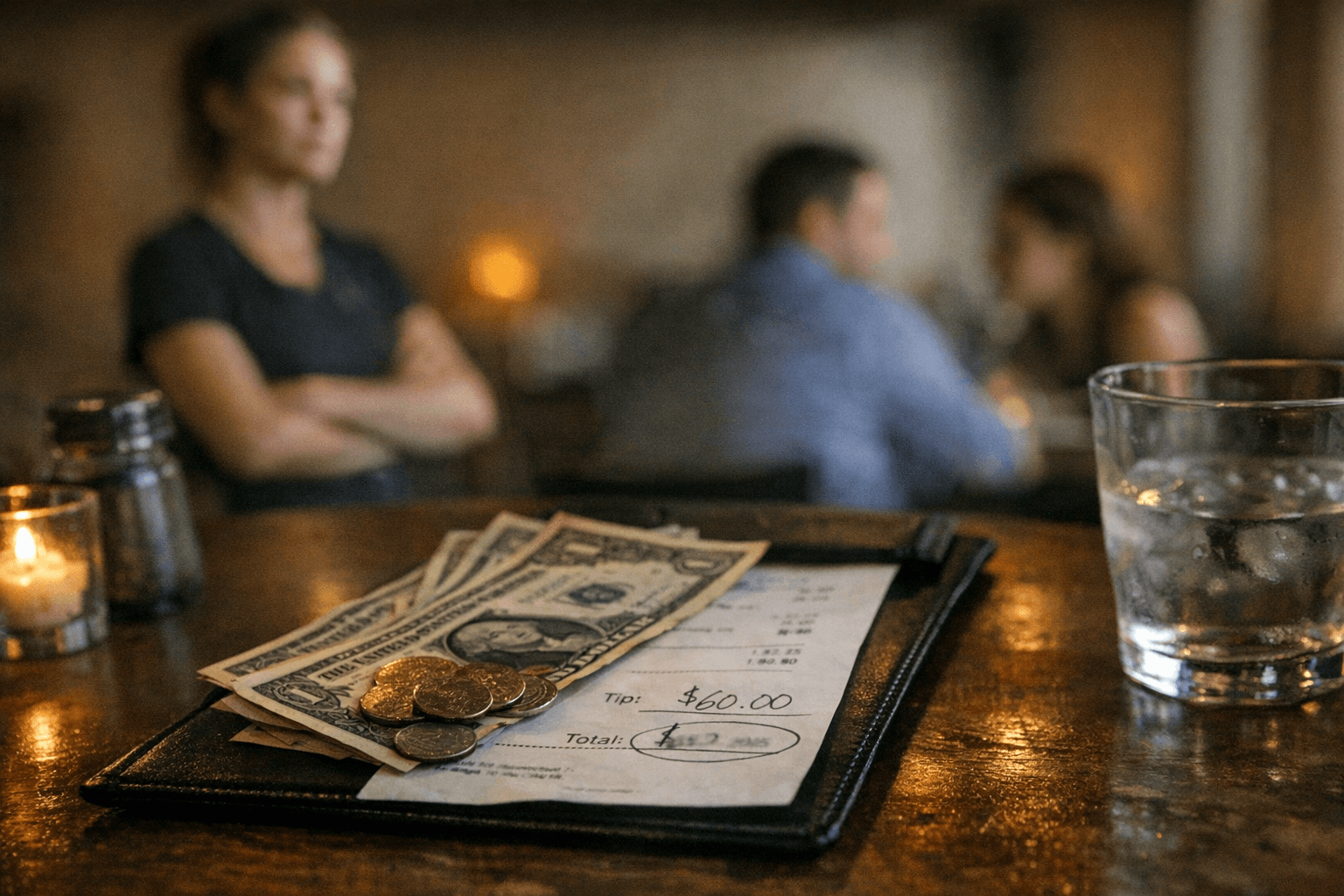
The disconnect between what guests see on a screen and what servers actually pocket compounds the friction. Tip-out obligations, in which servers share a percentage of their tips with bussers, hosts, and bartenders, mean a server walking away with a $60 tip at the end of the night may net considerably less after the house distribution. The IRS draws a hard legal line between a true tip, which is voluntary and changeable by the guest, and a service charge, which is mandatory restaurant revenue, with management deciding how much if any flows to workers. That distinction matters enormously when operators use service charges to supplement wages for back-of-house staff, who remain shut out of the proposed "No Tax on Tips" legislation currently before Congress.
For managers trying to reduce the friction before a receipt goes viral, the playbook is clearer than the policy debate. Posting tipping guidance at the table, stating what percentage goes where, removes the ambiguity that fuels online outrage. Transparent tip-pooling disclosure, given to staff in writing at hire, blunts internal resentment when a large tip gets divided. For operations running service charges instead of gratuity, scripting front-of-house staff on how to explain the model to guests at the start of a meal, not at the end, sidesteps the moment when confusion converts to a social media post. None of that fixes a federal tipped minimum wage that hasn't moved in 35 years, but it closes the gap between what a guest thinks they're doing with a $60 tip and what a server is actually depending on it for.
This article was produced by Prism’s automated news system from verified source data, official records, and press releases, then run through automated quality and moderation checks before publishing. The system is built and supervised by the people who set the standards it runs under. Read our full AI policy.
Did this article answer your question?