How Starbucks Bean Stock rewards partners and keeps them employed
Bean Stock is not instant money. It is Starbucks' two-year vesting system, and leaving early can erase the stock value you thought you earned.
Bean Stock is Starbucks' real retention lever
Bean Stock is the stock benefit at the center of Starbucks' idea of being a partner. Eligible workers receive restricted stock units, or RSUs, and those RSUs turn into Starbucks shares over a two-year vesting period. That makes the program look less like a one-time perk and more like a clock: stay long enough and the award can become meaningful; leave too soon and it never becomes yours.

Starbucks has leaned on that message for decades. The company says Bean Stock began in 1991, when about 700 people from roughly 100 stores in the United States and Canada were enrolled. Starbucks also says it was the first privately owned U.S. company to offer a stock option program to all eligible employees, including part-timers, which helped turn the word “partner” into more than branding.
Who qualifies and when the grant arrives
For U.S. partners, Bean Stock eligibility is typically tied to being employed by May 1 for the November grant, with no breaks in service between May 1 and the grant date. Starbucks says grants are awarded every fall, so the calendar matters almost as much as the job title. If you are new, moving roles, or coming back after a break, that timing can determine whether you are in or out for the year.
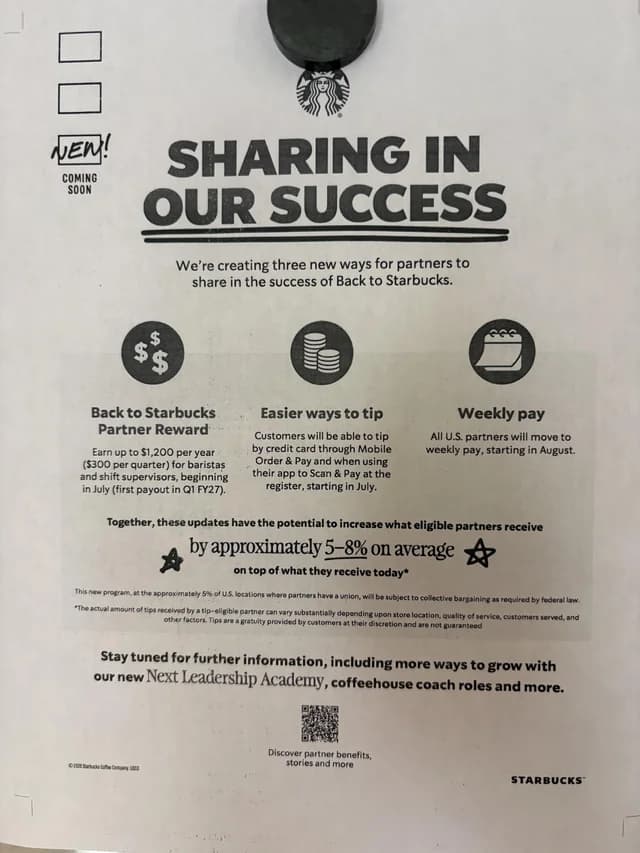
That matters in a workplace where people are already weighing base pay, tips, and whether the schedule is stable enough to justify staying. For baristas, shift supervisors, and store managers, Bean Stock is one of the few benefits that can build over time instead of paying out immediately. But it only works if you are still on the payroll when the clock runs out.
How vesting works, and what you lose if you leave
The vesting rule is straightforward. If you stay employed for at least one year from the grant date with no breaks in service, you receive the first half of the Bean Stock grant. If you remain employed for two years from the grant date, you receive the second half.
That means the realistic value changes by tenure. Before one year, the award is still just promised stock, not owned shares. After one year, you can expect the first half; after two years, you can expect the full grant. The actual dollar value still depends on Starbucks' share price, which means Bean Stock can be worth a lot more in a strong market and less in a weak one.
If you leave before vesting, you give up the unvested portion. That is the part workers need to understand most clearly, because the benefit is designed to reward people who stay. Bean Stock is not a cash bonus you have already earned; it is a retention tool that pays only if you remain continuously employed through the vesting window.
What Bean Stock means in practice
For workers comparing offers, Bean Stock is not the same as hourly pay, tips, or a retirement contribution. It does not help with rent this week, and it does not show up like a wage increase on payday. But for people who stay long enough to vest, it can become one of the more meaningful pieces of total compensation, especially if Starbucks stock performs well over time.
That is why it matters in day-to-day Starbucks life. A pay raise changes your check right away, and tip changes can alter take-home cash in a way you feel every week. Bean Stock asks for patience, and that makes it more valuable to workers who see Starbucks as a longer-term job rather than a short stop.
Once the shares are owned, partners can hold or sell them. That flexibility gives the program real financial weight for some people, especially workers who use it to start investing, build savings, or add another layer to their compensation. Starbucks says partners have used the grants for big and small goals, including buying homes, investing in the stock market for the first time, and taking vacations.
Why Starbucks keeps leaning on the program
Bean Stock is also part of how Starbucks sells the job itself. Starbucks says the program is why it calls employees partners, because success is supposed to be shared. In practice, that turns equity into a cultural signal: workers are not just paid to show up, they are told they have a stake in the company’s growth.
Under Brian Niccol, Starbucks has kept framing Bean Stock as part of making Starbucks “the best job in retail.” The company says more than 230,000 partners received a Bean Stock grant in 2024, and more than 1.5 million partners have received $2.4 billion in company stock since the program began. Starbucks’ Fiscal 2024 Global Impact Report says more than $2.4 billion in pre-tax gains have been granted to partners through Bean Stock. Those numbers show the program is not a side perk. It is one of Starbucks’ biggest retention and identity tools.
What it means in the Starbucks labor fight
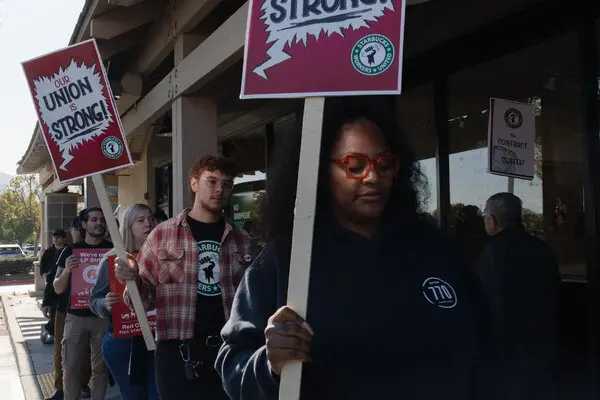
Bean Stock lands differently in a company where pay, scheduling, hours guarantees, and tip policy are constant pressure points. In stores affected by Starbucks Workers United organizing and contract bargaining, a stock grant can feel like part promise and part pressure. The company can point to equity as proof that it shares value with workers, while workers are still asking for the basics that keep a shift manageable: steadier hours, better pay, and a schedule they can live on.
That tension is what makes Bean Stock worth a reality check. It can be a real asset for people who stay, but it is also a delayed payoff that depends on continuous employment and stock performance. For a Starbucks worker deciding whether to build a career there or move on, the important question is not whether Bean Stock sounds generous. It is whether enough people can stay long enough for the stock to become something they actually own.
This article was produced by Prism’s automated news system from verified source data, official records, and press releases, then run through automated quality and moderation checks before publishing. The system is built and supervised by the people who set the standards it runs under. Read our full AI policy.
Did this article answer your question?