Starbucks-ASU program helps hourly workers earn degrees without debt
Starbucks and ASU turned college into a no-debt benefit for eligible partners. Nate Fiorini’s path shows how SCAP can move hourly workers toward a bachelor’s degree and career mobility.
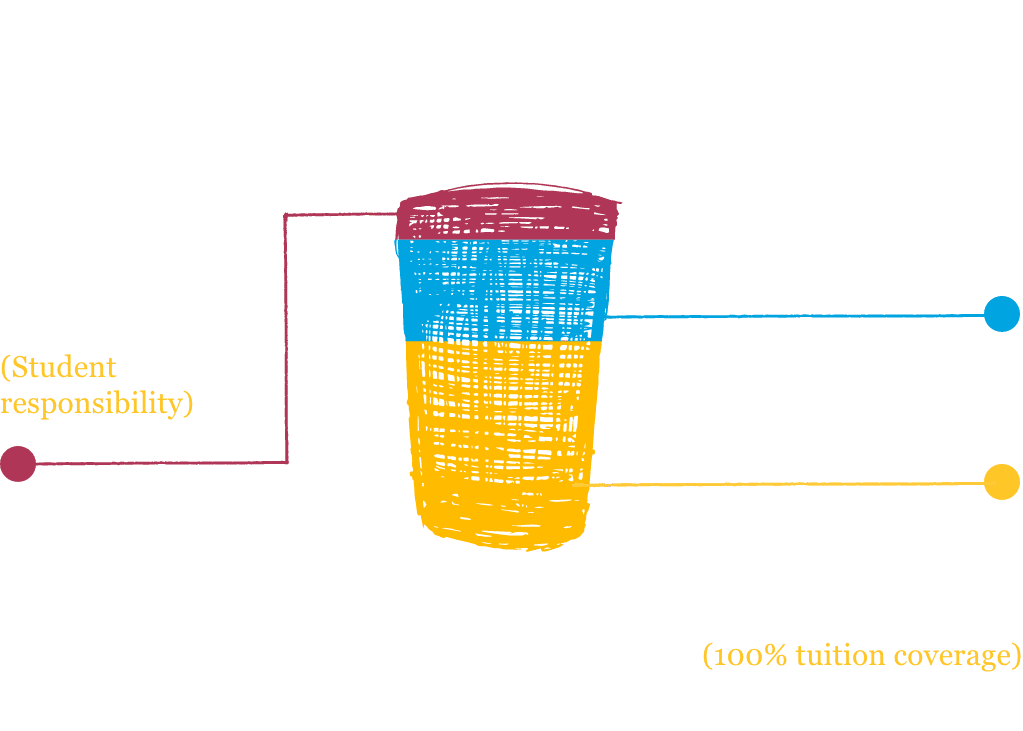
For a Starbucks shift supervisor in Arizona who already had an associate degree, the biggest barrier to a bachelor’s was not effort. It was the cost of trying to finish college while still living on an hourly paycheck. Starbucks College Achievement Plan was built to break that equation, pairing 100 percent upfront tuition coverage through ASU Online with academic support designed to make the benefit usable in real store life.
How the plan removes the real barriers
The value of SCAP is not just that it pays tuition. It is that Starbucks and Arizona State University built it around the practical problems that keep hourly workers from finishing school: cost, access and the sheer difficulty of juggling classes with work. Starbucks says eligible U.S. partners can apply from day one, and that part-time workers can qualify if they average 20-plus hours a week.
The program also wraps in support that matters once the paperwork is done. Starbucks says SCAP includes enrollment, career and success coaches, tutoring and accessibility services, all of which are aimed at keeping a partner from getting lost between admission, registration and classwork. That matters in a service job where shifts can change, hours can swing and school has to fit around the floor, not the other way around.
Nate Fiorini’s story shows why the benefit matters
Nate Fiorini is the kind of worker SCAP was meant to reach. He was working as a shift supervisor in Arizona when Starbucks announced the program in 2014, and he already had an associate degree. Like a lot of hourly workers, he assumed a four-year degree was out of reach because of cost.
SCAP changed that calculation. Instead of asking him to take on debt or leave work behind, it created a path to finish a bachelor’s degree online without borrowing for tuition. That is the core accountability question for any workplace education benefit: not whether it sounds generous on paper, but whether it removes the real barriers that keep people stuck. In Fiorini’s case, the answer was yes.
A benefit that was built, not just announced
Starbucks and ASU did not sell SCAP as a one-time perk and walk away. They introduced the Starbucks College Achievement Plan in June 2014 as a first-of-its-kind partnership and said more than 1,000 employees were already in the initial cohort. ASU said nearly 70 percent of those early enrollees were juniors or seniors, which tells you the program was catching workers who were already close to finishing but needed a workable route to the finish line.
Howard Schultz also used the first Partner Family Forum in New York’s Times Center to frame the program as a broad opportunity for eligible part-time and full-time U.S. partners. By April 2015, Starbucks and ASU said the plan would offer 100 percent tuition coverage for every eligible U.S. Starbucks partner, locking in what became the program’s defining promise.
Over time, the companies say they adjusted the benefit based on partner feedback. That matters because workplace benefits often fail when management treats them as fixed announcements instead of tools that need to work in the messiness of actual schedules, course loads and admission requirements. Starbucks and ASU say they used enrollment coaches specific to SCAP to help partners make decisions about their degree, application and admissions process, which is the kind of hand-holding many retail workers need and few employers provide.
The pathway widened for workers who needed another way in
SCAP later expanded beyond simple tuition coverage. Starbucks and ASU added a Pathway to Admission option for partners who do not initially qualify for ASU admission, and ASU says that pathway can cover credit-conversion costs. That is important because it recognizes a basic truth about the retail workforce: plenty of workers are capable of earning a degree, but not everyone arrives with the same academic background.
By building in a route for workers who need catch-up help, the partnership stopped pretending every partner starts from the same place. It made the benefit more usable for first-generation students, working adults and employees who need to translate previous college credit into a path ASU will accept.
The scale shows why Starbucks keeps pointing to it
The numbers help explain why SCAP remains central to Starbucks’ pitch to workers. In 2024, Starbucks said more than 13,000 partners had graduated through the program and more than 25,000 were participating. In 2025, the company said more than 1,100 partners graduated in that year’s class and participation had increased 60 percent over five years.
By 2026, Starbucks said nearly 20,000 partners had earned their first bachelor’s degree through SCAP, with another 27,000 on their way. Starbucks also says 75 percent of graduates reported career progression thanks to their ASU degrees. That is the clearest sign that the program is doing what the company says it does: not just paying for school, but creating a lane to better jobs, inside Starbucks or beyond it.
Why this still matters in the store
For baristas, shift supervisors and store managers, SCAP is part of the larger calculus of whether a Starbucks job can lead somewhere. In a company culture shaped by debates over staffing, scheduling, hours and the organizing work of Starbucks Workers United, benefits like this do not replace wages or fix a bad schedule. But they do change the long-term value of staying.
Starbucks has argued that SCAP is unusual among employer tuition benefits because many competitors cap annual aid at $5,250, limit degree options or require post-graduation service commitments. SCAP’s structure is different: eligible partners can pursue their first bachelor’s degree through ASU Online with upfront tuition coverage, plus support meant to keep them enrolled. For a worker trying to decide whether the job is just a paycheck or a bridge to something better, that distinction is the whole story.
The program’s real test is not the language in a benefits guide. It is whether an hourly worker can keep working, keep learning and leave with a degree instead of debt. On that measure, Starbucks and ASU built one of retail’s most consequential workplace benefits.
This article was produced by Prism’s automated news system from verified source data, official records, and press releases, then run through automated quality and moderation checks before publishing. The system is built and supervised by the people who set the standards it runs under. Read our full AI policy.
Know something we missed? Have a correction or additional information?
Submit a Tip