Starbucks CEO Brian Niccol drives broad store reset after tough year
Niccol's first year brought menu cuts, corporate layoffs, and a four-minute service target, but baristas are also bracing for fresh union pressure.
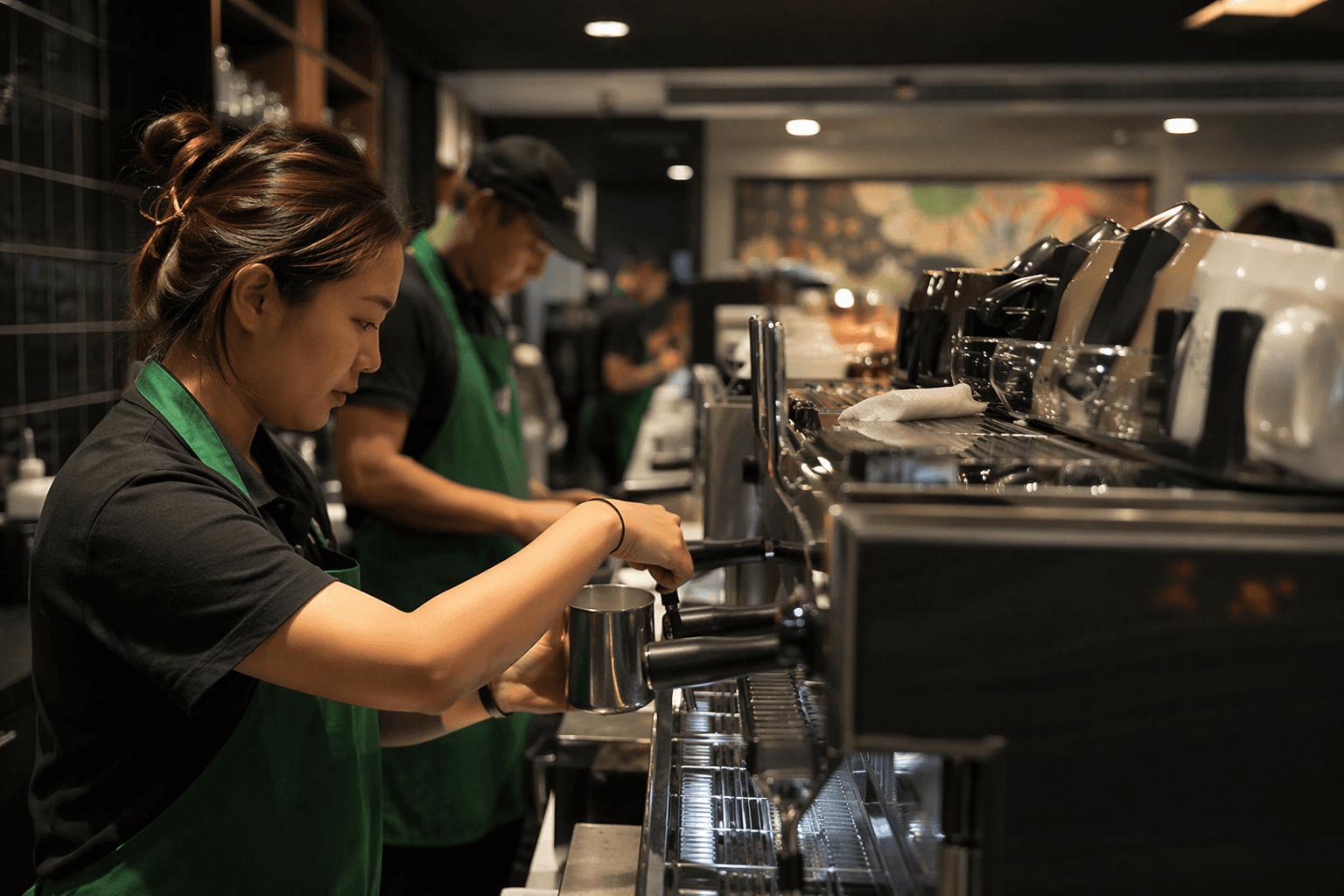
Menu boards and handoff counters became the front line of Brian Niccol’s first year at Starbucks. He has tightened the service model, simplified routines, and put more pressure on every shift to move faster and cleaner. For baristas, shift supervisors, and store managers, the question is whether the new approach actually makes a day on the floor easier or simply adds new standards on top of the old ones.
What Niccol inherited
Niccol took over as Starbucks CEO in August 2024 after the company was already under strain from weak demand and customer pushback over premium-priced drinks. By Oct. 23, 2024, Starbucks had suspended its forecast through the next fiscal year while Niccol worked on a turnaround plan, a sign that management was no longer treating the slowdown as a short-term patch job.
Weak sales usually show up first as tighter labor, harsher service metrics, and more pressure to protect throughput. When customers are already questioning price, every slow handoff, every backed-up mobile order line, and every poorly staged drink becomes part of the business problem that partners are asked to solve on the floor.
A reset built around the coffeehouse, not just the numbers
Starbucks calls the response a “Back to Starbucks” strategy, and the operational center of that plan is simplicity. Starbucks wants to cut roughly 30% of menu items to improve service speed, which is the kind of move that can matter immediately to people working bar, cold bar, drive-thru, and mobile handoff. Fewer items can mean fewer build variations, less confusion during peak, and less room for the line to stall when orders stack up.
The company has also brought back some nostalgic details, including condiment bars and handwritten names on cups in some locations. Those changes are small compared with the menu cuts, but they still affect the rhythm of a café: condiment bars change how customers move through the lobby, and handwritten names are part of the in-store experience Starbucks is trying to revive after years of app-first, speed-first habits. If the brand is trying to look more welcoming, that shift only works if the floor can absorb it without creating more cleanup, more guest questions, or more congestion at handoff.
Niccol’s broader reset has also leaned on leadership accountability and technology choices, which is why workers are seeing a stream of adjustments rather than one big launch. For store managers, that can mean new expectations around labor planning, more attention to how drinks are staged before handoff, and less tolerance for the kind of process drift that builds up when a café is short-staffed or badly sequenced.
The four-minute standard changes the pressure point
Starbucks has set a goal of making drinks within about four minutes of ordering. That number is the clearest example of how the turnaround reaches the floor, because it turns a general promise about speed into a concrete clock on every transaction. In a café with a heavy mobile queue, a packed drive-thru, and a rush of in-store orders, that target can sharpen decision-making on sequencing, sticker flow, and partner placement.
The upside is obvious if the labor matches the target: faster beverage delivery, fewer customer complaints, and less chaos at peak. The downside is just as familiar to anyone who has worked a slammed shift at Starbucks: a service goal without enough staffing or training just becomes another metric hanging over the bar, and the people making drinks absorb the pressure first.
The corporate cuts around the turnaround point in the same direction. On Feb. 24, 2025, Starbucks announced it would eliminate 1,100 corporate jobs and several hundred open and unfilled positions. Those layoffs did not hit café partners directly, but they signal a smaller support structure behind the stores, which can affect how quickly issues get solved, how much guidance managers get, and how much operational friction gets pushed down to district and store level.
Why the labor fight now runs beside the reset
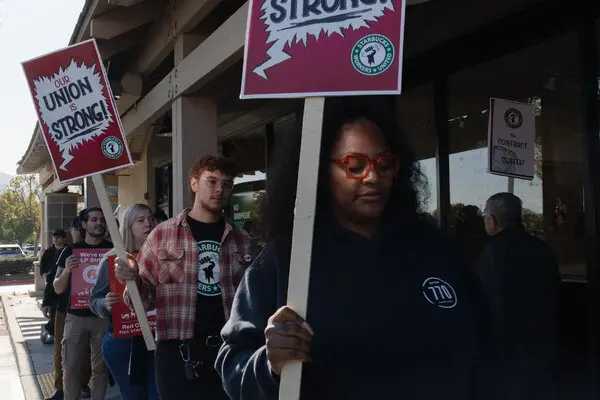
The store reset is unfolding alongside a more volatile labor story. On Nov. 5, 2025, Starbucks baristas were preparing a strike vote amid the dispute with Starbucks Workers United, and on Nov. 10, 2025, more than 100 U.S. lawmakers urged Niccol to restart union negotiations. The pressure came from the Congressional Labor Caucus and other lawmakers, showing that Starbucks’ labor fight had moved well beyond the company’s own walls.
The turnaround is happening in the same stores where bargaining over staffing, scheduling, and working conditions is still unresolved. A cleaner menu and a faster service model may help execution, but they do not settle the basic labor questions that keep coming up in union stores: how many hours are available, how labor is assigned, and whether management is willing to bargain in good faith. When workers are already organizing around the pace and predictability of the job, every new operational standard gets read through that lens.
What store leaders should watch next
- If the 30% menu cut reduces build complexity, partners should feel it in shorter lines and fewer remake traps.
- If the four-minute target is realistic, it should show up in smoother mobile handoffs and less congestion at peak.
- If corporate cuts translate into slower support, store managers will feel the gap first, especially when problems need escalation.
- If union talks restart, that could shape morale just as much as any menu change, because workers have made clear that staffing and contract terms are part of the same conversation as service speed.
This article was produced by Prism’s automated news system from verified source data, official records, and press releases, then run through automated quality and moderation checks before publishing. The system is built and supervised by the people who set the standards it runs under. Read our full AI policy.
Did this article answer your question?