Starbucks highlights five U.S. manufacturing and distribution centers
Starbucks’ five U.S. plants and distribution hubs decide what reaches stores, from Teavana tea in Kent to Northeast shipments out of York.
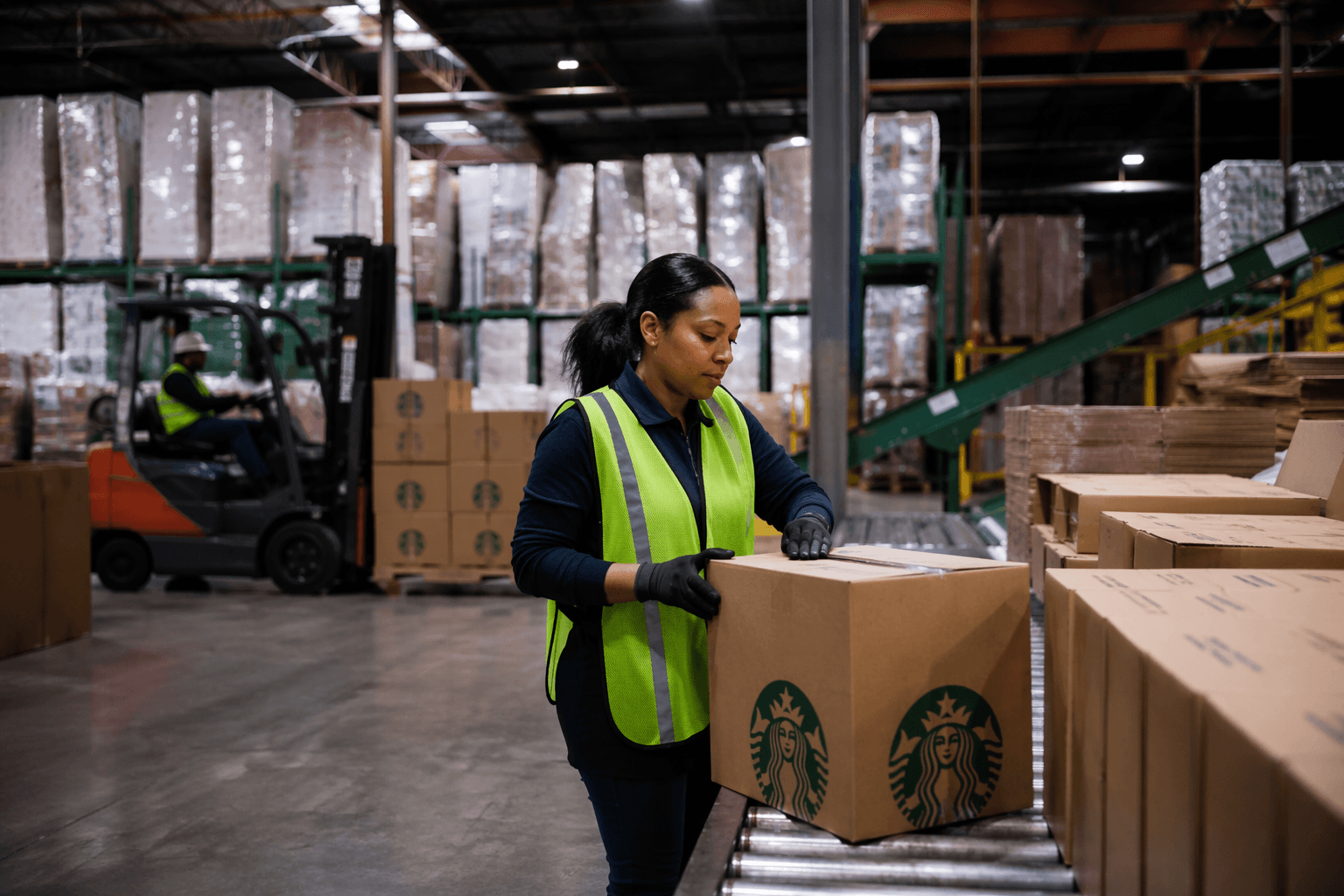
Starbucks’ café business runs on a much larger industrial machine than most customers ever see. The company says its five U.S. manufacturing and distribution centers employ specialists in roasting, planning, warehouse management, packaging, maintenance, engineering, and logistics, the kind of work that decides whether stores get the right products on time and in the right condition.
The hidden backbone behind the cup
That network matters because Starbucks was built as a roaster before it became a global retail brand. The company says its story began in 1971 as a roaster and retailer of whole bean and ground coffee, tea and spices in Seattle’s Pike Place Market, and the current footprint still depends on roasting, manufacturing and distribution plants to keep the business moving. Starbucks says those U.S. centers produce millions of pounds of coffee each year, a scale that helps explain why the company’s store experience depends on far more than the people on the espresso bar.
The jobs inside those facilities are not a simple extension of café work. A barista’s day is shaped by customers, mobile orders, and the pace of the store; the plant and warehouse side is shaped by equipment uptime, inventory timing, shipping windows, and production runs. That is a different environment, different skill set, and different schedule, which is why these jobs function as career entry points into industrial operations rather than just back-of-house support.
Where the work happens
Starbucks names five U.S. manufacturing and distribution sites: Kent, Washington; Augusta, Georgia; Gaston, South Carolina; York, Pennsylvania; and Carson Valley, Nevada. Each one serves a different part of the supply chain, and together they give the company the kind of physical infrastructure that makes a national coffee business possible.
Kent is the oldest of the group and the most direct link to Starbucks’ origin story. The company says the facility, built in 1992, was its first manufacturing site and sits 13 miles from the Support Center in Seattle. Kent is also the only Starbucks location that manufactures Teavana tea, and today it primarily roasts and packages coffee, making it one of the clearest examples of how the company blends legacy products with the steady, repetitive work that keeps store shelves and supply closets stocked.
Augusta has a different role. Starbucks says the site includes both a soluble coffee plant and a roasting plant, and that the soluble facility was the company’s first company-owned manufacturing plant in the world to produce products such as Starbucks VIA instant coffee. That makes Augusta a good reminder that “jobs behind the cup” include product formats many store workers do not handle directly, but customers still buy and expect to be available without interruption.
Distribution is where store performance gets decided
York, Pennsylvania, is the facility that shows how much a distribution center can matter to the day-to-day life of stores. Starbucks describes it as its largest distribution center, with more than 300 people onsite, and says it reaches stores and grocery channels across the Northeast, parts of Canada, and Europe. Late-2025 reporting also described York as the company’s largest distribution center in the world, which underscores its scale and the pressure that comes with moving product across such a wide footprint.
Carson Valley, Nevada, shows the schedule reality of the work. Starbucks describes it as a more than 1 million-square-foot operation that runs 24 hours a day, 5 days a week, with variable weekend shifts. That is not café scheduling, and it is not designed around peak lunch rushes or closing time in a store. It is continuous industrial work, built around throughput, freight timing, and the constant need to keep goods moving.
Gaston, South Carolina, is part of that same five-site network, which matters even when the company says less publicly about its exact function. For workers, the important point is that Starbucks does not rely on one warehouse or one roast plant. It relies on a spread of facilities that divide the work of making, packing, storing, and moving product, so a delay in one place can ripple into another.
Why store workers should care
These centers shape what customers experience in the café. If roasting falls behind, if packaging stalls, or if distribution gets jammed, the effect is not abstract. It can show up as missing products, strained inventory, substitution decisions, and pressure on store managers who are trying to keep the floor running without the items customers expect.
That is why the industrial side of Starbucks is a labor issue, not just a logistics issue. The company’s manufacturing and distribution jobs sit upstream from the café, but they still affect the pace and predictability of work in the stores. For a shift supervisor trying to balance labor against demand, or a store manager trying to keep partners from getting buried by customer complaints about missing items, the health of the supply chain is part of the job.
Labor tension has already reached the warehouse floor
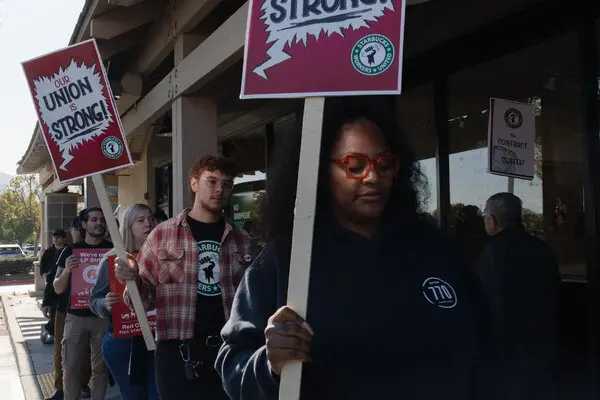
York also shows how these facilities become pressure points in labor disputes. In December 2025, Starbucks baristas and union supporters protested outside the distribution center during a nationwide unfair labor practices strike, putting the company’s logistics arm in the middle of the broader fight over workplace power. Starbucks Workers United has used store-level organizing to push on pay, hours, and contract bargaining, but the York protest made clear that distribution is part of that same labor map.
That matters because the company’s supply chain is only as smooth as the people running it. A distribution center that services the Northeast can become a visible point of leverage when workers want to show how labor unrest can disrupt operations beyond a single store. For a company built on speed, consistency, and brand polish, the warehouse floor is not hidden in any meaningful sense once workers decide to make it visible.
Operations and sustainability are now tied together
Starbucks has also folded sustainability into the way it talks about manufacturing. Its sustainability timeline says the company established an environmental mission statement in 1992, committing to environmental leadership across the business. More recently, Starbucks described its China Coffee Innovation Park as a model for smart, sustainable coffee manufacturing, with roasting, warehouse, and distribution functions built into the design.
The 2025 Global Impact Report says Starbucks reduced global Scope 1 and 2 market-based greenhouse gas emissions by 17% relative to FY19, and verified more than 13,000 coffeehouses for energy, water, and waste reduction practices. That links the plant side to the store side: the same company that relies on industrial throughput also wants those operations to carry less environmental cost. For workers, that means the manufacturing and distribution jobs sit at the intersection of production, maintenance, and the company’s climate claims, which makes them more central to Starbucks’ future than the average customer ever sees.
In practice, the five U.S. centers show how Starbucks really works: as a café brand powered by planners, roasters, mechanics, warehouse teams, and logistics workers who keep the cup supply chain intact.
This article was produced by Prism’s automated news system from verified source data, official records, and press releases, then run through automated quality and moderation checks before publishing. The system is built and supervised by the people who set the standards it runs under. Read our full AI policy.
Did this article answer your question?