Starbucks hiring page maps paths from applicant to partner growth
Starbucks’ hiring page is a road map, not a dead end: it shows how to apply, interview, and use internal tools to move from barista to leader.
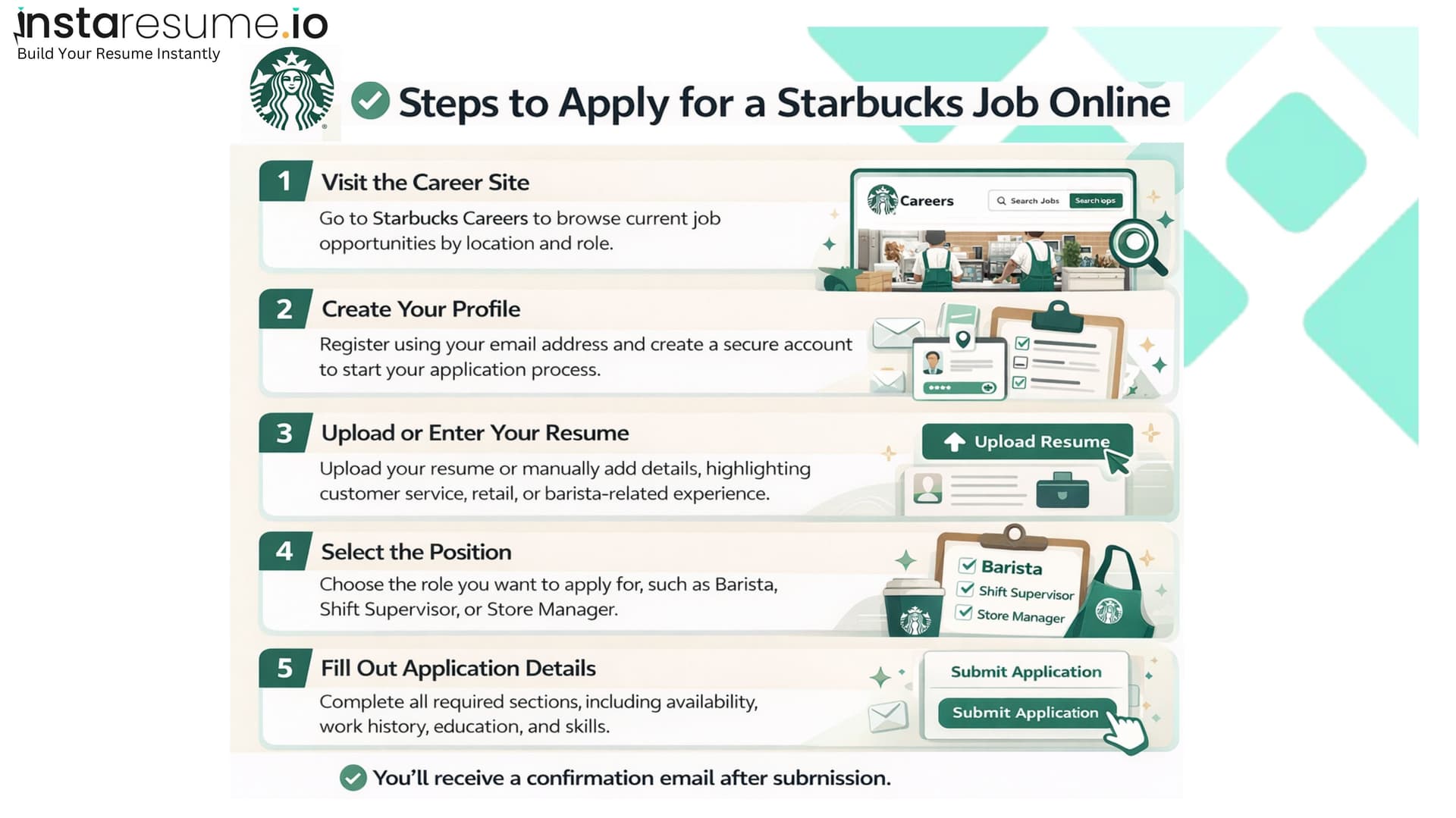
Starbucks’ hiring-process page does more than list openings. It lays out a sequence, create a profile, read the posting, apply online, then watch for email confirmation and possible outreach from a recruiter or coffeehouse leader. For baristas, shift supervisors, and store managers trying to read the company’s career ladder, that sequence is the clearest clue that Starbucks wants workers to see hiring as the first step in internal growth, not a one-off transaction.
How Starbucks wants you to apply
The company’s own guidance starts with the basics, but it is specific about what matters. Candidates are told to explore opportunities, study job descriptions carefully, submit an online application, and stay connected after they hit send. Starbucks also points applicants to its Craft Your Path Planner, a tool meant to help people understand the path from first application through interview and into later opportunities.
That makes the page useful in a practical way for anyone who has ever wondered what Starbucks is actually looking for. A clean profile, a resume that matches the role, and an application that fits the language of the posting are not extra polish, they are part of the process Starbucks says it wants. If a recruiter or coffeehouse leader reaches out, the applicant is already supposed to understand the role and the next step.
For people already working in stores, that same guidance matters because it shows how Starbucks expects internal candidates to move. Current partners can log in to see open positions and pursue career development and leadership opportunities, which means the company is encouraging employees to look beyond their current station and map a move before an opening feels urgent.
The internal ladder Starbucks wants workers to see
Starbucks is careful about the language it uses for employees. It calls them partners because, through the annual Bean Stock grant, they share in the future success of the business. That framing is not just branding. It is a signal that the company wants workers to think about ownership, mobility, and long-term commitment at the same time.
The company’s promotion data backs up that message. In 2024, Starbucks said between 59% and 83% of promotions were internal, depending on role and level. It also set a goal of hiring internally for 90% of its retail leadership roles within three years. Starbucks later said its coffeehouse leadership pilot was built to create a clearer career path for hourly partners, and that stable leadership produced stronger results across the board.
The most concrete proof point may be the one that matters most to a barista clocking in on a busy floor: Starbucks says 60% of store managers started as baristas. That is the company’s clearest answer to the question many frontline workers ask about the job, whether the role is an endpoint or a doorway. According to Starbucks, it is a doorway, especially if you can show that you can handle the pace, the standards, and the pressure of a real shift.
Which roles matter if you want to move up
Starbucks’ role descriptions sketch the path fairly plainly. Baristas are the heart of the coffeehouse. Shift supervisors run shifts and lead teams. Assistant managers handle operations and develop talent. Store managers coach in the moment and build future leaders. District managers oversee multi-store portfolios.
For a worker trying to move up, the lesson is to match your experience to the next rung, not just the one you already have. A strong barista candidate should be able to show consistency, speed, and comfort with service routines. A shift supervisor candidate should be ready to speak to leading a floor and handling the flow of a shift. By the time Starbucks is looking at assistant manager or store manager potential, the company is signaling that operations, coaching, and talent development are part of the job, not side tasks.
That ladder also extends beyond the coffeehouse. Starbucks says partners can search for roles in coffeehouses, support centers, and roasting plants. So a partner who wants to stay with the company does not have to imagine only one path upward. The internal market includes front-line stores, corporate support, and production roles, all inside the same system.
The benefits package is part of the pitch
Starbucks’ career pitch is tied to scale. The company says it has more than 41,000 company-operated and licensed coffeehouses globally, and its corporate teams support about 400,000 global employees. That scale matters because it gives workers more than one place to move, and it makes the company’s internal pipeline look more like an employment system than a single store job.
Education is one of the most visible pieces of that system. The Starbucks College Achievement Plan launched in June 2014 and offers eligible U.S. partners 100% upfront tuition coverage for a first-time bachelor’s degree online through Arizona State University. Starbucks said in 2026 that nearly 20,000 ASU graduates had gone through the program. Eligibility includes partners working an average of 20 or more hours a week, and the program now includes more than 150 degrees, along with enrollment help, career and success coaches, tutoring, accessibility services, and a military plus one benefit.
That matters to workers because Starbucks is not presenting education as a perk on the side. It is part of the company’s argument for staying, advancing, and building a longer career inside the business. For a barista who wants management, or a shift supervisor who is weighing school against staying in the store, the message is clear: the company wants education and employment to reinforce each other.
Why the extras matter
Starbucks also offers development experiences that go beyond the standard promotion track. The Global Barista Championship launched in 2025, giving skilled baristas a visible stage inside the company. Eligible Coffee Masters can also take part in the Origin Experience at Hacienda Alsacia in Costa Rica, a signal that product knowledge and coffee craft can still carry career value.
Those programs matter because they show what Starbucks chooses to celebrate. The company is not only rewarding people who can keep a line moving. It is also elevating craft, knowledge, and leadership identity. For workers trying to move from hourly work into management, that means the smartest application and interview strategy is to show both operational reliability and a serious interest in the business of coffee.
Starbucks’ hiring page is useful because it tells applicants exactly how the company wants them to think: start with the role, use the planner, stay connected, and treat the application as the beginning of a larger path. For workers inside the system, that is the real takeaway. The ladder is there, but Starbucks is making clear that the people who move first are the ones who learn the ladder early and apply with a plan.
This article was produced by Prism’s automated news system from verified source data, official records, and press releases, then run through automated quality and moderation checks before publishing. The system is built and supervised by the people who set the standards it runs under. Read our full AI policy.
Know something we missed? Have a correction or additional information?
Submit a Tip