Starbucks maps out which partner benefits are available right away
Some Starbucks perks start on day one, but stock, retirement, and vacation sit behind a clock. Knowing the cutoffs can shape your first 90 days on the job.
The day-one stack is bigger than many partners realize
Starbucks lays out a surprisingly long list of benefits that are available upon hire, and that matters most when you are still learning the store, the schedule, and what your paycheck will actually cover. For a barista or shift supervisor, the immediate perks are the ones that can relieve pressure fast: mental health support, backup care, food and beverage savings, and a few small but frequent cost cuts that add up across a week of early opens and late closes.
The company says the benefits available right away include Lyra Health, backup care, Headspace, Spotify Premium membership, sick time, the food-and-beverage benefit for store partners, the weekly coffee markout, in-store discount, Starbucks Global Academy, partner matching gifts, commuter benefits, the Caring Unites Partners fund, and Coffeegear discounts. Starbucks Careers also says partners get 20 therapy sessions a year and free access to Headspace, which makes the mental-health piece more than a talking point, especially for workers trying to juggle school, family care, and unpredictable store demands.
For many partners, the practical value is simple: these are the benefits that can help in the first paycheck cycle, not after months on the clock. That is why the day-one layer matters so much in a coffee shop where people often come in expecting only wages and tips, then discover there is a more complicated benefits package hiding behind the onboarding paperwork.
The clocks that matter most: 20 hours, 90 days, and a May 1 cut-off
The biggest misunderstanding at Starbucks is assuming that if a benefit exists, it is automatically there on day one. Some benefits are tied to time in service, and some are tied to whether a partner is keeping enough hours to clear the eligibility threshold. Starbucks says healthcare and related benefits begin at an average of 20 hours per week, which means scheduling is not just a daily headache, it can determine whether you qualify for the support the company advertises.
That 20-hour average also sits behind a broader set of benefits Starbucks says are available even to part-time workers, including comprehensive healthcare and 100% tuition coverage for a four-year degree. The company also says its benefits package includes up to 18 weeks of paid family leave, and that eligible part-time employees can earn stock equity. For workers comparing options in a tight labor market, those details can be as important as the hourly rate itself.
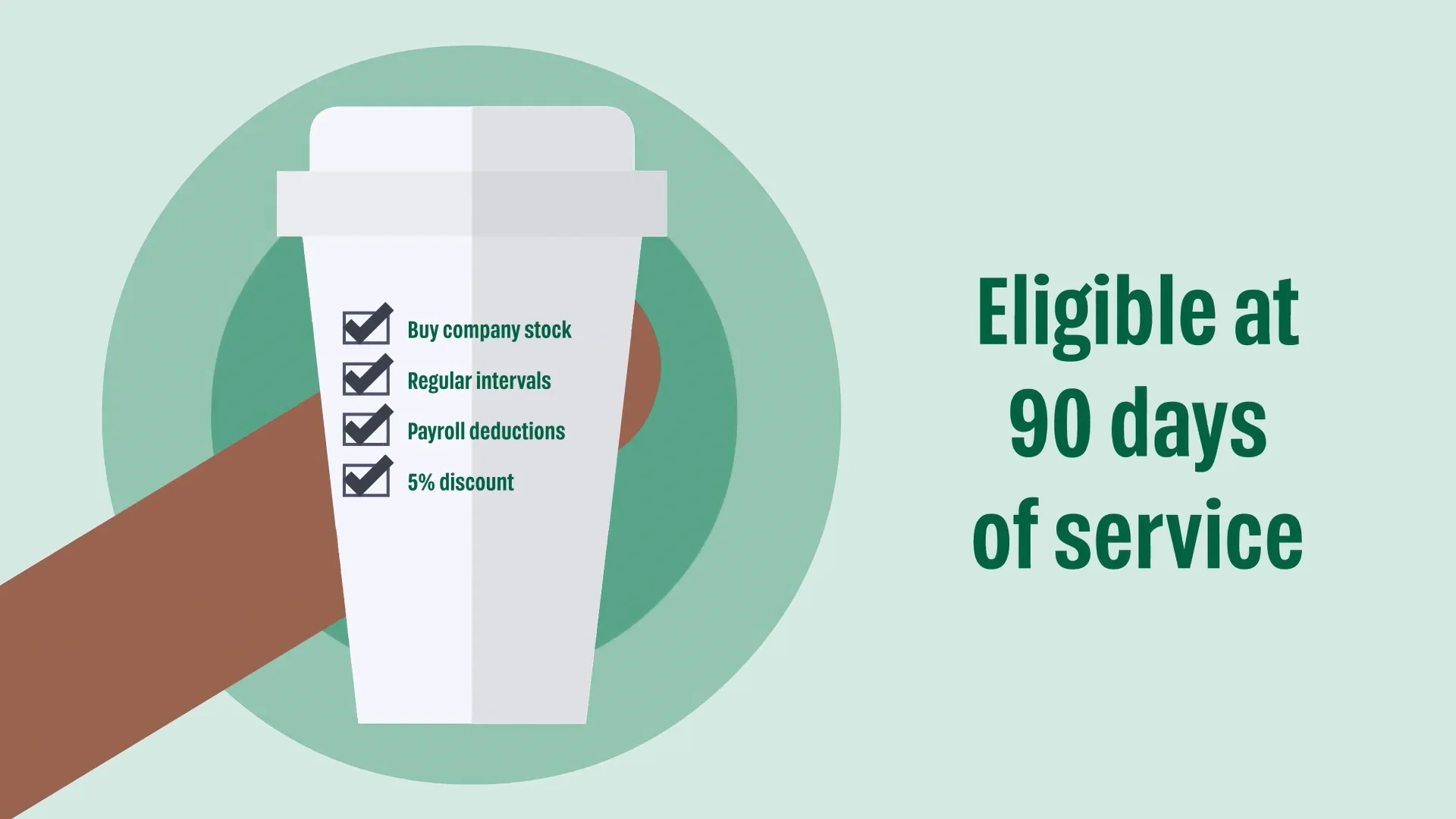
The 90-day mark is where the retirement and investing side opens up. Starbucks says the Future Roast 401(k) Savings Plan requires a partner to be at least 18 and to have 90 days of employment, while the Stock Investment Plan becomes available after 90 days. Bean Stock follows a different timeline entirely: the company says it is typically available for a November grant if the partner is employed by May 1 and has no break in service between May 1 and the grant date.
That is where partners most often get tripped up. A new hire can have access to immediate savings on food and coffee, but still be waiting on the stock and retirement pieces that matter for long-term security. If you are planning around a grant cycle, a tuition benefit, or retirement contributions, the fine print matters as much as the headline.
How to think about your first 30, 60, and 90 days
The first month is about using what starts right away and tracking your hours. If you are working toward healthcare and related benefits, the schedule matters as much as the badge scan, because Starbucks ties those benefits to an average of 20 hours per week. The safest move in those first 30 days is to treat the eligibility page like a checklist, not a slogan.
By day 60, the focus should shift from onboarding to pattern recognition. This is when partners start to see whether they are really holding enough hours to stay eligible, whether store coverage is stable enough to support that average, and whether benefits like sick time, commuter help, and backup care are making the job more manageable. For newer partners, this is also when the company’s education and mental health offerings can start to matter in a very real way, especially if work is being balanced with school or caregiving.
At day 90, the benefits picture changes. That is when the Future Roast 401(k) Savings Plan becomes available for eligible partners who are at least 18, and when the Stock Investment Plan opens up. If you started in the right window, Bean Stock may also be on the horizon, but only if you stay employed through the May 1 rule that determines the November grant cycle.
A useful way to read the timeline is this: day one covers relief, 90 days covers wealth-building, and the months in between decide whether you can hold onto either. For Starbucks workers who are trying to decide whether the job is temporary or worth building around, that distinction is the whole story.
Why this still matters in Starbucks’s labor fight
Starbucks has built its brand around benefits for decades, and that history is part of why the company keeps leaning on them in public. In 1988, Starbucks says it became the first major retailer to offer health benefits to eligible full- and part-time employees. In 1991, it introduced Bean Stock and says it became the first privately owned U.S. company to offer a stock option program to all eligible employees, including part-timers.
The company says the original Bean Stock program enrolled about 700 people from roughly 100 stores in the United States and Canada, which shows how small the program was at the start and how central it became to the Starbucks identity. That legacy still shapes how partners hear the company talk about itself today: benefits are not just compensation, they are part of the corporate brand.
But the labor conversation has moved well beyond the benefits page. Starbucks Workers United has continued pressing the company on bargaining, staffing, higher pay, and broader labor issues, and reporting in late 2023 highlighted union criticism over vacation accrual changes affecting unionized stores. That tension is why the eligibility chart matters so much: a strong benefits package can still leave workers angry about schedules, staffing levels, and the pace of contract bargaining.
For partners, the takeaway is practical. Starbucks does have a meaningful menu of benefits, and some of them start immediately. But the value of the package depends on hours, tenure, and timing, which means the first 30, 60, and 90 days are not just a probationary blur. They are the window that decides which parts of the job are real on paper and which ones you still have to earn.
This article was produced by Prism’s automated news system from verified source data, official records, and press releases, then run through automated quality and moderation checks before publishing. The system is built and supervised by the people who set the standards it runs under. Read our full AI policy.
Did this article answer your question?