Starbucks says dress code violations can block shifts, trigger discipline
Starbucks can send partners home for dress code violations, and the policy now sits at the center of a labor fight over fairness and who pays for uniform changes.
What the dress code really does on a Starbucks shift
Starbucks is treating dress code as a line you either clear or you do not. Under the company’s U.S. guide, partners who show up in violation of the dress code are not permitted to start their shifts, and failure to follow the policy can lead to corrective action, including separation from employment. That makes this more than a style rule. In a store where every opening minute matters, the policy can decide whether you clock in, get sent home, or walk into a discipline conversation before you have poured a first cup.
For baristas and shift supervisors, the practical meaning is simple: the dress code is enforced at the door to the shift, not just as a general expectation. Starbucks also puts the judgment call squarely with the store manager, who decides what meets the dress code. That gives managers broad discretion, which is exactly where appearance rules can turn into a fairness issue if one store is strict and another lets small violations slide.
How Starbucks says the policy should work
Starbucks’ dress-code materials say partners are expected to follow the guidelines while on shift, and the company ties the standard to food-service safety, professionalism, and the consistency of the coffeehouse experience. In Canada, the guide goes further, saying clothing and accessories should allow freedom of movement for safety and be appropriate for food services. The underlying message is that the company wants clothing that works on a busy café floor, not just clothing that looks on-brand in a photo.
The enforcement structure matters just as much as the appearance rules. When the store manager is the one deciding what qualifies, the same outfit can be accepted in one location and rejected in another. For workers, that means the dress code is not only about reading the policy, it is about knowing how a specific store applies it, because the consequence can be immediate: no shift, no hours, and a mark that can lead to discipline later.
Why Starbucks tightened the look
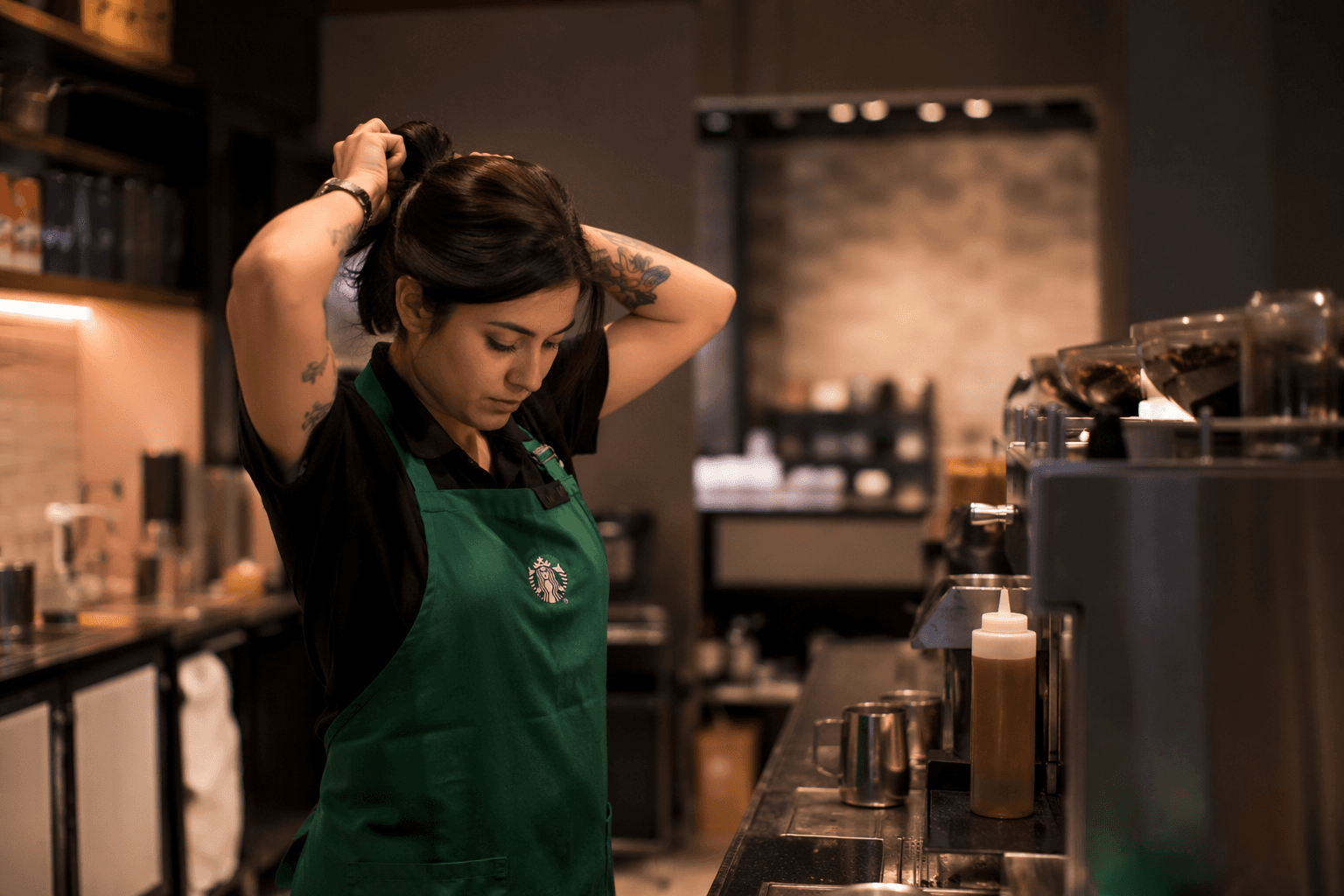
The 2025 update narrowed the uniform options. Starting May 12, 2025, employees at company-operated and licensed U.S. stores were required to wear a solid black shirt and khaki, black, or blue denim bottoms. Starbucks said the simplified color options highlight the green apron and create a sense of familiarity for customers across North America, while also giving partners clearer guidance so they can focus on crafting beverages and connecting with customers.
That branding message is not separate from operations. Starbucks tied the change to a broader effort to create a more consistent coffeehouse experience, and its launch materials connected the uniform shift to reduced wait times, improved quality and consistency, and a renewed emphasis on the company’s identity as a coffee business. In other words, the company is using dress code as part of a larger reset: fewer visual variables, fewer morning arguments over what counts, and more control over how stores look and feel from one location to the next.
For employees, the day-to-day impact is less abstract. Simpler rules can make it easier to get ready for work, but they also leave less room for personal expression. If a manager decides a shirt or pair of pants does not fit the standard, the worker can be stopped before the shift even begins. That is where a uniform policy becomes a power issue, because the person deciding the rule is the same person deciding whether you get on the floor.
Where the labor fight enters the picture
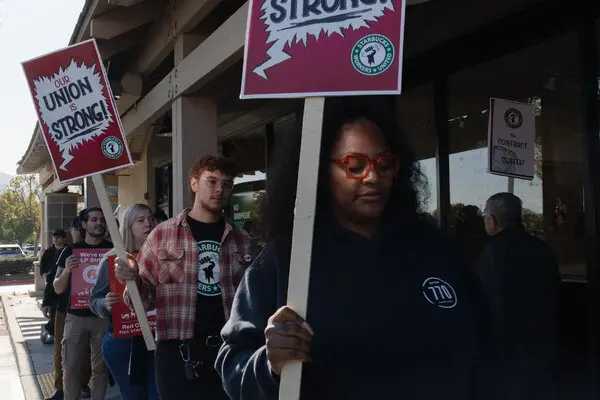
The dress code did not land quietly. Starbucks Workers United said the change sparked a strike at 75 U.S. stores on May 14, 2025, with more than 1,000 workers protesting the new policy. NBC News and the Associated Press later reported the action had grown to more than 2,000 baristas at 120 U.S. stores. That reaction turned a uniform rule into a labor-relations flashpoint, with workers treating the new dress code as part of the broader struggle over how much control Starbucks has over the job.
The fight did not stop at the store door. In September 2025, Starbucks workers in three states sued over the company’s refusal to reimburse employees for clothes required under the new dress code. That lawsuit pushed the issue beyond appearance and into cost. If a company changes the required uniform, workers are left asking who absorbs the expense, especially when the policy is mandatory and enforced before the shift can even start.
What this means on the floor
The most important thing for Starbucks workers to understand is that the dress code has three separate pieces: the look itself, the manager’s judgment, and the consequences. The look is relatively straightforward under the 2025 rule. The judgment is not, because store managers decide what meets the standard. The consequences are serious, because a violation can keep a partner from starting the shift and can also lead to corrective action, including separation from employment.
That is why this policy matters to baristas, shift supervisors, and store managers alike. A dress code that is framed as consistency can still be enforced unevenly, and uneven enforcement is where resentment grows. One store may treat a missing color or a wrong fabric as a quick correction; another may treat it as a send-home offense. For workers already watching scheduling, hours, and labor relations closely, that kind of discretion can feel less like order and more like another lever of control.
The bigger Starbucks pattern
The dress code also fits into Starbucks’ broader Green Apron Service rollout. The company piloted the program in 1,500 stores and then launched it across company-owned and operated coffeehouses nationwide. That rollout reinforces the same theme running through the clothing policy: Starbucks wants more consistency, more predictable service, and a tighter link between what partners wear and how the brand presents itself.
For workers, the takeaway is plain. Starbucks is not treating appearance as a side issue. It is using dress code to shape the floor, the customer experience, and management authority all at once. That is why the rule matters so much: it can determine whether a partner starts a shift, how a manager exercises power, and whether a brand message becomes a workplace standard with real consequences.
This article was produced by Prism’s automated news system from verified source data, official records, and press releases, then run through automated quality and moderation checks before publishing. The system is built and supervised by the people who set the standards it runs under. Read our full AI policy.
Did this article answer your question?