Starbucks spotlights internal promotion as it refocuses on coffeehouse leadership
Starbucks is telling workers the path up runs through coaching, customer recovery and store-level labor management, not just speed at the bar.
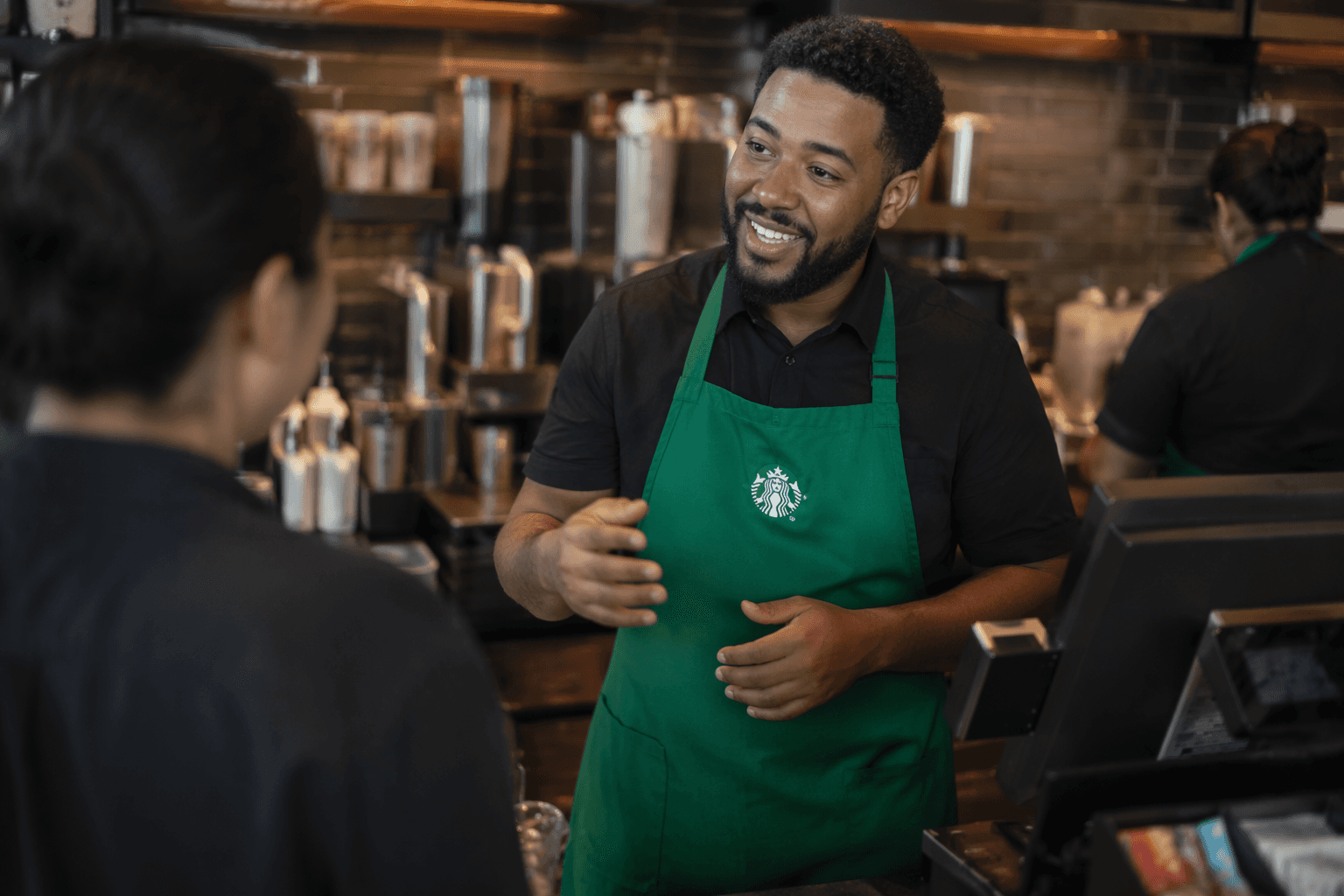
Starbucks is putting its internal-promotion story front and center as it tries to define what “coffeehouse leadership” actually means inside the store. The company says it is committed to filling 90% of its retail leader roles internally, and says about 60% of store managers in the U.S. and Canada started as baristas. For ambitious workers, that turns the ladder into something more concrete than branding: Starbucks wants to signal that a barista can still climb into management if the person can coach people, steady service and keep a floor moving.
That message fits Brian Niccol’s broader effort to push the company “back to Starbucks,” with more focus on coffee, craft and customer connection. Starbucks said its June 2025 Leadership Experience in Las Vegas drew more than 14,000 coffeehouse leaders, its largest leadership gathering ever. The point was not just inspiration. It was a public reset around the idea that the next generation of store leaders should be built from inside the company, not imported from outside retail or food service.
The company has also started putting numbers behind the job. Starbucks said coffeehouse leaders typically oversee multi-million-dollar businesses and manage teams of about 18 partners on average. It piloted a dedicated coffeehouse coach role in California, Illinois and Texas, and said 62 partners stepped into those full-time jobs, with 90% hired internally. Starbucks later framed that pilot as part of a larger move to add at least one assistant store manager to nearly all coffeehouses across North America. In plain terms, the company is trying to build a layer of management that can absorb the daily chaos that comes with drive-thru, mobile and in-store traffic.
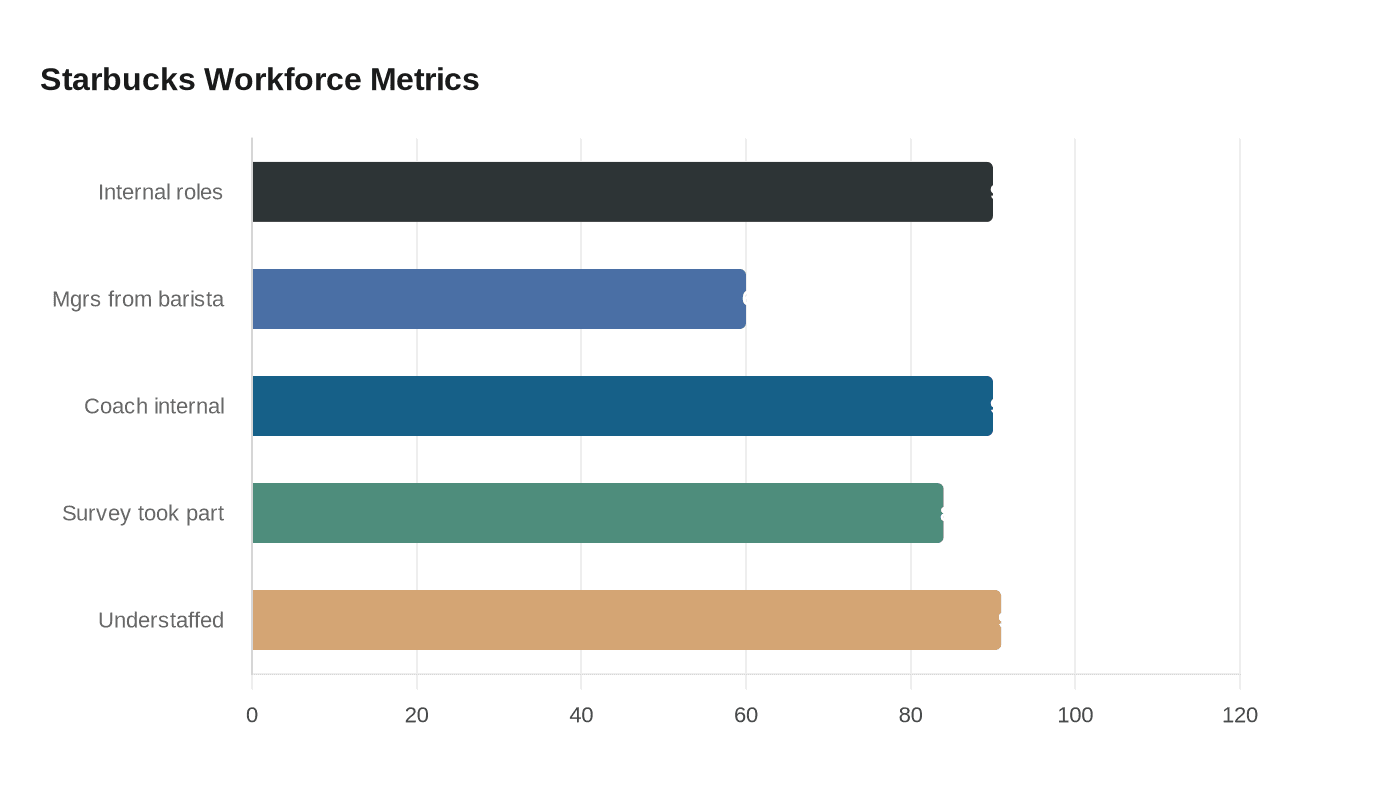
That is where the corporate language meets the realities of the floor. Starbucks says the leadership path includes developmental support, partner networks, Coffee Master opportunities and the Origin Experience, but the company is also asking leaders to do the unglamorous work: service recovery, staffing rhythm, coaching new partners and keeping a store stable when the rush hits. In its FY2024 impact tables, Starbucks reported 2,275 internal hires for U.S. retail leadership roles. It also said 84% of baristas and coffeehouse leaders, more than 160,000 partners, took part in its most recent U.S. partner survey, suggesting it is leaning hard on employee feedback while it redesigns the job.
The tension is that all of this sits beside a hard store-level strain. A 2025 worker report found 91% of respondents had experienced understaffing in the previous three months. That gap, between the polished language of belonging and the pressure of too few hands on the floor, is what Starbucks managers and aspiring managers are really navigating now.
This article was produced by Prism’s automated news system from verified source data, official records, and press releases, then run through automated quality and moderation checks before publishing. The system is built and supervised by the people who set the standards it runs under. Read our full AI policy.
Did this article answer your question?