Starbucks stores now juggle three restaurants at once, workers say
Starbucks stores are running like three restaurants at once, and the strain shows up in staffing, sequencing, and wait times even when the lobby looks light.

The calm lobby can be misleading
A Starbucks store can look manageable from the front door and still be running at full tilt. Workers say that is because the same team and the same equipment are now serving multiple businesses at once: in-store register orders, drive-thru traffic, mobile pickups, and third-party delivery. The result is a hidden queue that changes how every shift feels, because the pressure is not just how many customers are visible, but how many orders are landing on the same espresso bar at the same time.
That is the core workplace insight here. A barista may see only a handful of customers in line, while mobile orders keep arriving, the drive-thru keeps moving, and delivery tickets keep printing. One barista captured the staffing problem plainly, saying what would really make connection easier is “more workers on the floor.”
Why the workload feels so uneven
The operational challenge is not simply volume. It is layering. Today, a single Starbucks store can receive orders from the register, the drive-thru window, the Starbucks mobile app, and at least two third-party delivery platforms. That creates parallel production streams, all competing for the same handoff counter, the same sequencing logic, and the same labor pool.
For baristas and shift supervisors, that means the hardest part of the shift is often not one rush, but the overlap between several rushes. A calm café can hide a much hotter back-of-house reality, especially when mobile orders arrive faster than customers can physically reach the store. Starbucks itself has acknowledged that this can create a counter bottleneck, which is exactly the kind of jam workers feel when the machine, not the lobby, is where the line actually lives.
The company is chasing speed, not just volume
Starbucks leadership has framed the problem as one of service time and order sequencing as much as raw labor. In January 2025, Brian Niccol said the company was piloting an in-store prioritization algorithm at three stores and aiming to complete in-person orders within four minutes, with mobile orders done in 12 to 15 minutes at the latest. That target tells you how the company now sees the floor: not as one line, but as several timing systems running simultaneously.
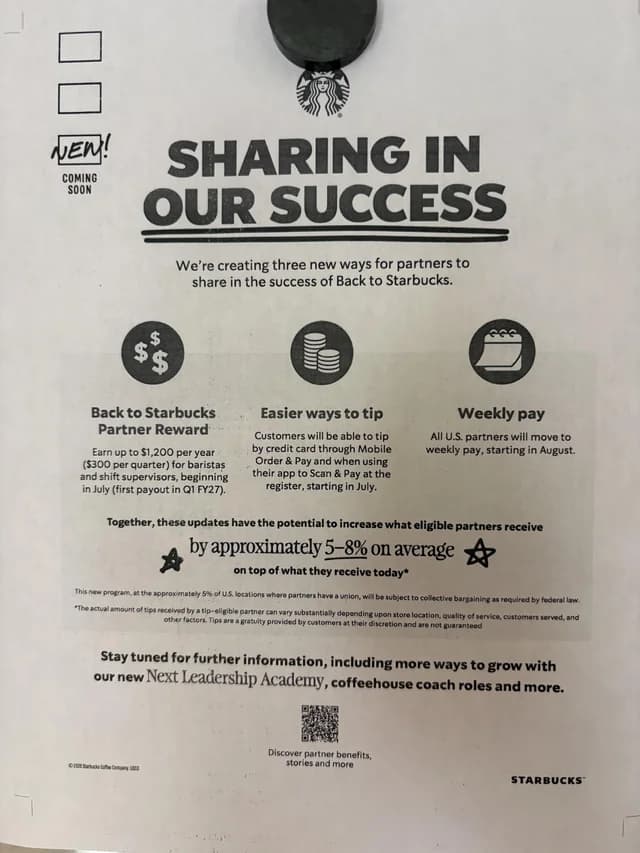
The company has also said it is increasing staffing and working on staffing, scheduling, and technology at the same time. Starbucks reported that it added more than 500,000 shifts year over year through its Shift Marketplace tool, which lets partners post, swap, and claim shifts across stores in their district. On paper, that sounds like a meaningful lift in flexibility. On the floor, it also underscores how dependent the operation has become on shift coverage just to keep multiple demand streams moving.
The Siren System did not solve the sequencing problem
Starbucks began rolling out its Siren System in 2022 to speed drink-making, but by 2025 executives were signaling that the bigger problem was not only equipment capacity. It was order sequencing and the way demand from different channels lands at the same time. That distinction matters to workers, because it explains why a store can have functioning machines, enough ingredients, and still feel overwhelmed.
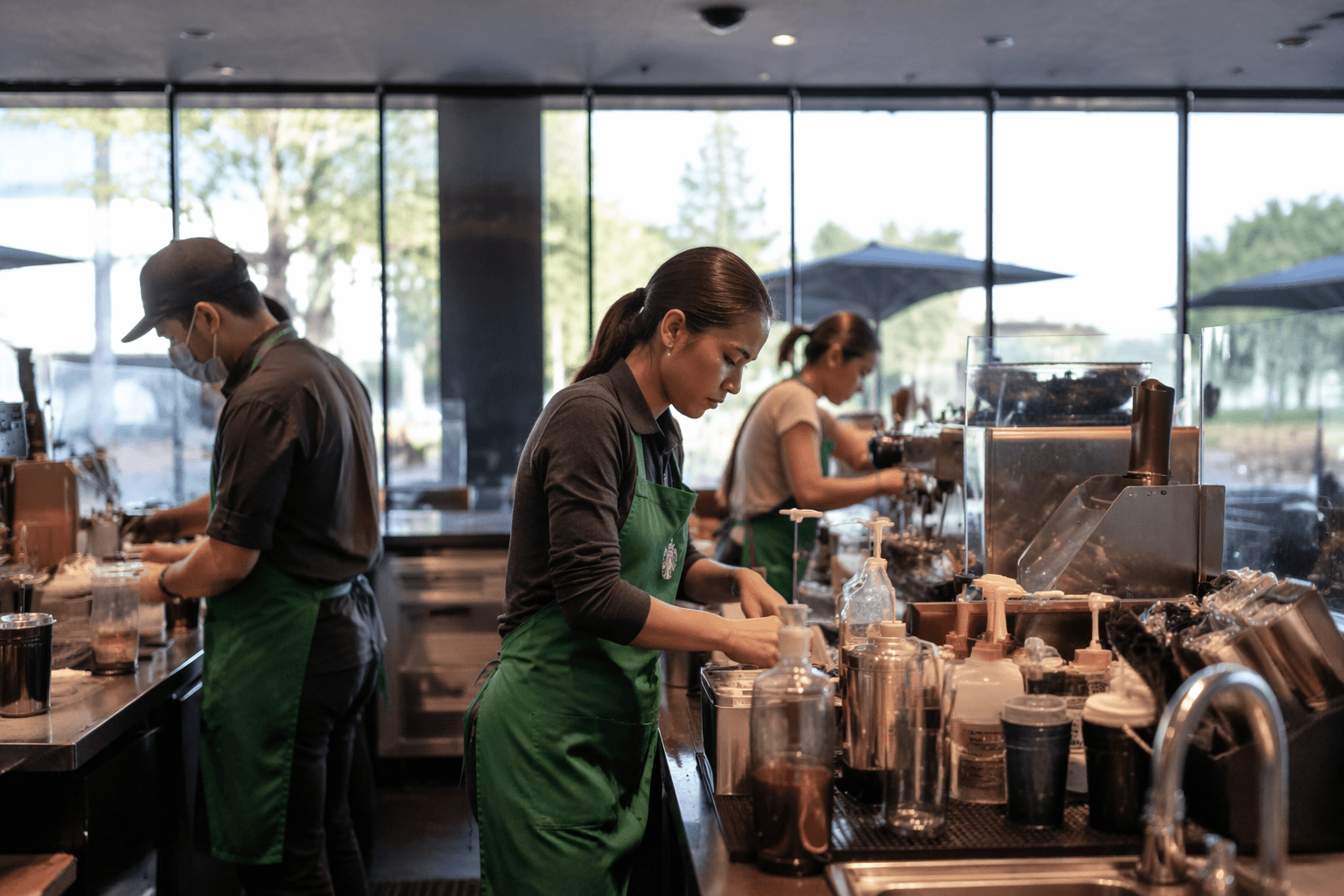
In other words, the bottleneck has moved. The challenge is less about whether the store can make drinks and more about whether the team can decide which order to make first, which customer to hand off to next, and which lane is about to surge. For a shift supervisor, that means constant triage. For baristas, it means the pace of work can swing hard without the lobby ever looking packed.
The broader business backdrop is still under pressure
Starbucks ended fiscal 2025 with 40,990 stores globally, including 16,864 in the U.S. It also recorded 107 net store closures in the quarter and 627 closures tied to a restructuring plan announced on September 25, 2025. Even with that footprint, the company said U.S. and North America comparable store sales were flat in the fourth quarter, while global comparable store sales rose 1%.
The portfolio is still heavily concentrated in two markets. At the end of the quarter, stores in the U.S. and China made up 61% of Starbucks’ global footprint, with 16,864 stores in the U.S. and 8,011 in China. That scale helps explain why workflow changes in U.S. stores matter so much: when one store is trying to absorb multiple channels without obvious staffing relief, the effect is multiplied across a massive system.
What workers say the labor issue really is
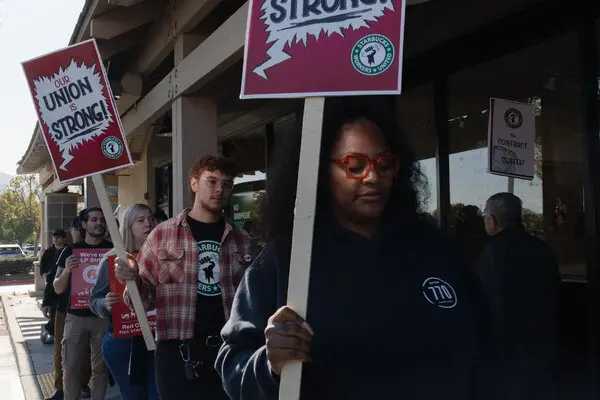
For Starbucks Workers United, staffing is not a side issue. The union has repeatedly argued that understaffing drives longer waits as orders pile up from multiple channels, and that workers need better hours. More than 1,000 unionized baristas in over 40 U.S. cities launched an open-ended strike on November 13, 2025, on Red Cup Day, with pay and staffing among the main issues.
Starbucks, for its part, says it offers strong pay and benefits and has argued that Workers United represents only a small share of its U.S. partners. The company has also urged the union to return to bargaining. That divide matters because the store-level workflow problem is not separate from the labor conflict. When a store is run like three restaurants at once, the questions of how many people are scheduled, who gets hours, and how much pressure falls on each shift become bargaining issues as much as operational ones.
What this means on the floor
For a barista, the practical lesson is that workload is now defined by channel overlap, not just customer count. For a shift supervisor, the job is increasingly about sequencing, not only delegation. For a store manager, staffing decisions are now inseparable from the way the café, drive-thru, app, and delivery orders collide across a single shift.
That is why Starbucks can report turnaround progress and still leave workers feeling squeezed. The company has more than one levers to pull now, but the floor still has to absorb every order stream at once. Until staffing, scheduling, and order prioritization line up with that reality, the store will keep functioning like multiple restaurants packed into one.
This article was produced by Prism’s automated news system from verified source data, official records, and press releases, then run through automated quality and moderation checks before publishing. The system is built and supervised by the people who set the standards it runs under. Read our full AI policy.
Did this article answer your question?