Starbucks ties store redesign and labor planning to ease peak chaos
Starbucks is redesigning the bar and its labor forecasting together, aiming to cut rush bottlenecks. The test is whether that eases backlogs or just repackages the same pressure.
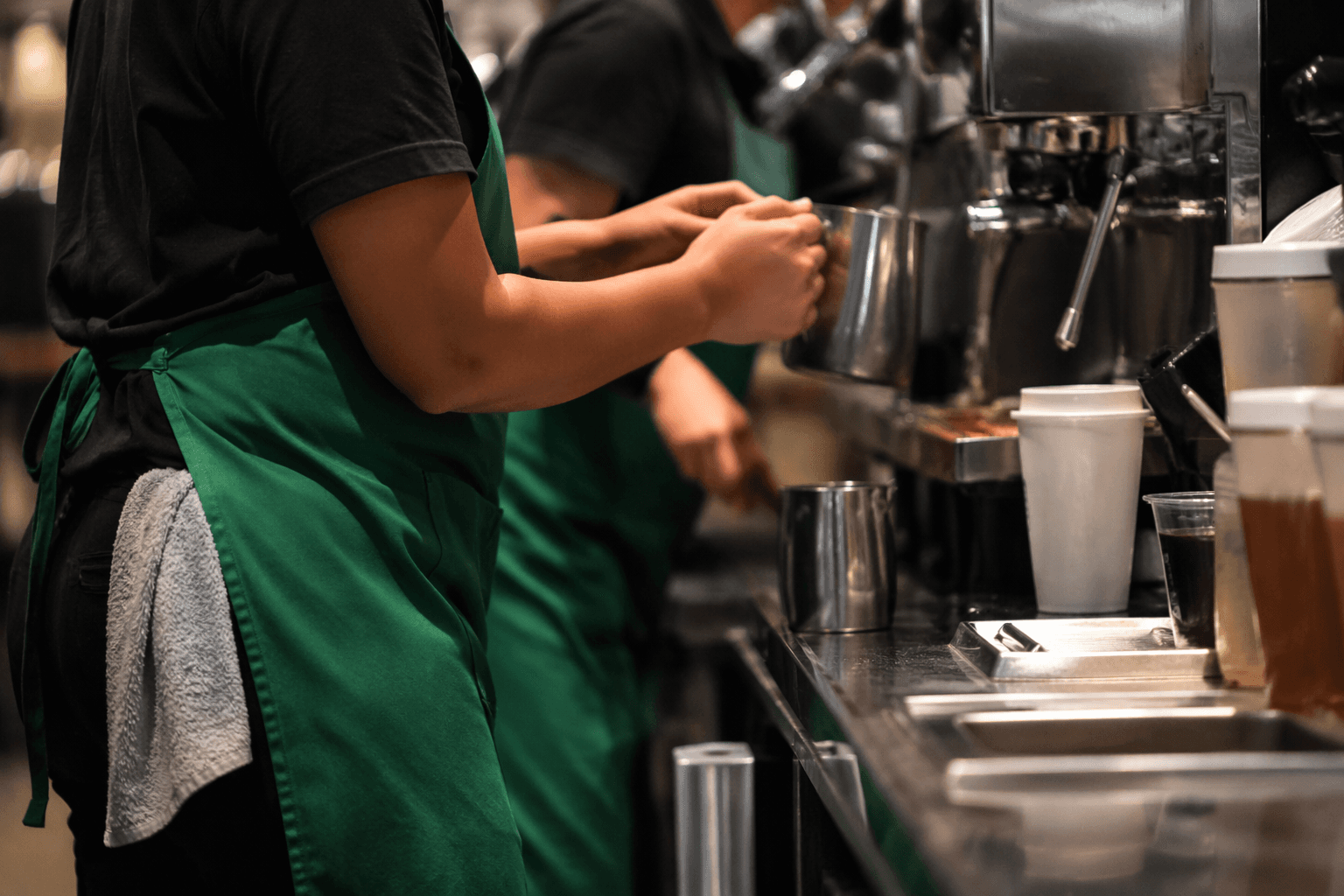
In Starbucks’ Plano, Texas pilot store, customers rarely crowded the mobile order and pickup counter, even at busy times. Siren Craft System changes how drinks are sequenced, how partners move through beverage routines, and where new roles fit into the shift, while the company’s scheduling update tries to predict labor needs in 15-minute blocks. For baristas, shift supervisors, and store managers, the central question is still the same: does it make peak more manageable, or does it just organize the same pressure in a cleaner way?
What Siren Craft System changes on the floor
Siren Craft System began in 2023, when partners tested changes and gave feedback on what would matter most. Starbucks calls it a partner-driven evolution of store operations, built on the equipment-focused Siren System and expanded with changes to beverage sequencing, beverage routines, new positions, and digital tools.
In Plano, the drive-thru ran smoothly. That is the operational target in plain terms: fewer pileups at the handoff point, less bottle-necking at cold bar, and fewer moments when baristas have to stop one drink to rescue another part of the line.
Starbucks has tied the rollout to a new Peak Play Caller role and to streamlined beverage steps, changing the bar layout and drink flow while assigning someone to help direct the rush.
How labor planning matches the redesign
The other half of the story is scheduling. Starbucks uses historical trends, current trends, planned promotions, and product mix to forecast labor needs. It projects expected transactions in 15-minute increments, then builds schedules three weeks in advance around store needs and partner preferences.
That is a more precise model than simply staffing to a daypart average. If the forecast is right, a store manager should have a better shot at lining up enough coverage for the exact windows when mobile orders spike, drive-thru traffic stacks up, or the cold bar gets buried. If the forecast is wrong, the system just creates a more detailed version of the same shortage.
The redesign and the scheduling update are meant to work together. Siren Craft System aligns the bar, the drive-thru, and the schedule so that the busiest 15-minute stretch does not turn into a 45-minute backlog.
What Starbucks has seen so far
Starbucks has linked the system to reduced customer wait times, improved drive-thru times, and higher customer satisfaction. By July 1, 2024, more than 10% of Starbucks’ roughly 10,000 stores had implemented Siren Craft System, and Starbucks said it would be in use across North America by the end of July 2024.
It was moving fast across a massive U.S. and Canada footprint, and the test was whether the change would hold up in stores with different volumes, labor patterns, and layouts.
The rollout also landed in the middle of a rough business stretch. In April 2024, Starbucks reported U.S. same-store sales down 3 percent, traffic down 7 percent, and incomplete mobile orders in the mid-teens. That combination put the company under pressure to improve throughput quickly, especially in parts of the business where customers notice missed orders, slow handoffs, and crowded pickup zones immediately.
Starbucks has to find those gains inside small kitchen footprints. The company cannot simply expand every back counter or rebuild every cafe, so the savings have to come from sequencing, staffing, and the way each partner moves through the rush.
What workers should watch during a peak shift
On the floor, the practical question is whether the redesign actually changes the work or just changes the script. A barista will know the answer fastest in the first 20 minutes of a rush, when the mobile shelf, the drive-thru screen, and the cafe line all compete for attention.
- Does the mobile pickup area stay clear when orders spike, or does the counter still clog up?
- Does the Peak Play Caller role genuinely reduce handoff friction, or does it add one more layer of direction without extra help?
- Do the beverage routines make it easier to keep the bar moving, or do they simply standardize the same pace under a tighter clock?
- Do schedules set three weeks out actually line up with the promotions and product mix that hit the store, or do partners still get pulled into coverage gaps?
Why the labor backdrop still shadows the rollout
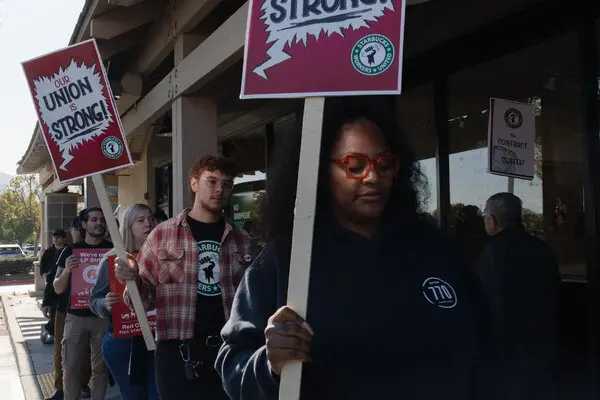
The company is making these changes against a tense bargaining and organizing backdrop. Workers United and Starbucks agreed in February 2024 to create a framework for organizing and collective bargaining. In December 2024, union baristas walked out at more than 300 stores over pay, staffing and scheduling, and in November 2025 more than 1,000 unionized Starbucks employees launched an open-ended strike.
If a store is chronically short on coverage, a faster drink sequence can only do so much. If schedules are set three weeks ahead but the floor still feels thin at peak, partners will see the redesign as a productivity push, not relief.
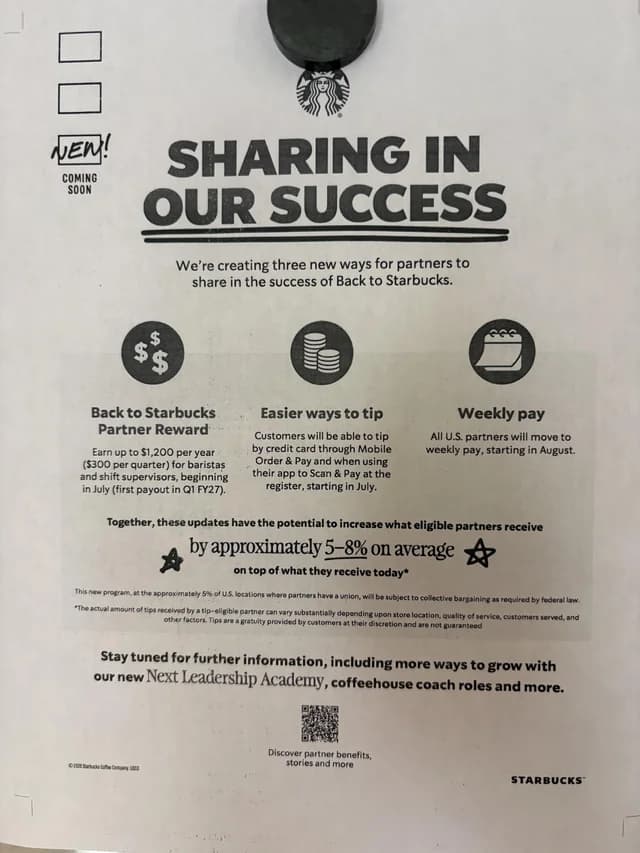
Starbucks later folded the effort into its broader “Back to Starbucks” reset, alongside partner staffing changes and new leadership roles. By then, Starbucks told investors that operational improvements were helping drive stronger customer flow and faster cafe orders.
This article was produced by Prism’s automated news system from verified source data, official records, and press releases, then run through automated quality and moderation checks before publishing. The system is built and supervised by the people who set the standards it runs under. Read our full AI policy.
Did this article answer your question?