Starbucks workers in Chile win national contract, a model for U.S. unions
Chile shows Starbucks workers in the U.S. what a national contract can do: steadier scheduling, stronger tipping rules and more leverage than store-by-store bargaining.
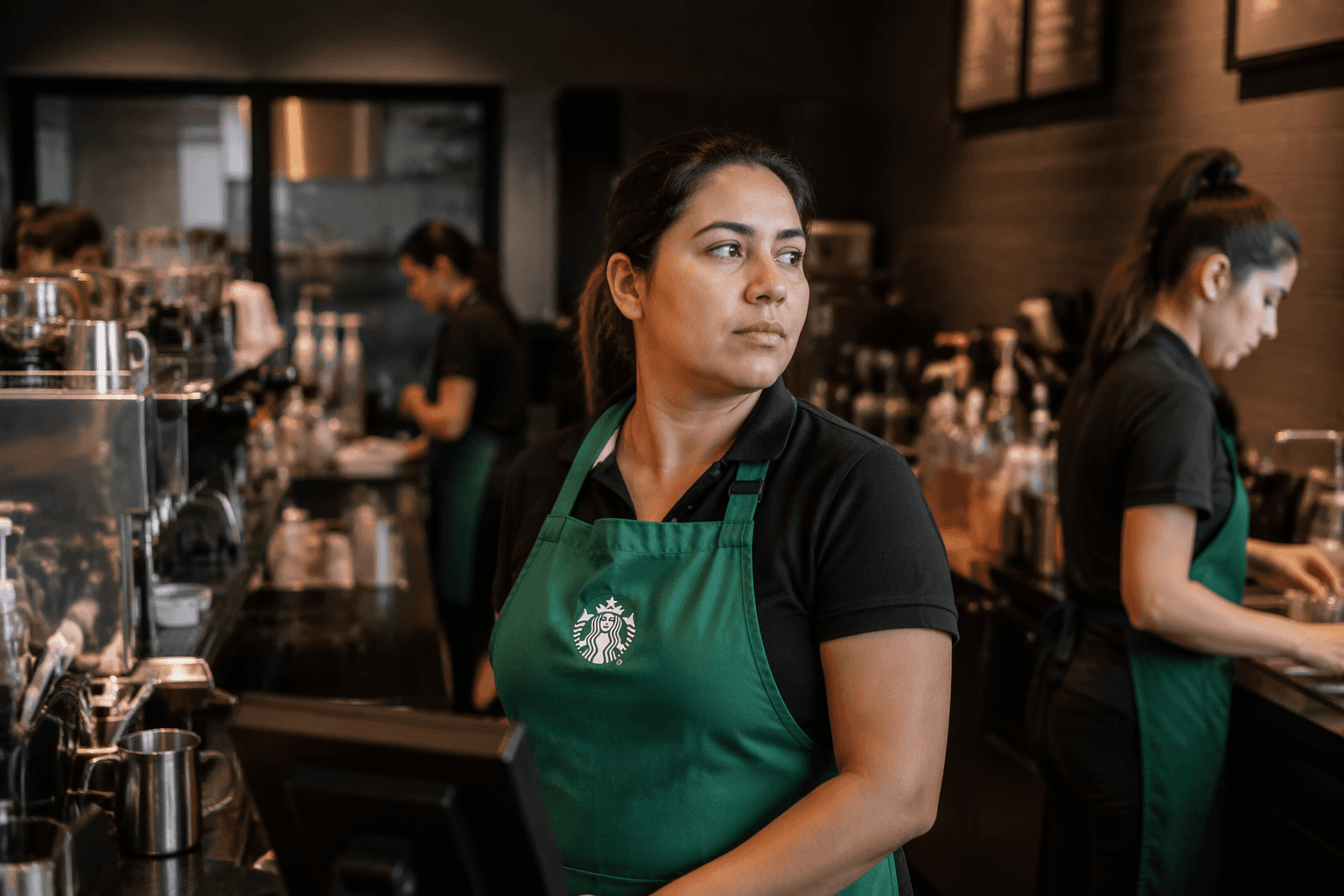
Starbucks workers in Chile already have something most U.S. baristas can only win store by store: a national contract. That changes the basic math of bargaining, because workers are not starting over every time they cross a district line or a state border. For U.S. Starbucks Workers United members, the Chile example is useful precisely because it makes the missing pieces visible, from scheduling and pay floors to grievance handling and tipping.
Why Chile is the sharpest comparison
The biggest difference is structure. In Chile, workers at Starbucks negotiate across the company’s national footprint, while in the United States the union has had to organize location by location and then push for standards that still vary widely by store, district and state. That fragmented setup makes it harder to lock in one rule that applies everywhere, especially on issues that baristas feel immediately: hours, coverage, tip distribution and the predictability of shifts.
Starbucks Workers United said it had reached a 400-store, 10,000-worker milestone with a Miami win, a reminder of how dispersed the U.S. campaign remains. That scale is real, but it is still not the same thing as bargaining one contract that covers the whole system. The Chile model shows how much leverage changes when workers can speak with one voice across an entire country rather than fighting the same battle in hundreds of separate stores.
What a national contract changes on the floor
A national contract is not just a legal abstraction. It can standardize the terms that matter most to the people actually pulling shots, warming sandwiches and cleaning up the mobile-order rush.
For Starbucks workers, the most practical differences are easy to name:
- More predictable wage structures, so pay is not reinvented store by store
- Clearer leave provisions, which matter when staffing is thin and a call-out can ripple through a whole shift
- More consistent scheduling rules, which is a major issue in a business built on variable demand and labor-light labor plans
- Stronger tipping systems, including how tips are collected and distributed
- A formal grievance process, so disputes do not depend on which manager is on duty
That kind of consistency matters because Starbucks runs on systems, not just individual stores. Mobile orders, drive-thru timing, cold-bar bottlenecks and peak-hour labor all depend on whether a store has enough hands at the right moments. A national contract gives workers a way to push those terms together, instead of asking each store to win them alone.
What Chile workers actually won
Chilean Starbucks workers did not get there by waiting for management to hand them a template. They struck for 25 days in 2025 and then secured their second contract from Alsea, the company that operates Starbucks in Chile. That matters because it shows the contract is not a one-off victory that can be filed away and forgotten. It is part of an ongoing bargaining relationship, and the second agreement came only after workers used collective pressure to force movement.
They also won electronic tipping through organizing. For U.S. Starbucks workers, that detail should land immediately. Starbucks has built a labor model around technology-driven ordering, and the way money moves through the store is a real workplace issue, not a side topic. When a company leans on app orders, drive-thru throughput and digital payment systems, workers have every reason to care about whether tipping is transparent, reliable and built into the store’s actual workflow.
The strike is the lesson, not just the contract
The 25-day strike is the most practical part of the Chile story for U.S. workers trying to understand leverage. It shows that a contract usually comes after sustained pressure, not after one organizing high point or one successful election. Workers in Chile did not simply win recognition and wait for management to decide the rest; they kept pushing until the company negotiated terms that reflected what they wanted.
That persistence also fits the broader Chilean labor context. In 2022, Starbucks union members there were active in wider political struggles, including support for a more democratic constitution to replace the dictatorship-era one. That does not mean U.S. Starbucks workers need the same political terrain to learn from Chile. It does mean the union has operated as part of a larger movement, not as an isolated workplace campaign.
For U.S. partners, the takeaway is straightforward: if the goal is more than one-off fixes, the organizing has to be durable enough to outlast a single round of store pressure. One store can win a scheduling improvement; a national structure is what makes that improvement harder for the company to undo somewhere else.
Why this is rare at Starbucks
The Chile contract stands out globally because Starbucks has signed union contracts almost nowhere else in the world. That makes Chile an exception worth studying, not a template the company has already accepted in most markets. In practice, it means U.S. workers are not looking at a common Starbucks labor system they can point to and copy. They are looking at one of the rare places where workers forced a different result.
That rarity is exactly why the Chile example is useful for baristas, shift supervisors and store managers in the United States. It shows that the company can operate under a broader bargaining model, even if it has mostly resisted that model elsewhere. It also shows the tradeoff on the ground: national bargaining can reduce confusion at the store level because the rules are set centrally instead of improvised locally.
What U.S. Starbucks workers can take from it now
The Chile case is most useful when it is translated into concrete expectations for U.S. stores. If workers want less chaos around hours, stronger tipping rules and a fairer grievance process, they need a bargaining strategy that reaches beyond any single storefront. That is the central lesson of the Chile contract: the more unified the bargaining unit, the more likely the standards are to hold across the system.
For managers and supervisors, the lesson is different but related. A national contract would not eliminate conflict, but it would replace a lot of ad hoc decision-making with rules everyone can see. In a company where labor pressure already shows up in labor shortages, customer volume spikes and constant order-management pressure, that kind of consistency is not cosmetic. It is the difference between a store that improvises every dispute and one that has a framework for settling them.
This article was produced by Prism’s automated news system from verified source data, official records, and press releases, then run through automated quality and moderation checks before publishing. The system is built and supervised by the people who set the standards it runs under. Read our full AI policy.
Did this article answer your question?