AI search could reshape Taco Bell orders, store traffic, execution pressure
AI search could steer more Taco Bell orders through a few digital gateways, putting store accuracy, hours, and drive-thru execution directly under pressure.
Discovery is becoming a store-floor issue
A lunch campaign that generated 108% GMV growth and 84.4 million impressions is a good reminder that visibility is no longer just a marketing metric at Taco Bell. If diners increasingly find restaurants through AI assistants, maps, and delivery apps, then where Taco Bell shows up first can affect what lands in the kitchen, how fast it has to move, and which parts of the day get squeezed hardest.
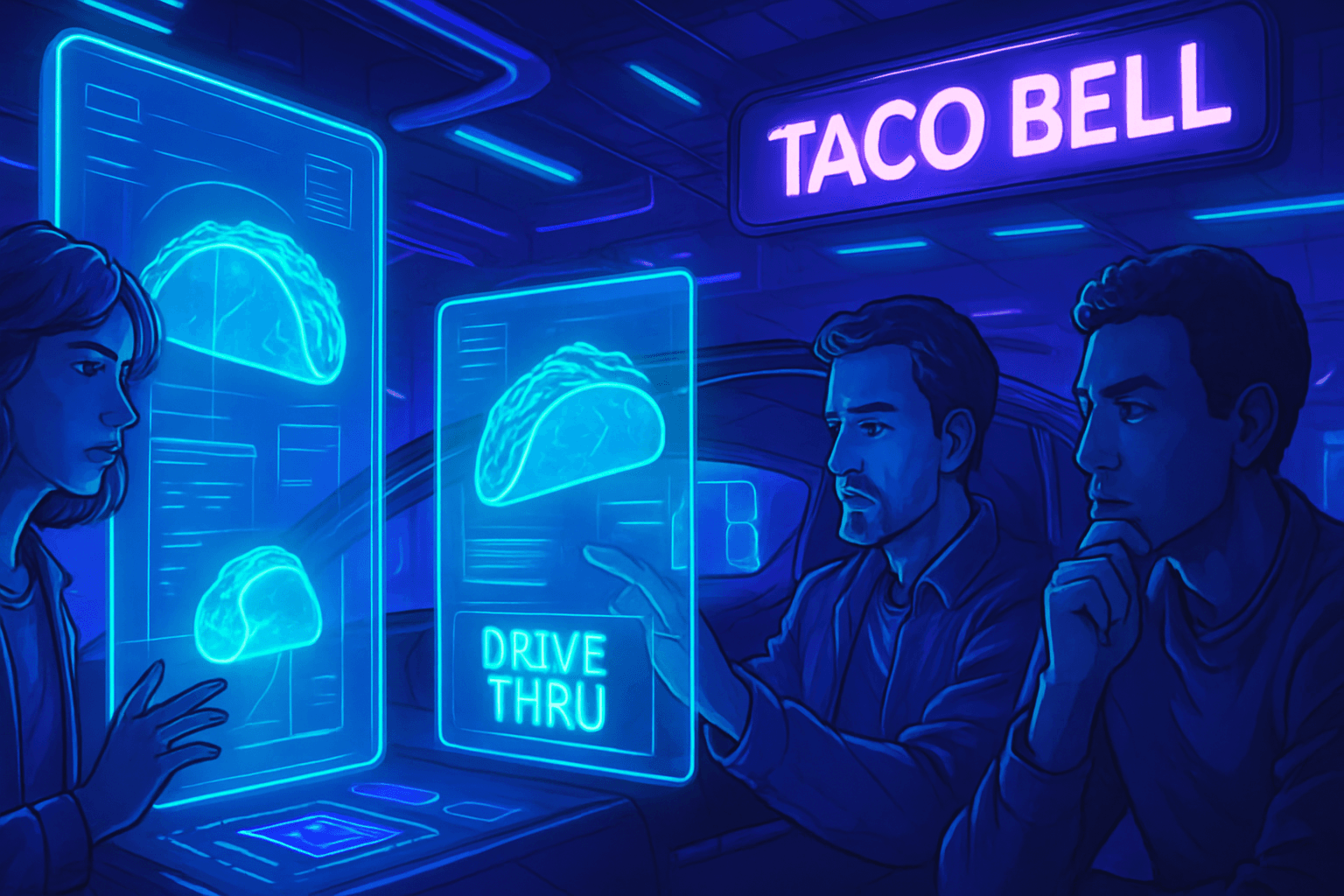
That matters because discovery is shifting from a simple search problem to a workflow problem. If a customer asks one assistant where to eat, taps one app for ordering, and expects the whole experience to be seamless, then menu clarity, current hours, service settings, and order reliability become part of store performance. A restaurant that is easy to find but hard to fulfill will lose business faster, and the pressure lands on the crew trying to turn digital promises into completed orders.
Taco Bell is already built for this fight
Taco Bell is not starting from a low-digital base. The company says it was the first quick-service chain to launch a mobile app in its U.S. restaurants for both drive-thru and dining orders. Rewards members can earn points and redeem offers in the app, at the kiosk, or in the drive-thru, and the brand pushes free-food rewards and early access to new product launches through the app.
The audience for that system is already large. Taco Bell’s app shows 10 million-plus Google Play downloads and 1.1 million App Store ratings, which suggests a broad installed base that can move with any change in digital discovery behavior. For store teams, that means the next traffic shift is less likely to come from a billboard and more likely to come from how the brand appears inside a search result, a delivery platform, or an assistant response.
The business context also shows why the stakes are high. Yum! Brands said its digital sales approached $30 billion in 2023, and digital accounted for more than half of sales in the first quarter of 2024. Yum also said the digital business had more than doubled since 2019. When more than half of system sales already flow through digital channels, small changes in ranking or visibility can quickly show up as bigger changes in order mix.
Voice AI moves more of the battle into the drive-thru
The company has also been pushing automation directly into the ordering flow. On July 31, 2024, Yum! Brands said it was expanding Voice AI across Taco Bell drive-thrus in the United States, targeting hundreds of stores by the end of 2024. At the time of the announcement, Voice AI was already live in more than 100 Taco Bell U.S. drive-thrus across 13 states.
Yum said the rollout was meant to modernize drive-thrus and improve the experience for consumers and restaurant team members alike. In practice, that means the front line is getting more software in the ordering lane just as customers are getting more software in the discovery lane. The same chain that uses automation to take orders is also depending on platforms and assistants to steer those orders toward the right restaurant in the first place.
For crew members, that can mean more digital tickets, more custom builds, and less room for error once the order is locked in before the customer reaches the store. For shift managers, it raises the cost of bad execution. If the store misses items, lets hours drift out of date, or fails to keep local services accurate, digital guests can disappear before the transaction even hits the line.
What changes when the algorithm decides who sees Taco Bell first
AI-mediated search can change more than volume. It can alter the mix of guests a store gets, including how often it sees value-driven customers, delivery users, or people looking for premium items and limited-time offers. If Taco Bell surfaces higher in one app or assistant than another, that could affect whether a location gets a lunch rush, a late-night spike, or a steadier stream of small-basket orders.
That is why local profiles and platform hygiene matter so much. Accurate hours, correct service flags, and reliable order handling are not back-office details anymore. They are part of whether Taco Bell appears trustworthy enough for a diner to commit before they ever see a crew member, and that choice can determine whether the store gets the order at all.
The lunch campaign numbers make the point even sharper. A 108% GMV increase is not a tiny promotional lift; it suggests Taco Bell can still reshape when people think of the brand and what daypart they associate with it. If AI search and platform ranking become the new gatekeepers, the brand’s ability to win those moments will influence staffing pressure on the floor just as much as promotion planning in the office.
The growth story is also a workload story
Taco Bell’s scale helps explain why these shifts matter so much to managers. The brand said it projected U.S. same-store sales growth of 8% in the first quarter of 2025. It also said it opened 347 gross-new locations across 25 countries in early 2025, bringing total restaurant locations to 8,757.
That is a lot of doors, and a lot of places where digital discovery can either feed traffic or starve it. At that size, a slight change in how an AI assistant ranks Taco Bell against nearby competitors, or how a delivery platform surfaces the nearest store, can create real differences in ticket volume. For managers, the operational challenge is not just getting found. It is being found in the right way, with the right hours, the right services, and enough labor to handle the demand that follows.
- Keep local listings current, especially hours, services, and pickup options.
- Watch for order errors that trigger cancellations or refund pressure.
- Track whether digital demand is shifting lunch, late-night, or delivery-heavy traffic into your store.
- Treat search placement and app visibility as workload variables, not just marketing wins.
The broader lesson is simple: for Taco Bell, AI search is not an abstract tech trend sitting above the restaurant. It is part of the same system that decides who orders, when the order lands, and how hard the line has to work to keep up. In a business already running on digital scale, the next battle is as much about being surfaced correctly as it is about making the food on time.
This article was produced by Prism’s automated news system from verified source data, official records, and press releases, then run through automated quality and moderation checks before publishing. The system is built and supervised by the people who set the standards it runs under. Read our full AI policy.
Know something we missed? Have a correction or additional information?
Submit a Tip