California's $20 Fast-Food Wage Brings Higher Pay, Fewer Hours, More Kiosks
California's $20 fast-food wage lifted hourly pay 18% but cut hours and accelerated kiosk adoption, leaving some crew members with smaller weekly paychecks.
A UC-Santa Cruz field study that surveyed more than 100 fast-food outlets across Santa Cruz and the Central Valley has delivered one of the starkest assessments yet of California's AB 1228: the $20-per-hour wage floor lifted pay per hour but simultaneously pushed operators toward kiosks, mobile ordering, and AI drive-thru pilots in ways that are quietly reshaping what a shift at a Taco Bell in California actually looks like.
The research, led by economics lecturer Stephen Owen, found that workers faced fewer scheduled hours, the elimination of overtime, and new challenges qualifying for employer health and other benefits after the law took effect in April 2024. "Employees have been impacted with fewer job opportunities, reduced employee hours, elimination of overtime, and new eligibility challenges for healthcare and other benefits," the study stated, adding that automation technologies "are being tested and implemented with the goal to reduce labor requirements."
The Santa Cruz findings stand in direct tension with a UC-Berkeley analysis that AB 1228 supporters have long cited. The Berkeley team concluded that the law "increased average hourly pay by a remarkable 18 percent, and yet it did not reduce employment." Owen's team specifically criticized that framing for omitting the automation acceleration: counting heads did not capture the kiosks replacing them.
On pricing, the numbers were less contested. Menu prices at affected chains rose roughly 3.7 percent after the wage increase, translating to about 15 cents more on a $4 item. That is smaller than what the industry had warned but real enough to reduce customer traffic during slower periods, which feeds directly back into how many hours a store can justify scheduling.
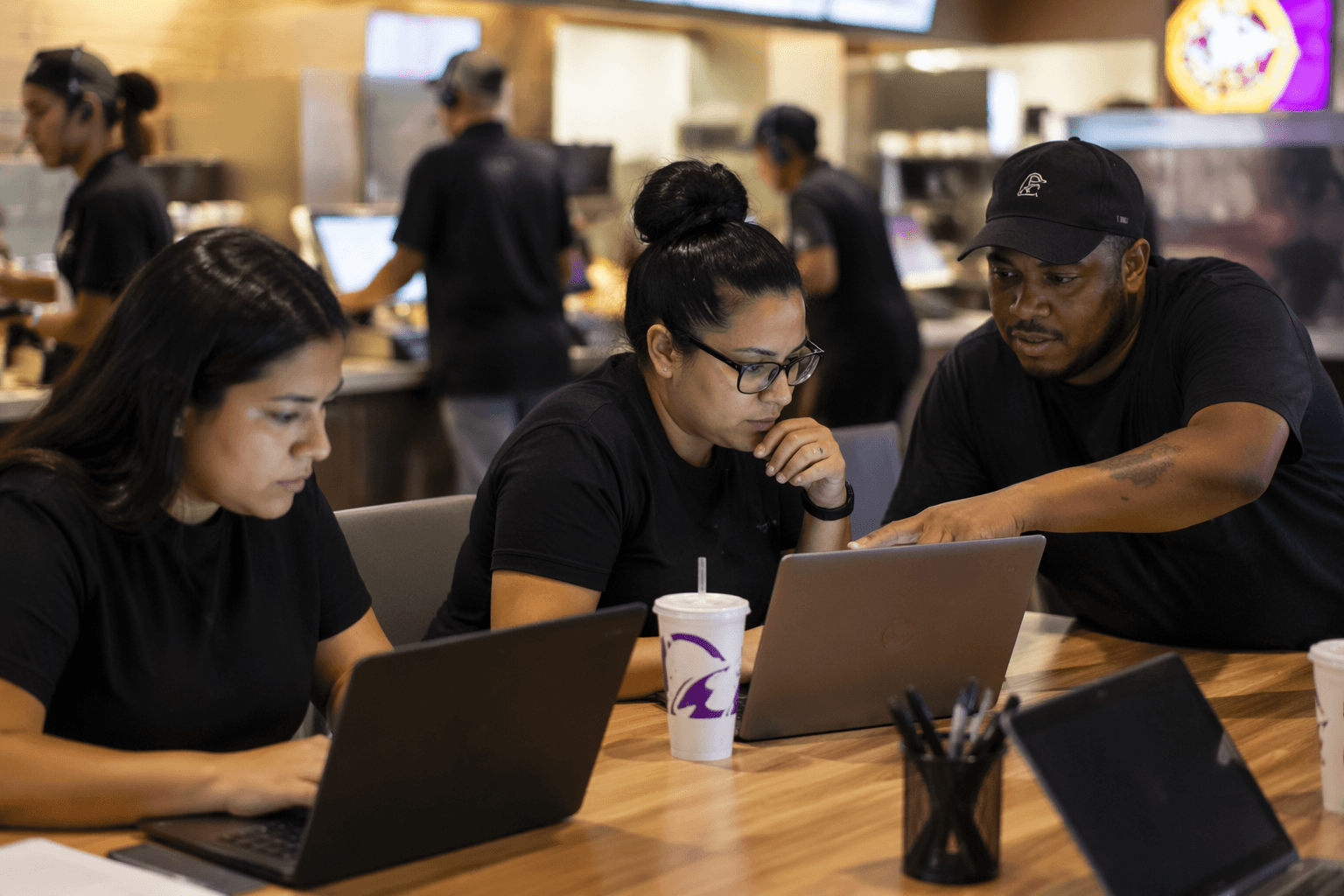
For Taco Bell crew in California, this is not an abstraction. When order volume shifts to a kiosk or the mobile app, front-counter hours contract. That does not always mean layoffs, but it does mean the payroll mix changes: fewer hours at the register, more demand for line prep and assembly positions that remain difficult to automate. Crew who cross-train into fryer or prep roles may find more consistent scheduling; those whose value to the store was built around the counter face a narrower path.
Shift managers need to track where the payroll dollars are actually moving week over week. If a store is rebalancing labor toward specialized kitchen positions while trimming general availability, that pattern carries compliance exposure. California law requires advance notice of schedule changes, and franchise operators who quietly restructure overtime or reconfigure bonus eligibility to absorb labor costs can face wage-and-hour claims. The California Fast Food Council, which AB 1228 created alongside the wage floor, retains authority to raise that floor by up to 3.5 percent annually and to recommend additional working-condition standards.
For crew members who have already seen their hours shrink, the downstream effects extend past the weekly paycheck. Reduced hours can push workers below the thresholds that determine eligibility for Taco Bell's health coverage and tuition assistance programs. Workers who suspect their schedules have been adjusted in ways that don't match their pay stubs should document both, and contact the Department of Labor or California's Labor Commissioner if the numbers don't reconcile.
Owen offered a blunt summary of where two years of AB 1228 have landed: "Based on what we've found, I think this legislation is a classic case of 'no good deed goes unpunished.' There are unintended consequences and knock-on effects."
The Fast Food Council's next round of deliberations and any enforcement guidance from state labor agencies will determine how much room franchise operators have to keep absorbing labor costs through scheduling and technology rather than prices.
Formatted response:
A UC-Santa Cruz field study that surveyed more than 100 fast-food outlets across Santa Cruz and the Central Valley has delivered one of the starkest assessments yet of California's AB 1228: the $20-per-hour wage floor lifted pay per hour but simultaneously pushed operators toward kiosks, mobile ordering, and AI drive-thru pilots in ways that are quietly reshaping what a shift at a Taco Bell in California actually looks like.
The research, led by UC-Santa Cruz economics lecturer Stephen Owen, found that workers faced fewer scheduled hours, the elimination of overtime, and new challenges qualifying for employer health and other benefits after the law took effect in April 2024. "Employees have been impacted with fewer job opportunities, reduced employee hours, elimination of overtime, and new eligibility challenges for healthcare and other benefits," the study stated, adding that automation technologies "are being tested and implemented with the goal to reduce labor requirements."
The Santa Cruz findings stand in direct tension with a UC-Berkeley analysis that AB 1228 supporters have frequently cited. The Berkeley team concluded that the law "increased average hourly pay by a remarkable 18 percent, and yet it did not reduce employment." Owen's team specifically criticized that framing for omitting the automation acceleration: the UC-Santa Cruz report chided the UC-Berkeley study for failing to include the accelerated use of automation by fast-food outlets as they reduced their staffs.
On pricing, the numbers were less contested. Menu prices at affected chains rose roughly 3.7 percent after the wage increase, translating to about 15 cents more on a $4 item. That is smaller than what the industry had warned but real enough to reduce customer traffic during slower periods, which feeds directly back into how many hours a store can justify scheduling.
For Taco Bell crew in California, this is not an abstraction. When order volume shifts to a kiosk or the mobile app, front-counter hours contract. That does not always mean layoffs, but it does mean the payroll mix changes: fewer hours at the register, more demand for line prep and assembly positions that remain difficult to automate. Crew who cross-train into fryer or prep roles may find more consistent scheduling; those whose value to the store was built around the counter face a narrower path.
Shift managers need to track where the payroll dollars are actually moving week over week. If a store is rebalancing labor toward specialized kitchen positions while trimming general availability, that pattern carries compliance exposure. The California Fast Food Council, which AB 1228 created alongside the wage floor, meets regularly and retains authority to raise that floor by up to 3.5 percent annually and to recommend additional working-condition standards.
For crew members who have already seen their hours shrink, the downstream effects extend past the weekly paycheck. Reduced hours can push workers below the thresholds that determine eligibility for Taco Bell's health coverage and tuition assistance programs. Workers who suspect their schedules have been adjusted in ways that don't match their pay stubs should document both and contact the Department of Labor or California's Labor Commissioner if the numbers don't reconcile.
Owen offered a blunt summary of where two years of AB 1228 have landed: "Based on what we've found, I think this legislation is a classic case of 'no good deed goes unpunished.' There are unintended consequences and knock-on effects."
The Fast Food Council's next round of deliberations and any enforcement guidance from state labor agencies will determine how much room franchise operators retain to keep absorbing labor costs through scheduling and technology rather than passing more of those costs to customers.
This article was produced by Prism’s automated news system from verified source data, official records, and press releases, then run through automated quality and moderation checks before publishing. The system is built and supervised by the people who set the standards it runs under. Read our full AI policy.
Did this article answer your question?