CIW campaign that pressured Taco Bell on tomato purchasing, labor revisited
An aggregator this week revisited the Coalition of Immokalee Workers’ campaign that pressured Taco Bell to add a penny per pound to Florida tomatoes and adopt supplier safeguards.
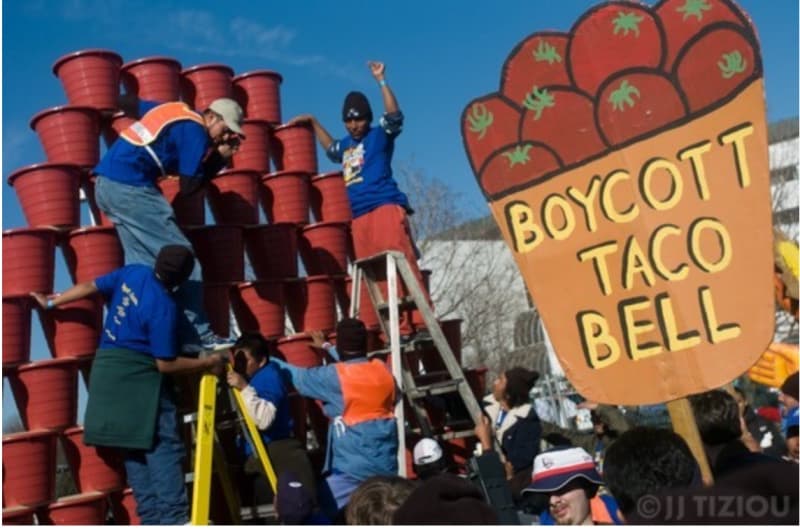
An aggregator posted this week a feature titled "Taco Bell Boycott - National Farm Worker Ministry's 50 for 50 (2026)" revisiting the Coalition of Immokalee Workers’ national campaign that pushed Yum! Brands/Taco Bell to agree to pay an extra penny per pound for Florida tomatoes and to adopt a code of conduct allowing suppliers who commit abuses to be severed. The agreement, described in contemporary reports as reason to call off a multi-year boycott and to turn planned rallies into celebrations, remains the focal point of renewed attention. The exact calendar date for the March agreement cited in earlier coverage is not specified in the materials reviewed.
The CIW’s push against the tomato supply chain grew out of organizing in Immokalee, south Florida, where between 1995 and 2000 CIW members staged three community-wide general strikes, a 30-day hunger strike by six members, and a 240-mile march across Florida that led to wage raises from 1997 to 1999. CIW leaders built a community identity in Immokalee that underpinned those direct actions and later supplied organizers and farmworkers for national mobilizations.
The coalition turned its attention to Taco Bell in 2001 because of the chain’s heavy tomato purchasing. That shift produced a four-year boycott that relied heavily on student and campus pressure: the Student/Farmworker Alliance helped "boot the bell" from 22 campuses, with UCLA, Notre Dame and the University of Chicago cited as examples. Organizers framed the choice of Taco Bell as strategic, modeled on consumer campaigns that targeted youth-oriented products; one SFA national coordinator described the decision in those terms, and Melody Baker of the Funders’ Collaborative on Youth Organizing summarized the organizing tactic this way: "High school age groups usually work on issues in their own community, while college students come together from many communities. It a difference between community organizing and campus activism." Romero Brown of the Boys & Girls Clubs of America underscored the market logic: "Teenagers are one of their core groups."
CIW’s campaign extended beyond campuses through a national coalition of unions, faith groups and farm organizations. The United Farm Workers, the Los Angeles County Federation of Labor, the American Postal Workers Union and Jobs with Justice chapters built pickets and rallies; family farm groups including the National Family Farm Coalition, Family Farm Defenders and the Community Farm Alliance added endorsements and joined actions. Worker centers strengthened by the campaign included the Miami Workers Center, the Mississippi Workers Center, Make the Road by Walking in Brooklyn and the Korean Immigrant Workers Association in Los Angeles. Two family farmers, Mike Moon and Stephen Bartlett, joined CIW farmworkers in a reported hunger strike in Irvine, fasting side-by-side.
Direct actions included hunger strikes, a 30-day fast by six CIW members, a Taco Bell Truth Tour that moved about 80 Immokalee farmworkers through 15 cities en route to a final rally in Louisville, and high-profile protests outside company headquarters. The campaign also fed into federal prosecutions of labor contractors on charges of promoting slavery, cases in which CIW assisted authorities.

Economic pressure centered on low piece-rate pay: one set of figures in the record states that "farmworkers today usually earn 40 cents for each 32-pound bucket of tomatoes they pick, the same rate as 30 years ago," and that a worker must pick two tons to earn about $50. The reported corporate concession was modest on paper: an added penny per pound for Florida tomatoes, with the increase stated to go directly to workers’ wages, along with a code of conduct to exclude abusive suppliers. Taco Bell has maintained that it buys tomatoes through brokers and that labor disputes are between pickers and growers, a corporate framing that coexisted with the pledge to help improve working and living conditions.
CIW leadership framed the outcome as hard-won but incomplete. Coalition leader Lucas Benitez said, "When we started this, it was like man going to the moon — nobody thought it was possible. With the help of people around the country, we have built a way to go to the moon. ... Now we must continue moving forward." Domingo Jacinto, identified as a 40-year-old farmworker from Guatemala, called the result "huge," adding that "Taco Bell will be able to help us in persuading other companies." Others remained skeptical: Pedro Morales, a 34-year-old picker from Guatemala, said, "The reality is it's not going to change our situation, the conditions we live in."
Organizers signaled follow-up plans: letters were sent to executives at McDonald’s, Subway and Burger King asking those chains to match Taco Bell’s commitments, while CIW activists and allied family farm groups framed the victory as part of a broader effort to challenge corporate market power and the structural forces that depress farmgate prices. Structural limits remain: the agricultural-worker exemption from the National Labor Relations Act continues to restrict union protections for many farmworkers on the East Coast, a legal obstacle the campaign repeatedly confronted as it moved from Immokalee to campuses and national coalitions.
Know something we missed? Have a correction or additional information?
Submit a Tip