Taco Bell Targets Snack Occasions to Drive Visits Between Mealtimes
Taco Bell's $2.49 Mini Taco Salad is the tip of a snacking strategy that's quietly rewriting how managers schedule, staff, and train across 8,000-plus locations.
With the January 22 national rollout of its Luxe Value Menu, Taco Bell formally committed to a snacking strategy that changes more than what's on the menu board. The 10-item lineup, all priced at $3 or less, replaced the Cravings Value Menu and anchored its pitch around smaller, portable formats: the $2.49 Mini Taco Salad, the $2.49 Beefy Potato Loaded Griller, and similar compact builds designed to convert cravings between traditional mealtimes into paid visits.
Heather Mottershaw, Taco Bell's VP of pipeline innovation and product development, framed the Mini Taco Salad, first teased at the 2025 Live Más Live event, in terms that have direct operational subtext. "It's more aligned with how fans eat today," Mottershaw said. The item is a scaled-down riff on the Fiesta Taco Salad, using a smaller tortilla bowl, swapping black beans for refried beans, eliminating rice and sour cream, and adding Chipotle Sauce. The components overlap heavily with existing menu items, which matters less as a sourcing convenience and more as a line-management variable: shared ingredients mean a snack-hour spike can quietly drain prep inventory that was earmarked for dinner volume, specifically lettuce, cheddar, and Chipotle Sauce, creating downstream bottlenecks in the drive-thru unless par levels are adjusted to account for the new demand pattern.
That recalibration is the core operational task. Snack occasions don't arrive in one sustained rush the way a 12 PM lunch peak does. They hit in shorter windows, mid-afternoon and late night most predictably. Taco Bell's existing Happier Hour, running daily from 2 PM to 5 PM, already established one snack daypart; the Luxe Value Menu is designed to intensify it. For restaurant managers, the traditional staffing architecture of 4 to 5 hour lunch and dinner blocks doesn't map cleanly onto that pattern. Short shift overlaps timed around snack windows, combined with staggered starts, can keep coverage without inflating labor across the low-volume hours between. Cross-training crew to rotate between register and assembly quickly, rather than holding single-station positions, handles the uneven load better.
Before restructuring schedules, managers at any of Taco Bell's more than 8,000 U.S. locations should audit their local scheduling laws. Predictive scheduling ordinances active in several major metro markets impose premium pay for last-minute shift changes, and the incremental labor savings from a tighter snack-hour model can evaporate fast if short shifts are added and adjusted without adequate notice. The compliance exposure is real and often underestimated at the restaurant level.
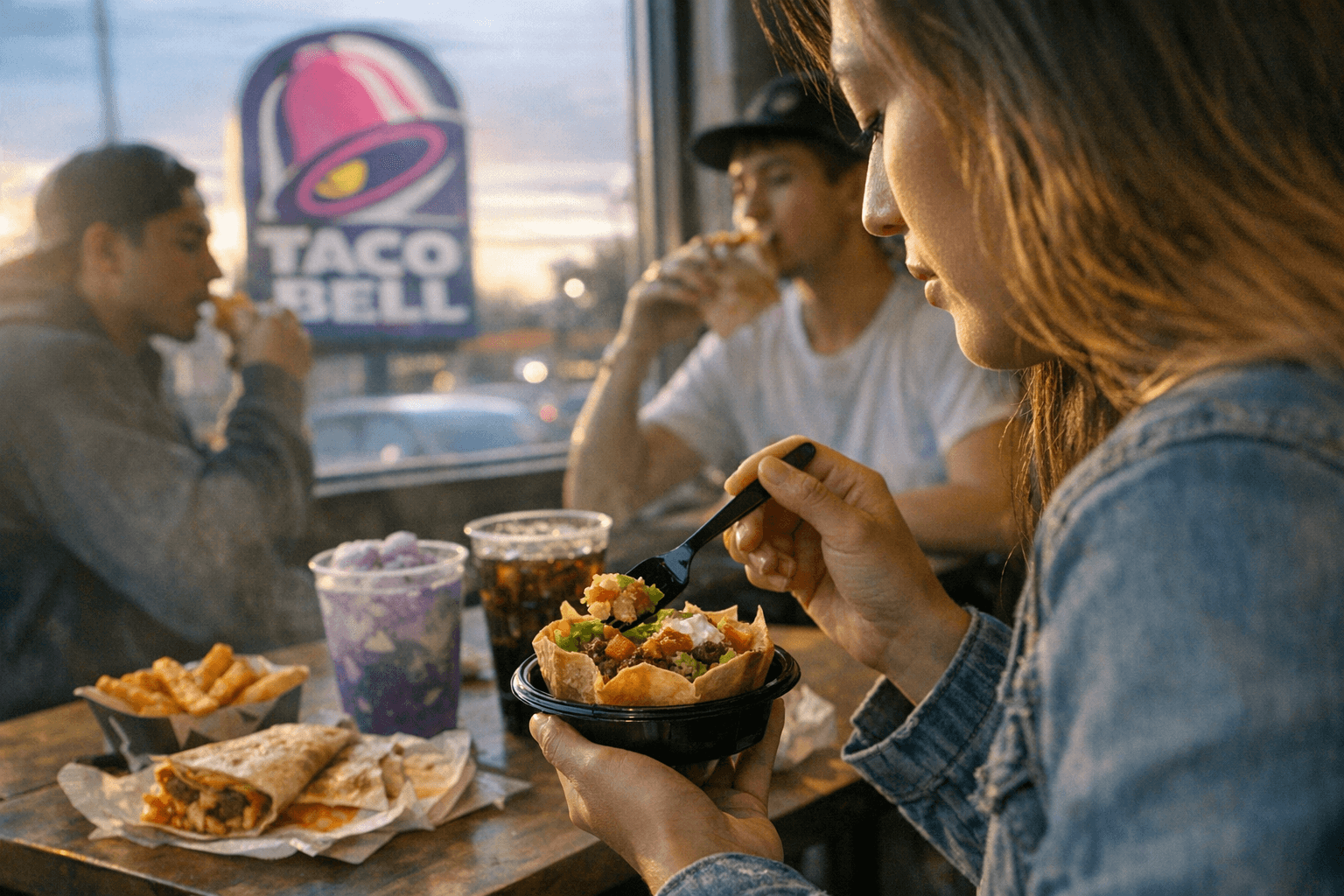
Food safety protocol is a less obvious but equally concrete concern. Snack-format items held in smaller batches cycle through faster but also risk sitting at temperature longer during slow stretches between spikes. Holding time logs and waste-tracking procedures built for high-volume dinner batches need a separate set of parameters for snack-tier SKUs, particularly the tortilla bowls and grilled wraps that degrade differently than a standard taco.
On training, snack items live and die on impulse: a hesitant build or inconsistent portion slows throughput and undercuts the value pitch that brought the customer in. Pre-shift demos of 5 to 10 minutes, focused on snack SKU build sequence, packaging specs, and portion standards, run consistently during the early adoption window, reduce remakes and keep drive-thru times from creeping. New crew members absorb snack formats faster because the builds carry lower complexity, making this rollout a legitimate onboarding tool if managed intentionally rather than treated as an add-on to a standard training checklist.
Taco Bell's 2026 Live Más Live event signaled that slider-format and compact items, including the Crème Brulee Crunchwrap Slider, are a continuing direction, not a one-cycle experiment. The restaurants that build snack-capable operations now, with updated par sheets, rebalanced station assignments, and documented waste controls, will be the ones positioned to execute the next launch without the friction of figuring it out in real time.
This article was produced by Prism’s automated news system from verified source data, official records, and press releases, then run through automated quality and moderation checks before publishing. The system is built and supervised by the people who set the standards it runs under. Read our full AI policy.
Did this article answer your question?