Customers Trapped for Over an Hour, St. Louis Taco Bell Drive Through
A widely shared social media thread posted December 22 described customers who were stuck for 60 to 90 minutes or more in the drive through lane at a Taco Bell in Chouteau near St. Louis, after ordering online and pulling into the lane. The accounts highlight safety hazards from locked lobby doors and store layout, and they illustrate pressure points for frontline workers dealing with staffing and operational decisions.
%3Amax_bytes(150000)%3Astrip_icc()%2FTaco-Bell-Drive-Thru-Defy-FT-2-BLOG0622-163a5fa016b141ff8af57e8e766c30bf.jpg&w=1920&q=75)
On December 22 a highly viewed social media thread documented a string of customers who said they were stuck in the drive through lane at a Taco Bell in Chouteau for between 60 and 90 minutes or longer after ordering online and pulling in. Multiple posts described locked lobby doors, an unresponsive speaker box, and a buildup of cars with no easy way to exit because of physical medians in the lot, leaving drivers trapped and unable to leave the queue.
The thread was largely composed of firsthand customer accounts and on the ground commentary. Several contributors said employees were visible inside the store but were not answering service points. Others described repeated similar experiences at the same location, and many users connected the incidents to store layout and management choices, including policies that prioritize the drive through while closing or locking the lobby. Commenters also cited staffing and scheduling constraints as likely contributors to the breakdown in service.
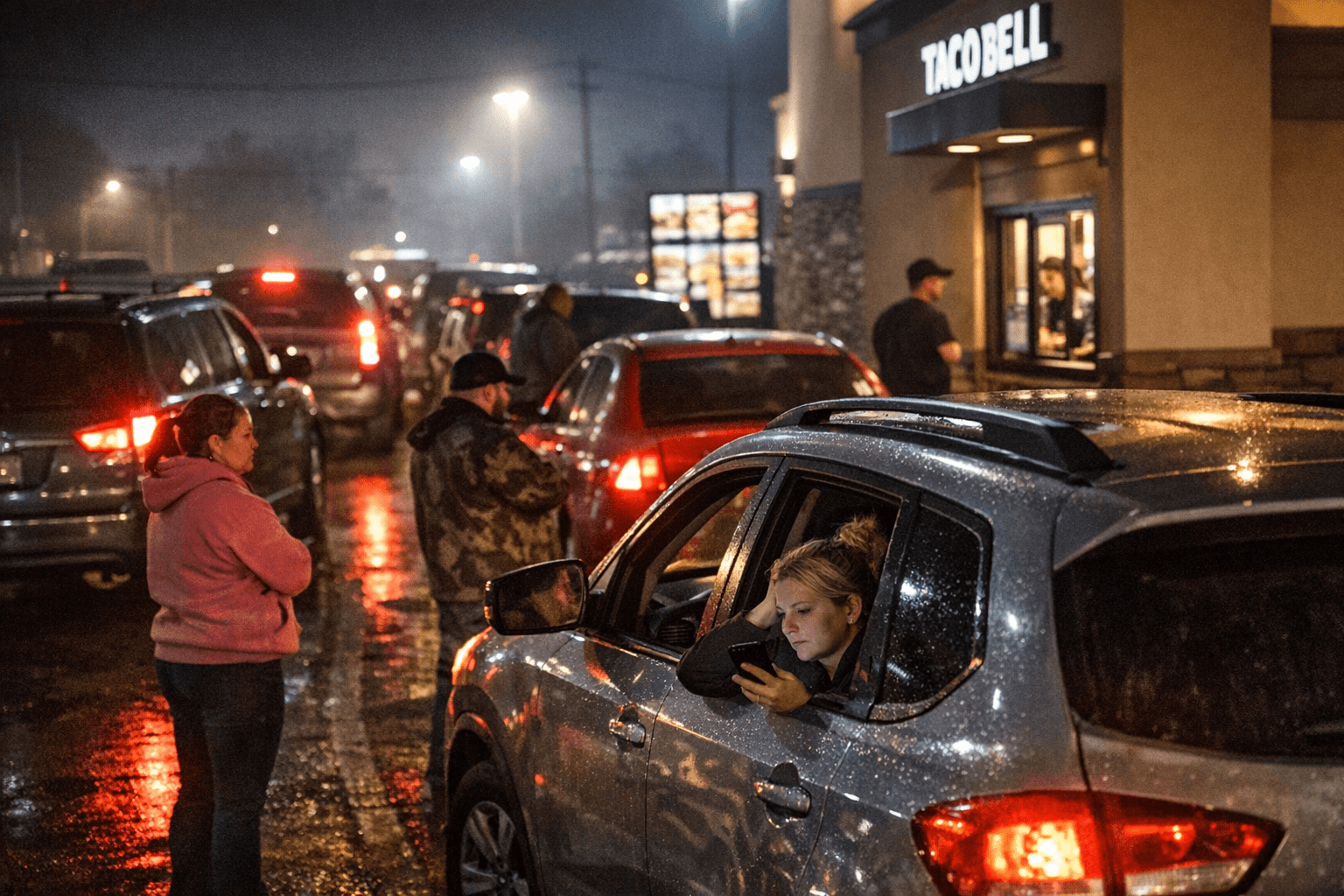
For workers the episode illustrates how operational choices cascade into workplace strain. When cars back up and customers are unable to exit, employees confront heightened customer frustration and safety concerns while trying to manage orders with limited staff. Locked lobbies can reduce the physical options for customers, but they also change the nature of employee duties, shifting more interactions to drive through equipment and creating pressure to clear queues quickly without enough manpower.
The incident underscores broader tensions in fast food operations between convenience technology, such as online ordering, and the limitations of physical sites and staffing. Store design that funnels cars into lanes with few escape routes can create hazardous situations when service slows. Scheduling systems that understaff peak windows can leave workers to handle surges alone, increasing the risk of errors and confrontations.
There has not been an official company statement tied to the accounts in the thread. For frontline employees and managers the episode is a reminder that choices about lobby access, staffing, and how to handle digital orders affect both customer safety and worker conditions. Management reviews of scheduling, equipment responsiveness, and site egress could reduce the risk of similar events in the future.
This article was produced by Prism’s automated news system from verified source data, official records, and press releases, then run through automated quality and moderation checks before publishing. The system is built and supervised by the people who set the standards it runs under. Read our full AI policy.
Did this article answer your question?