How no tax on overtime could affect Taco Bell paychecks
Extra overtime is where Taco Bell workers are likeliest to feel this tax change. The cap and the recordkeeping rules matter most for hourly crew, shift leads and other extra-hour workers.
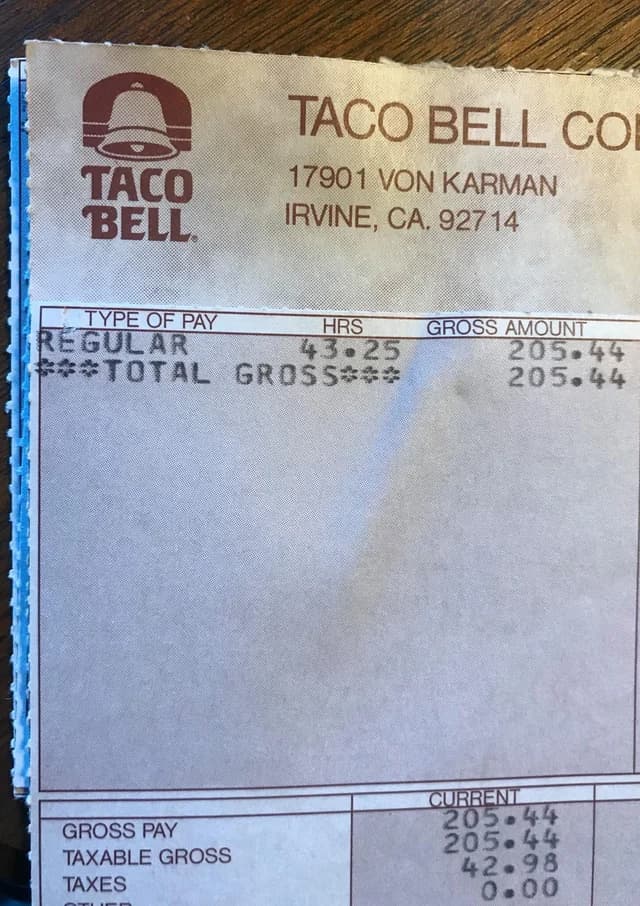
At California’s fast-food floor wage of $16.90 an hour, a Taco Bell overtime hour is worth $25.35 in gross pay. The tip part of the new tax talk barely moves the needle at Taco Bell, but overtime can. For hourly crew, shift leads and other extra-hour workers, the difference shows up in the weekly paycheck, not the press release.
What the overtime piece means on the clock
If you work more than 40 hours, the extra hours are where the paycheck can change fastest. The no-tax-on-overtime provision takes effect in tax year 2025 and runs through the end of 2028, with a yearly cap of $12,500. The tax break is aimed at workers who actually rack up meaningful overtime, not at someone who clocks a few extra minutes here and there.
A crew member who works 48 hours in a week would bring in $676 for the first 40 hours and another $202.80 for eight overtime hours. The key number is the overtime premium, the extra $67.60 that comes from those eight hours being paid at time and a half. If the deduction applies to the overtime income, those extra dollars are the slice most likely to be sheltered from federal income tax, up to the cap.
That is why the rule matters more for a Taco Bell worker who picks up closing shifts, stays late for a callout, or covers a rush than for someone whose schedule never crosses 40 hours. The policy does not create overtime, and it does not guarantee a bigger net paycheck by itself. It changes the tax treatment of wages that already exist, which means the actual boost depends on how the hours are recorded and how withholding is set up.
Why Taco Bell workers should care more about overtime than tips
Taco Bell is not a traditional tipped-service brand, so the tip side of this story matters less than it would at a sit-down restaurant. The real paycheck issue is overtime, especially for crew members and shift leads who live on fluctuating schedules. For a fast-food worker, one extra late-night callout can be the difference between a flat week and a meaningful bump in gross pay.
That is also why the title of the policy can be misleading at store level. “No tax on tips and overtime” sounds like a broad pay raise, but the effect depends on what kind of wages you actually earn. If you are mostly hourly and nonexempt, the overtime piece is the one that can touch your check. If you are salaried and exempt, or you rarely break 40 hours, the impact may be limited or nonexistent.
The National Restaurant Association resource library includes an explainer called “Getting the nitty-gritty on no tax on tips and overtime.” Operators are not just looking at a slogan. They are looking at payroll rules, wage categories, and the forms that have to match both.
The fine print managers cannot ignore
The IRS issued guidance for individuals who received tips or overtime during tax year 2025. By the time accountants, payroll vendors and labor lawyers started publishing detailed guidance, the question had moved into filing-season logistics. RSM published an explainer on June 2, 2025.
For Taco Bell store teams, the practical problem is recordkeeping. Hours worked across midnight, split shifts, meal periods and role changes within the same week all have to be coded correctly. If a crew member starts as a cashier, switches to shift lead coverage, and then stays late to cover a missing closer, the payroll trail has to show exactly what happened or the overtime and tax treatment can get messy fast.
That is where managers and payroll approvers matter as much as the employees themselves. Employers still have to track hours accurately, classify roles correctly and report wages carefully. If the approval process for extended shifts is sloppy, the tax rule will not fix it. It can only work if the store has good timekeeping in the first place.
Why the rule may change scheduling behavior anyway
A tax break on overtime does not mean managers will suddenly hand out more hours. In a lot of restaurants, the opposite can happen when labor costs feel tight. Managers become more conservative about approving extra shifts, especially if the store already runs thin, and that can affect who gets the call when someone is sick or when a lunch rush runs long.
That matters because overtime is often the easiest way for a Taco Bell worker to smooth out a weekly income swing. If a shift opens up on short notice, it can be the difference between a paycheck that barely covers bills and one that gives you a little breathing room. When managers hesitate, the worker loses the chance to earn those extra hours in the first place.
This is where the franchise model matters. In many Taco Bell stores, the people deciding whether someone can stay late are not sitting at corporate headquarters. They are the franchise operators, general managers and shift leads who have to juggle staffing, labor costs and compliance at the store level. The tax rule adds one more reason those decisions need to be documented carefully.
Taco Bell has already lived through wage pressure
This is not Taco Bell’s first wage debate. In December 2021, Taco Bell planned to raise its average minimum wage to $15 an hour by 2024. California has pushed the issue even further, with the state minimum wage at $16.90 an hour effective January 1, 2026, and fast-food restaurant employers under a higher minimum wage since April 1, 2024.
A November 5, 2025 Cato Institute brief estimated that California’s fast-food minimum wage increase from $16 to $20 per hour for chains with more than 60 locations nationwide cost the state about 18,000 jobs.
On July 20, 2022, the Labor Department recovered $56,000 for 31 managers after a Taco Bell franchisee misapplied overtime wage rules.
This article was produced by Prism’s automated news system from verified source data, official records, and press releases, then run through automated quality and moderation checks before publishing. The system is built and supervised by the people who set the standards it runs under. Read our full AI policy.
Did this article answer your question?