New York City scheduling rules offer Taco Bell workers a benchmark
NYC’s fast-food scheduling rules show Taco Bell workers what predictability looks like: 14-day notice, clopening pay, and real penalties when managers ignore them.
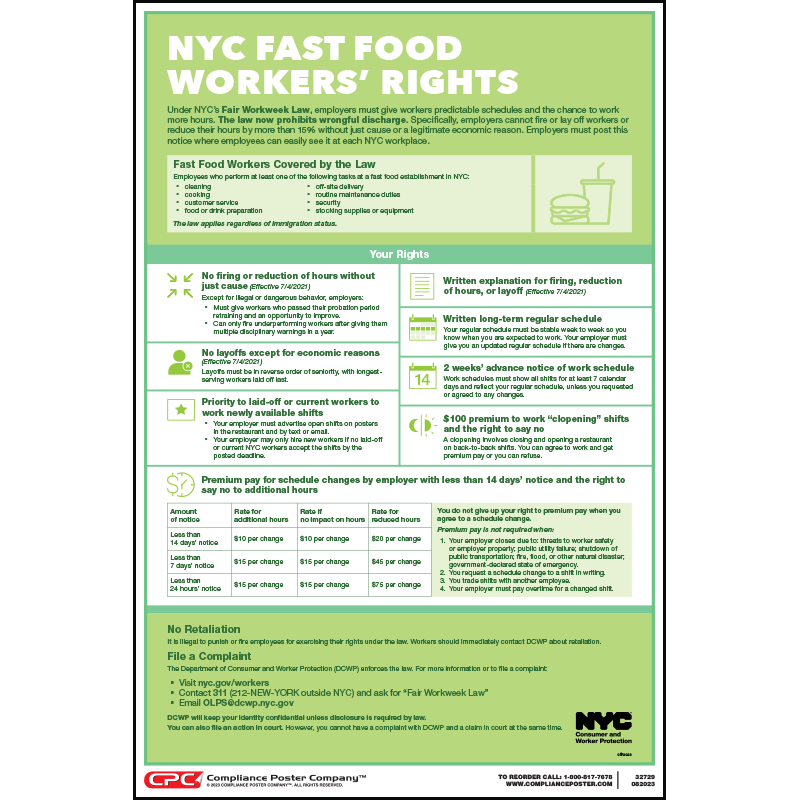
Fast food employers in New York City must give workers regular schedules, post them 14 days in advance, and pay premiums when managers change shifts late or try to stack close-open turnarounds.
For Taco Bell crew members, those rules are a practical benchmark for school, child care, second jobs, transportation, and sleep, all of which get squeezed when a store posts schedules late or flips them at the last minute. For shift managers and restaurant managers, the same rules make scheduling a compliance job, not just a staffing chore.
What NYC fast food workers are entitled to
NYC’s Fair Workweek Law took effect on November 26, 2017, and the city expanded fast food protections again on July 4, 2021.
Those premiums run from $10 to $75 for a schedule change made less than 14 days before the work schedule starts. A clopening, where the gap between shifts is less than 11 hours, requires written consent and a $100 premium. Employers also must give current workers the chance to work more hours before bringing in new hires, and they must post the official New York City Fast Food Workers’ Rights notice where employees can easily see it.
The 2021 amendments went further by adding just-cause-style protections. Fast food workers cannot be fired or have their hours cut by more than 15 percent without just cause or a legitimate economic reason.
Why that standard matters inside a Taco Bell
A Taco Bell store runs on tight labor timing, but the NYC model draws a line between planning and improvisation. A 14-day schedule gives workers time to line up the rest of their lives, and it forces management to decide earlier how many people the store actually needs. When premium pay kicks in for changes, managers have a reason to stop treating shift swaps, cut hours, and emergency fill-ins as cost-free.
That is especially important in fast food, where turnover is high and a chaotic schedule is one of the biggest reasons hourly workers leave.
For restaurant managers, predictable scheduling is a retention tool and a records problem at the same time. If a store can forecast labor needs, publish schedules early, and avoid unnecessary clopenings, it is less likely to lose workers and less likely to trigger premium pay. If it cannot explain why hours were changed or reduced, the risk is not only morale, but a law violation.

Enforcement shows these are not symbolic rules
The city has treated Fair Workweek violations as real labor cases, not paperwork errors. In July 2021, New York City announced settlements with fast food franchisees, including a Pizza Hut and a McDonald’s, and workers received more than $221,000 in restitution.
By February 2024, New York City found Taco Bell violated the Fair Workweek Law at 10 New York City locations. The violations included failing to consistently provide 14-day schedules, failing to pay premiums for schedule changes and clopenings, failing to obtain consent when adding hours, and failing to give current workers first chance at newly available hours before hiring new workers.
The city kept pressing after that. In December 2025, New York City announced a $38.9 million Starbucks settlement, the largest worker-protection settlement in city history at the time. The city said the agreement was expected to benefit more than 15,000 workers across more than 300 locations and involved more than 500,000 alleged Fair Workweek violations.
In 2026, the city said it secured nearly $2 million in restitution for 800-plus fast food and retail workers in cases including Taco Bell franchisee Salz Management LLC.
What Taco Bell workers should ask when schedules go sideways
The NYC model gives workers a useful set of questions to bring to any Taco Bell store, even outside New York City:
- How far in advance is the schedule posted?
- How often do shifts change after the schedule is posted?
- Does management pay any premium when it changes a shift late?
- Are clopenings voluntary, and is written consent ever used?
- Are current workers offered extra hours before new hires are brought in?
- If hours are cut, what reason is given, and is it documented?
- Is the worker-rights notice posted where everyone can actually see it?
The city’s worker-rights materials also point employees to complaint channels and arbitration options, and the Department of Consumer and Worker Protection uses worker surveys to help identify violations.
This article was produced by Prism’s automated news system from verified source data, official records, and press releases, then run through automated quality and moderation checks before publishing. The system is built and supervised by the people who set the standards it runs under. Read our full AI policy.
Did this article answer your question?