NIOSH Restaurant Safety Guidance Offers Actionable Steps for Taco Bell Teams
NIOSH and CDC outline research-backed restaurant safety steps Taco Bell managers and franchisees can use to lower injuries, reduce fatigue, and support frontline employees.
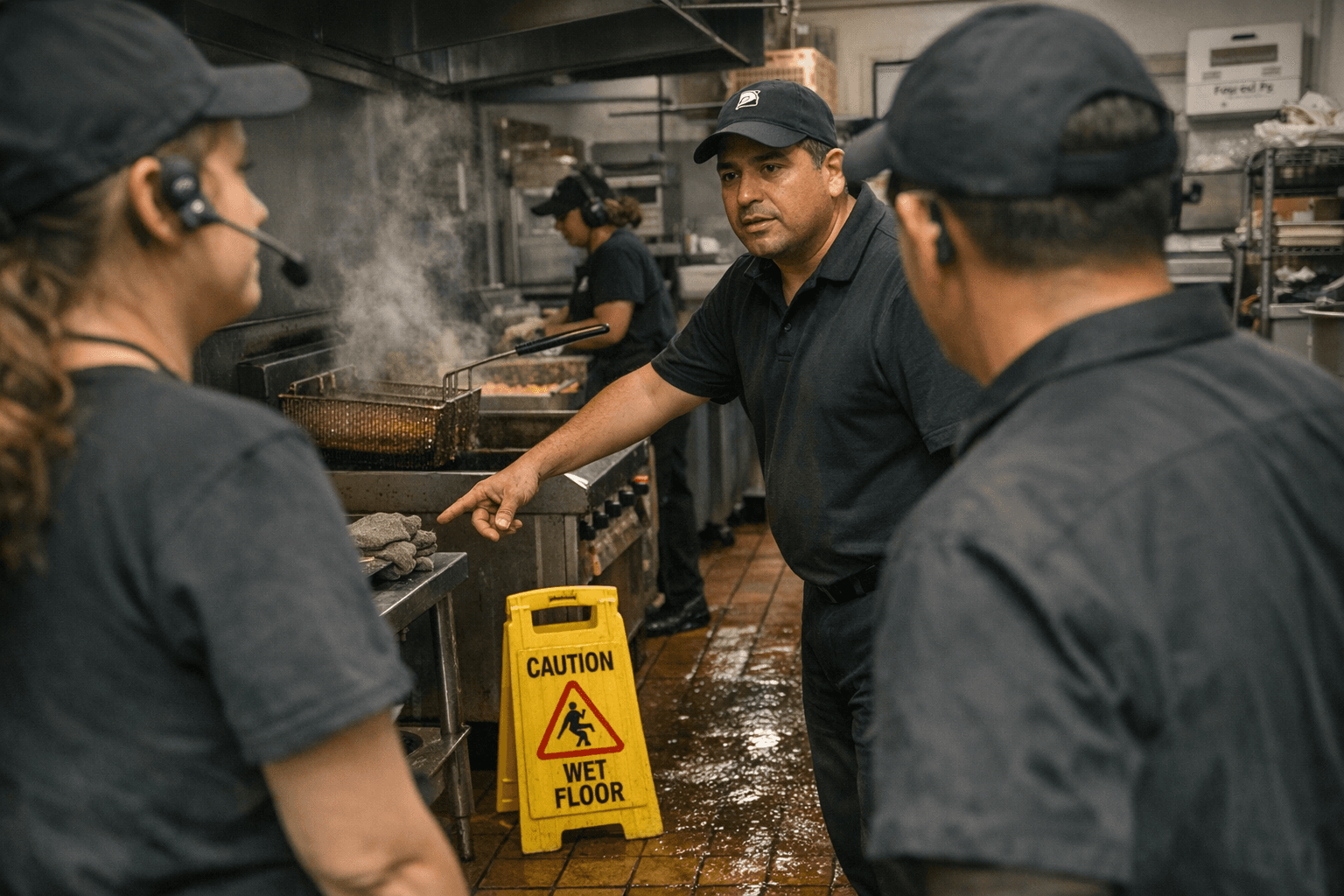
NIOSH and CDC materials on restaurant and food-service worker safety provide a clear set of prevention priorities that Taco Bell managers, franchisees, and frontline employees can adopt to reduce common on-the-job injuries and workplace stress. The guidance summarizes frequent hazards in limited-service and full-service restaurants - slips, trips and falls; burns and scalds; cuts; ergonomic strain; workplace stress; and workplace violence - and pairs those risks with practical, evidence-based interventions.
At the top of the guidance is injury tracking and hazard identification. Accurate, routine tracking of incidents and near misses helps pinpoint hotspots on the prep line, in the drive-thru, or at the front counter. Hazard identification encourages managers to walk the operation, review workflows, and document conditions that contribute to spills, sharp-tool injuries, or repetitive motion strain.
Engineering controls are presented as a key prevention priority. That includes making physical changes to equipment, layouts, or processes to reduce exposures that cause burns, scalds, and cuts. The guidance also emphasizes improved scheduling to reduce fatigue, which research links to slower reaction times and higher risk of errors during rush periods. Training modules and recommended safe work practices round out the approach, providing consistent, role-specific instruction for line cooks, cashiers, and shift leads.
For Taco Bell, these recommendations can be adapted across company-owned and franchise restaurants. Managers can use injury tracking data to tailor training and to justify modest investments in controls. Franchisees can align scheduling and fatigue-management strategies with local staffing realities while maintaining consistent safety protocols. Frontline employees benefit directly when engineering controls and clear procedures reduce the frequency and severity of burns, cuts, and musculoskeletal strain, and when schedules consider recovery and commute times to lower stress.
Adopting the guidance also affects workplace dynamics. Consistent tracking and training create a shared language about hazards that helps shift leads coach crew members and escalate unresolved risks. Better scheduling practices can decrease turnover driven by burnout, and tangible engineering changes signal to employees that leadership prioritizes safety over short-term throughput.
Implementation does not demand a one-size-fits-all overhaul. Taco Bell managers can begin with basic steps such as regular incident reviews, hazard walkthroughs, and targeted training modules for high-risk tasks, then scale to engineering investments where data shows the greatest return. Taken together, the NIOSH and CDC recommendations offer a practical roadmap for reducing injuries, improving morale, and strengthening safety culture across Taco Bell locations.
This article was produced by Prism’s automated news system from verified source data, official records, and press releases, then run through automated quality and moderation checks before publishing. The system is built and supervised by the people who set the standards it runs under. Read our full AI policy.
Did this article answer your question?