NIOSH warns Taco Bell shift work can disrupt sleep and safety
Late-night Taco Bell shifts can erode sleep, slow reactions, and raise injury risk. NIOSH says smarter scheduling and better breaks are part of keeping crews safe.
Late-night work is a safety issue, not just a schedule issue
For Taco Bell crews, fatigue is not an abstract wellness topic. NIOSH says irregular shift work disrupts sleep because the body clock is built around daytime activity and nighttime rest, and OSHA warns that days, evenings, nights, rotating or on-call schedules, and extended shifts longer than eight hours can all push workers into fatigue. NIOSH estimates nearly 30% of the American workforce has a schedule outside a regular daytime shift, which makes this a mainstream labor issue, not a niche one.
That matters at Taco Bell because the brand openly sells itself as a late-night operation, with menu language that says it serves customers “to late night.” In practice, that means closers, openers, weekend crews, and people bouncing between day and night assignments are working in the exact conditions NIOSH flags as risky. The issue is not simply feeling tired after a hard rush. It is whether the shift structure itself is making it harder to stay alert, work safely, and get home in one piece.
What fatigue changes on the line
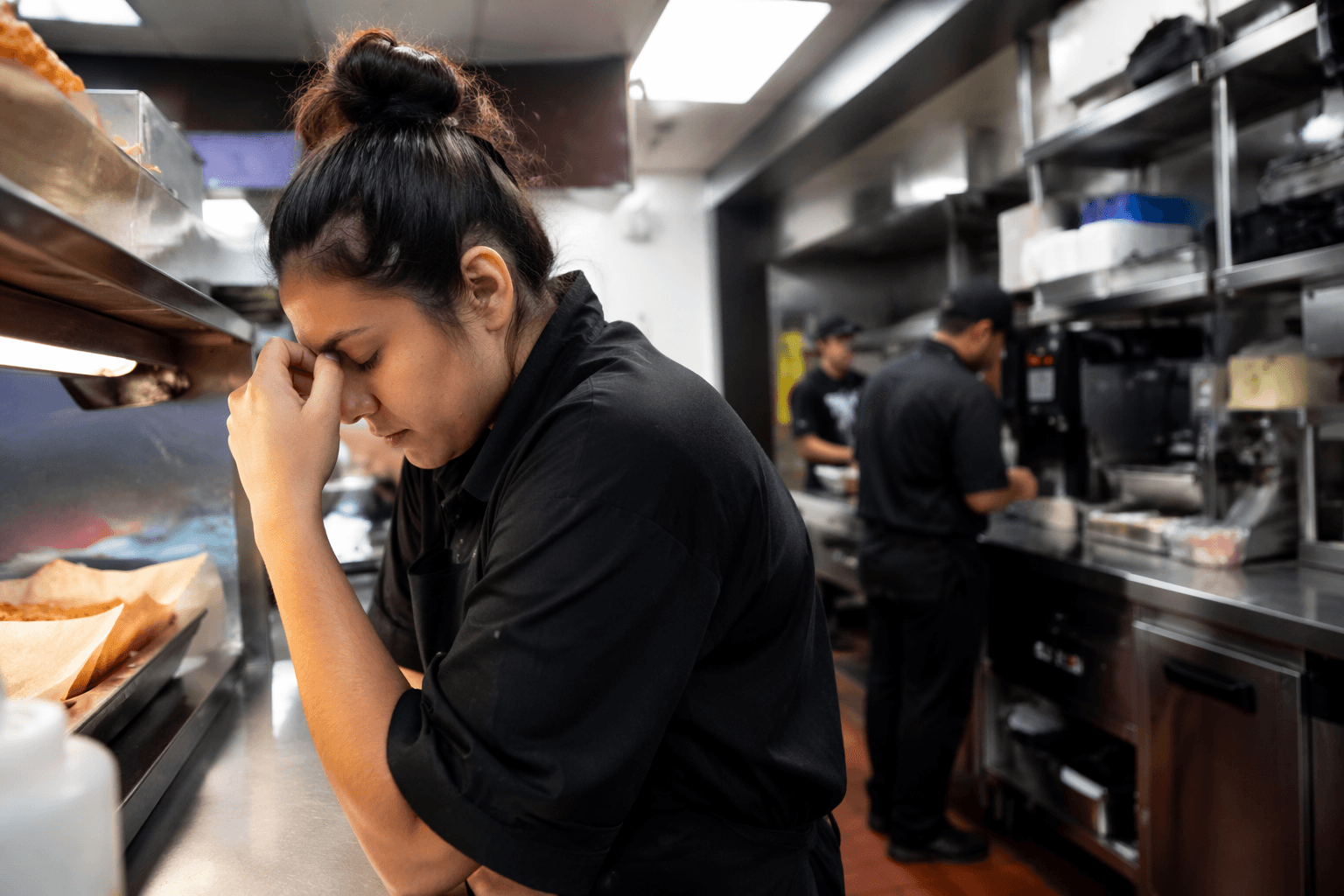
NIOSH says work-related fatigue can slow reaction times, reduce attention or concentration, limit short-term memory, and impair judgment. In a Taco Bell kitchen, those effects show up fast. A slower reaction can mean missing a hot pan, dropping a drink, or taking too long to correct a drive-thru mistake. A lapse in attention can lead to the wrong modifications on a burrito, a missed allergen concern, or a longer delay when the line is already backed up.
This is why shift work becomes a safety issue as much as a service issue. When a crew member is tired, the risk is not only slower throughput. It is also a higher chance of burns, cuts, slips, and other restaurant injuries, plus a more dangerous commute after midnight when reaction time is already dulled. NIOSH has also found that many studies show shift workers often get shorter sleep and poorer-quality sleep, with night and rotating shifts causing the most difficulty.
Why Taco Bell feels the strain more sharply
Taco Bell is built around the very schedule patterns that strain sleep. Closers may be finishing after midnight, then opening crews are back before dawn, and some workers get caught in back-to-back swings that leave little time for real recovery. NIOSH’s guidance is clear that frequent schedule changes make it harder for the body to adapt, and that the problem can spill over into mood, family life, and general performance, not just the shift itself.
That broader strain has already shown up in labor conflict. On June 12, 2024, Taco Bell workers in San Jose struck over allegations of unsafe working conditions and cut hours. In March 2026, Reuters reported that a Taco Bell and Dunkin’ franchisee agreed to pay more than $1.5 million to settle claims tied to New York City’s fast-food scheduling law. Together, those stories show that schedule instability is not just a complaint about inconvenience. It can become an organizing issue, a compliance problem, and a costly business risk for franchise operators.
What NIOSH says actually helps
NIOSH does not treat fatigue as unavoidable. Its guidance points to practical steps that restaurants can use to reduce harm. One of the clearest recommendations is to design schedules with frequent rest breaks. Another is to avoid night shifts longer than eight hours when possible, because extended hours deepen the fatigue problem and make it harder to recover before the next shift.
The agency also recommends improving the sleep environment and using nap strategies before a night shift. That matters for crews who finish late and have to be back again soon after. A dark, quiet room and enough time to sleep are not luxury items for a closer or opener. They are part of staying sharp enough to handle heat, knives, cash, headset traffic, and customer rushes without making the kind of mistake that can hurt someone.
What managers should do before the shift breaks the crew
For managers, the lesson is operational, not theoretical. If staffing is thin, the answer is not to squeeze more hours from the same exhausted people. It is to build schedules that give crews a chance to recover, rotate stations intelligently, and keep breaks real instead of symbolic. When the same worker is asked to close, then reopen, then cover a weekend rush, the restaurant is effectively importing fatigue into the store.
That is especially important in a chain like Taco Bell, where late-night demand is real and the pressure to keep service moving is constant. NIOSH says fatigue can impair judgment, and in a fast-food restaurant that means slower decisions at the fryer, more mistakes at the window, and a higher chance that a tired crew member gets hurt before the night is over. Good scheduling is therefore a safety control, not just a staffing preference.
Why the late-night push keeps growing anyway
The business case for late hours is obvious. Placer.ai reported that Taco Bell visits rose 5.0% year over year in Q2 2024, and later said Taco Bell remained Yum! Brands’ primary growth driver in Q4 2025 and Q1 2026. Late-night demand is also a major battleground across quick-service restaurants, which helps explain why chains keep stretching hours even when staffing is tight.
That creates the central tension for Taco Bell workers and managers. The company can chase traffic after dark, but the cost lands on the people closing the stores, cleaning the line, and trying to sleep before the next swing shift. NIOSH’s older research and its newer fatigue guidance point to the same conclusion: when work keeps pushing deeper into nights and rotating schedules, safety starts to slide unless the schedule itself is built to protect it.
For Taco Bell crews, the practical takeaway is simple: the shift pattern is part of the safety plan. When scheduling ignores sleep, the whole restaurant absorbs the risk.
This article was produced by Prism’s automated news system from verified source data, official records, and press releases, then run through automated quality and moderation checks before publishing. The system is built and supervised by the people who set the standards it runs under. Read our full AI policy.
Did this article answer your question?