Oakland Organizers File Ballot Initiative to Raise Minimum Wage to $30
Alameda County organizers filed a ballot initiative to raise the minimum wage to $30/hr, nearly double the current $16 countywide floor.
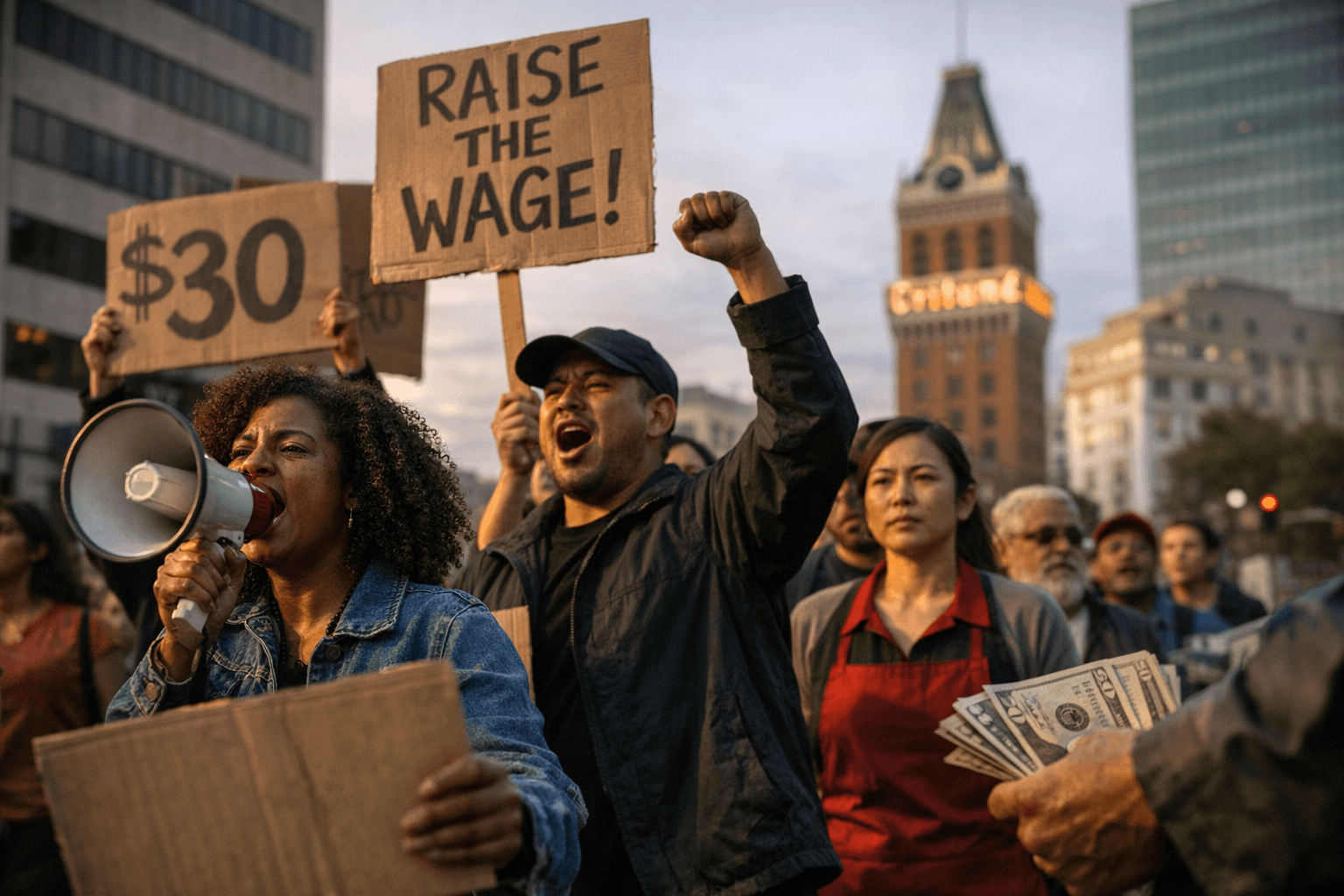
Labor and community organizers in Oakland filed a ballot initiative campaign last week to raise the Alameda County minimum wage to $30 an hour, nearly doubling the county's current floor of about $16 an hour and setting up a potential November vote that would reshape pay standards across the region.
The Alameda County Living Wage for All campaign announced the filing on March 20, with the proposal laying out different timelines depending on employer size. Large businesses with more than 100 employees and $100 million in revenue would be required to reach the $30-an-hour threshold by 2030. Smaller businesses with fewer than 25 workers would have 10 years to hit that same mark. The proposal does not specify a timeline for businesses that fall between those two size categories.
Organizers anchored their argument in the MIT living wage calculator, which concludes that in a two-parent, two-child household, both parents must work and each must earn over $44 an hour to cover basic costs of living in the area. By that measure, even the proposed $30 floor falls well short of what the calculator identifies as a living wage for a family of four.
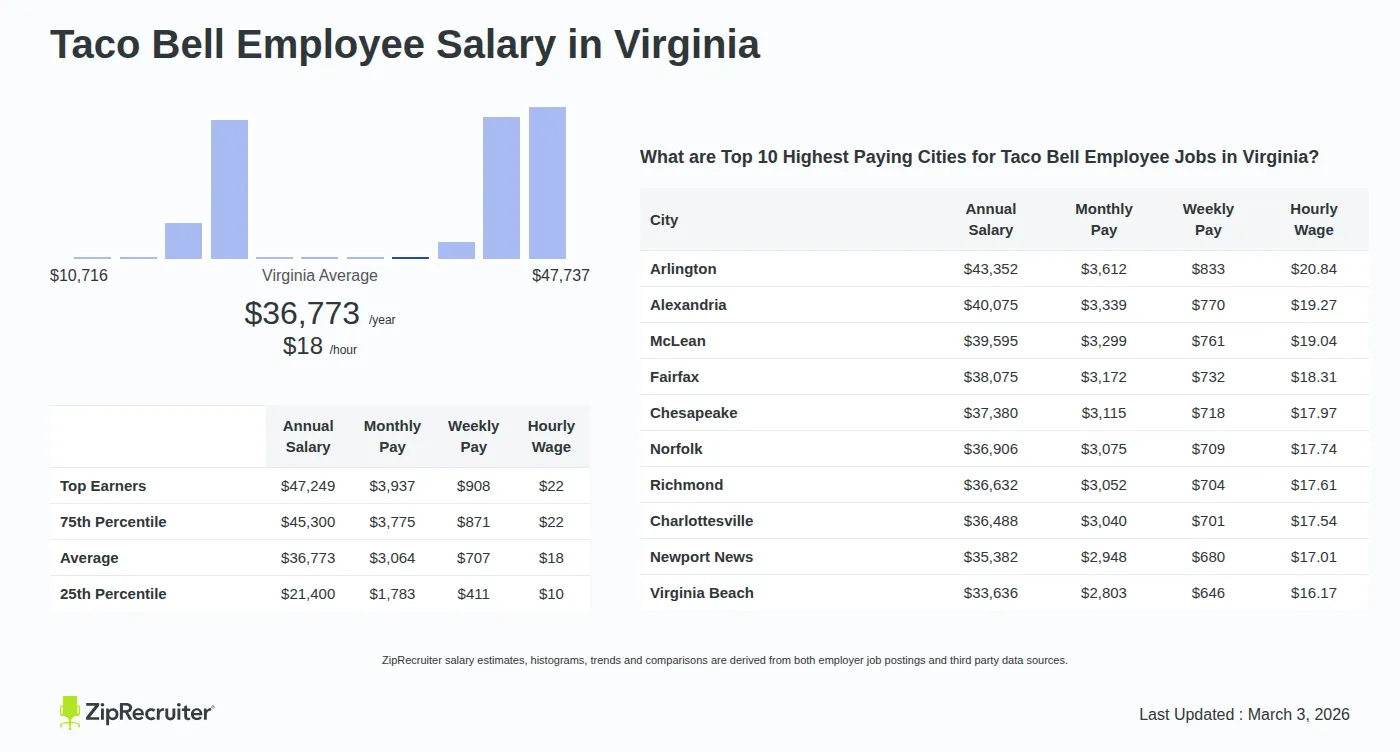
For Taco Bell crew members and shift managers working in Alameda County, the gap between $16 an hour and $30 is not abstract. Fast food wages in California already sit above the federal minimum following the state's AB 1228 sector-specific floor, but the proposed $30 target would substantially exceed those existing benchmarks. Franchise operators would face the steepest pressure under the large-employer threshold, given that chains with significant systemwide revenue could qualify even if a single location employs fewer than 100 people, depending on how the initiative defines its revenue test. The full ballot text, including how revenue would be calculated, has not been made public.
Los Angeles offers a reference point for where regional wage floors can go: the city already requires hotel and airport workers to be paid $30 an hour by July 2028, making Alameda County's proposal consistent with a broader trend of local governments moving ahead of state law on wages.
The coalition still needs to gather enough signatures to qualify the measure for the November ballot, and the formal ordinance language has not yet been released for public review. How the initiative defines the $100 million revenue threshold, what compliance and enforcement mechanisms it includes, and whether it contains any exemptions will determine how broadly it applies to the county's restaurant industry.
This article was produced by Prism’s automated news system from verified source data, official records, and press releases, then run through automated quality and moderation checks before publishing. The system is built and supervised by the people who set the standards it runs under. Read our full AI policy.
Did this article answer your question?