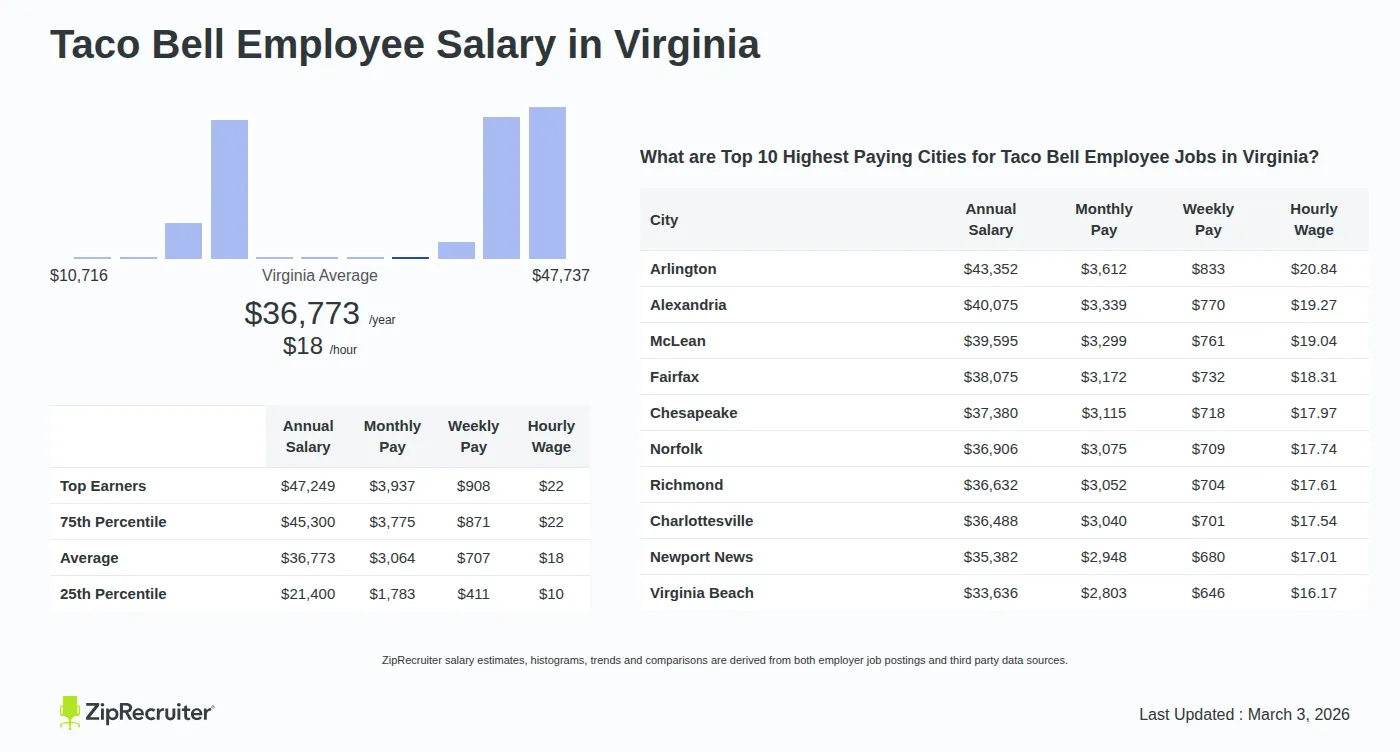
OSHA reminds restaurants to prioritize training for young workers
Young Taco Bell crews face their highest risk in the first year, when rushed training can turn routine line work into burns, cuts, or worse.
Why this warning matters for Taco Bell crews
OSHA’s reminder lands hard for restaurants like Taco Bell because the job is often a first job. In restaurants and other eating and drinking businesses, the agency says 11.6 million people work in the United States, and nearly 30% are under 20. That means a large share of the workforce is still learning how to move safely around hot surfaces, sharp tools, cleaning chemicals, and fast-moving shifts.
The danger is not abstract. OSHA says young workers suffer a disproportionate share of injuries and fatalities, especially in the first year on the job. In 2017, 22 youths under 18 died from work-related injuries and another 27,070 were sickened or injured. CDC and National Institute for Occupational Safety and Health data also show that workers ages 18 to 24 had the highest rate of work-related nonfatal injuries and illnesses treated in emergency departments in 2020, at 2.3 per 100 full-time equivalents. For a Taco Bell store trying to keep labor tight and lines moving, that is a reminder that the first few shifts are not the place to wing it.
The hazards that matter most on a Taco Bell line
OSHA’s restaurant materials point to the same danger points that show up in a busy Taco Bell kitchen. Burns and scalds can happen around hot equipment and food. Knives and cuts are a constant risk in prep work. Strains and sprains build up when people are lifting, twisting, or moving too fast. Electrical hazards and fire hazards sit behind the counter even when they are easy to ignore in the rush of a lunch or late-night window.
Slips, trips, and falls are another common cause of injury, and they are especially dangerous when a crew is moving fast, the floor is wet, or a new worker does not yet know where trouble spots show up. OSHA’s Young Worker Safety in Restaurants eTool covers cleaning, cooking, drive-thru, food preparation, delivery and storage, serving, and general hazards, which is a good map of how broad the risk picture really is. In a Taco Bell setting, the lesson is simple: the person learning the line needs to know not just how to do the task, but where the hazard sits before the task starts.
Cleaning chemicals and the hidden parts of the shift
Young workers are often shown the food side of the job first and the cleaning side second, but OSHA’s guidance treats cleaning as part of the core safety picture. That matters because the wrong mix, the wrong container, or a rushed cleanup can expose a crew member to chemical injury before anyone notices a problem. A teenager or first-job worker may not instinctively recognize that a cleaner is hazardous or know when a spill needs to be escalated instead of wiped up quickly.
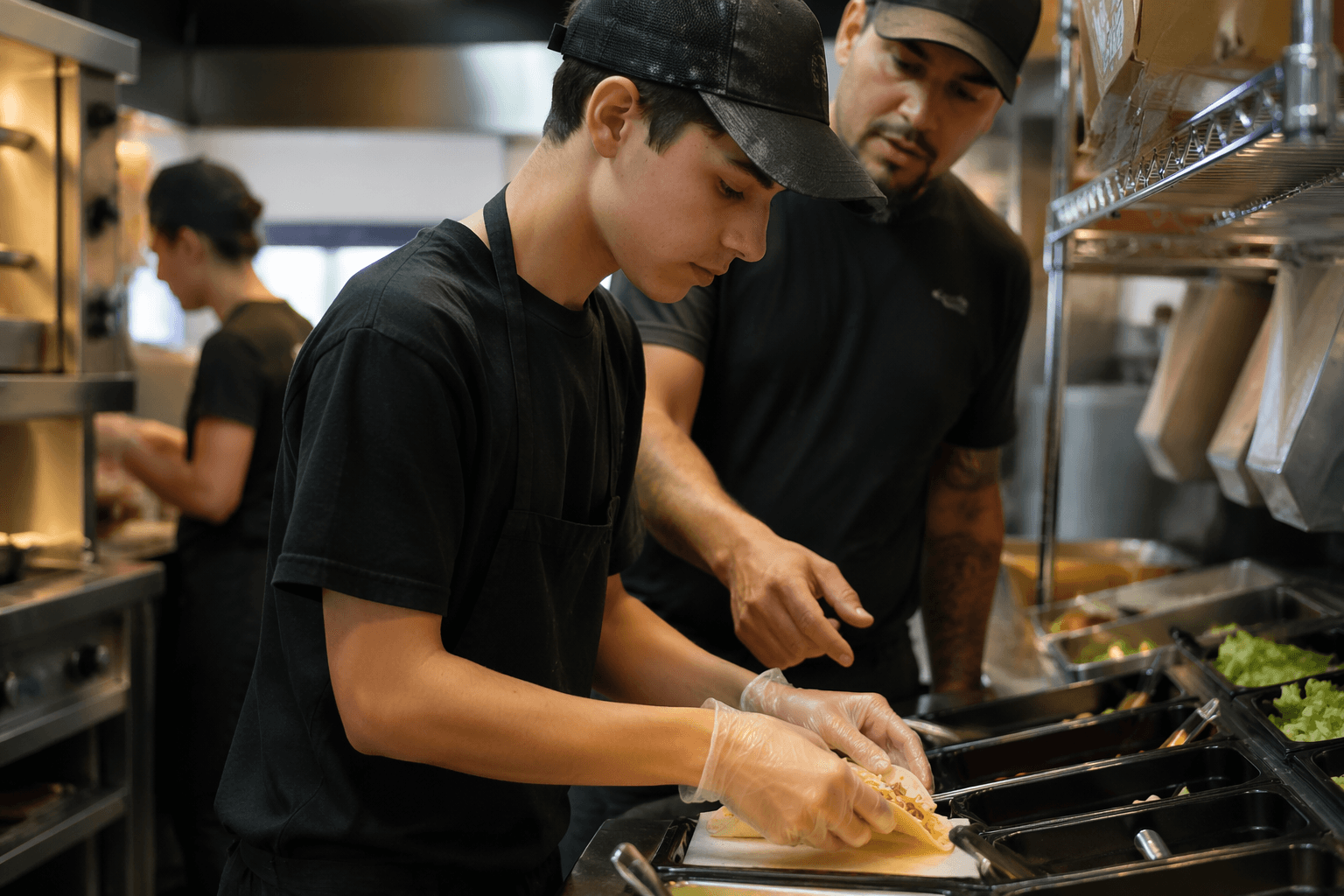
That is why the training has to be specific. A new crew member should know what chemicals are used, where they are stored, which tasks require caution, and who to alert if a product is unlabeled, leaking, or being used the wrong way. If that step gets skipped, the cost is not just a minor mistake. It can become an injury, a discipline issue, or a compliance problem if the store has not trained workers well enough to handle the job safely.
Late hours bring a different kind of risk
OSHA says workplace violence is a restaurant hazard because of cash, late work hours, and contact with the public. The agency also cites a Bureau of Labor Statistics study from 1998 to 2002 that found 14% of overall youth workplace injuries were attributed to assaults or violent acts. For Taco Bell, where late shifts and drive-thru traffic can stretch into the night, that makes security part of the safety conversation, not a separate issue.
Young workers need to know where to stand, when to call for help, how to respond to aggressive behavior, and what they should never try to handle alone. That matters for crew morale as much as physical safety, because a worker who feels exposed on late shifts is more likely to freeze, make a bad judgment call, or quit. In a restaurant that relies on fast turnover and cross-trained staff, that kind of instability hits the whole operation.
What OSHA says workers are entitled to
OSHA is blunt about employer responsibility: workers have the right to working conditions that do not pose a risk of serious harm, and they have the right to training in a language and vocabulary they understand. That point is easy to overlook in restaurants, where onboarding often gets compressed into a few rushed shifts and a manager assumes a demonstration is enough.
The agency also says workers can review injury and illness records and can file a complaint if they believe there is a serious hazard or a rules problem. Retaliation for reporting injuries or safety concerns is prohibited. For a Taco Bell crew member, that means speaking up about a slick floor, a faulty cord, or a broken piece of equipment is not insubordination. It is part of the safety structure that OSHA expects to exist.
What good first-week training should look like
At Taco Bell, the best training is not just a walkthrough of the line. It is a concrete lesson in where the risks sit, how the job flows, and what happens when something looks off. New crew members should be told where to stand around hot equipment, what surfaces they should not touch, what should never be rushed, and who to tell if the floor is slick or a machine is acting strangely.
That first-week focus matters because young and inexperienced workers are especially vulnerable when they do not know the routine yet. CDC and NIOSH say little or no prior work experience and lack of safety training contribute to young worker injuries. In practice, that means managers cannot assume common sense will fill the gaps. A first-job worker needs repetition, supervision, and clear language, not just a quick nod toward the prep table.
Why scheduled training time matters
Taco Bell’s Yum-linked training pages indicate hourly employees must take training only during scheduled work hours. That detail matters because it treats training as part of the job, not an after-hours favor. For young workers, especially those balancing school, transportation, or family responsibilities, scheduled training time can be the difference between real instruction and a box checked under pressure.
It also gives managers a practical standard to follow. If training is done on the clock, it is easier to pace it, document it, and make sure the worker is actually absorbing the safety steps instead of trying to learn while the line is already flooding with orders. That is how a store reduces the chance that a missed step becomes a burn, a cut, a chemical exposure, or a complaint that could have been avoided.
The bigger operational lesson
Restaurants do not fail on safety because the rules are complicated. They fail when the basics get rushed. OSHA’s numbers show that young workers are overexposed to injury, especially at the start of their careers, and Taco Bell’s fast-service model leaves little margin for casual onboarding. A store that trains carefully in the first week is not just protecting a teenager’s first paycheck. It is protecting the shift, the manager, and the store’s compliance record from the kind of preventable incident that can spread far beyond one station on the line.
This article was produced by Prism’s automated news system from verified source data, official records, and press releases, then run through automated quality and moderation checks before publishing. The system is built and supervised by the people who set the standards it runs under. Read our full AI policy.
Did this article answer your question?