Portillo’s airport debut shows how compact restaurants can work under pressure
Portillo’s airport opening is a live stress test for compact restaurants, and Taco Bell’s smaller formats show how quickly staffing, speed, and line design can decide success.
A compact unit that behaves like a pressure test
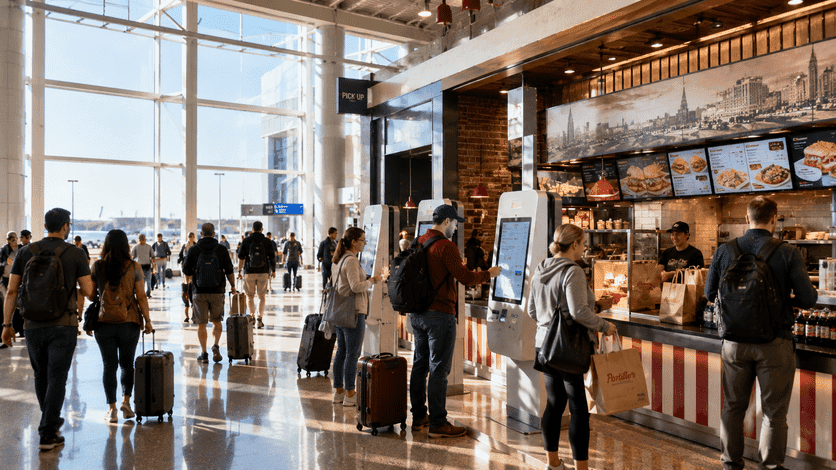
Portillo’s first airport restaurant at Dallas Fort Worth International Airport is more than a new address in Terminal B. It is a test of whether a brand can keep service moving in a tighter footprint, with multiple order channels, a smaller back-of-house, and no room for sloppy staffing decisions. That is exactly why Taco Bell crew members and managers should pay attention: airports compress the same problems that already show up in drive-thrus, urban stores, and other high-traffic locations.
Portillo’s said the airport unit is part of its first two restaurants built around a new small-format prototype. The setup includes register ordering, self-order kiosks, order-ahead pickup, and a Grab & Go area, with seating for 50 or more guests. That mix matters because it shows what modern compact restaurants demand from workers: fewer wasted steps, faster handoffs, and enough cross-training that one busy station does not stall the whole line.
Why Texas makes this a labor story, not just a growth story
The Dallas-Fort Worth airport opening lands in a state where Portillo’s has already learned some hard lessons. Its first Dallas unit was a top performer in 2023, but by August 2025 the company said results in Houston and in-fill Dallas stores had flattened, and it cut its revenue growth outlook for the year to 5% to 7%, down from an earlier 10% to 12% estimate. That is a reminder that format changes are often a reaction to execution pressure, not just a push for expansion.
Portillo’s own comments make that clearer. CEO Michael Osanloo has said the smaller-scale concepts are aimed at high-traffic areas and are an important step in growth, while partner Roz Mallet of PhaseNext Hospitality described the airport move as a way to extend the brand’s reach. The same small-format rollout also includes a restaurant in The Villages, Florida, at about 4,300 square feet with seating for about 110 guests and no drive-thru lanes. Taken together, those units show a chain trying to make a smaller box work in two very different settings, one with planes overhead and one without a drive-thru at all.
For restaurant workers, that kind of change usually means the labor model has to get sharper very fast. A compact store does not forgive loose scheduling, unclear station ownership, or managers who assume the same playbook will work in a smaller space. When the footprint shrinks, the gap between a good shift and a bad one is often the quality of the line design.
What Taco Bell already knows about tight footprints
Taco Bell is not starting from scratch here. In 2023, the chain tested a 1,600-square-foot Go Mobile prototype in El Paso designed primarily for digital and third-party delivery, with no dining room. The format can be built on lots as small as half an acre, compared with three-quarters of an acre for traditional Taco Bell outlets, and it was built to reduce delivery-driver wait times and late-night drive-thru congestion.
That matters because Go Mobile shows the same rule Portillo’s is now testing at the airport: a smaller building only works if every task is simpler and every role is clearer. In a no-dining-room store, the team cannot afford confusion about who is handling pickup, who is watching the drive-thru, and who is stepping in when digital orders spike. For shift managers, the lesson is brutally practical: smaller footprints do not reduce pressure, they concentrate it.
Taco Bell’s own growth numbers make the stakes even higher. In March 2025, Yum! Brands said Taco Bell reached $1 billion in operating profit in 2024, grew digital sales 32% to $6 billion, and ended the year with 8,757 restaurants after opening 347 gross-new locations across 25 countries. That level of growth means format decisions are no longer side experiments. They become the operating standard that sets expectations for franchisees, company-run stores, and the crews trying to keep everything moving.
Technology only helps if staffing is ready for it
Taco Bell has also used technology to relieve pressure at the counter and the window. In July 2024, Yum! Brands said Voice AI was already running in more than 100 Taco Bell U.S. drive-thrus across 13 states and would expand to hundreds of stores by the end of that year. Taco Bell said the system was meant to improve order accuracy, cut wait times, and ease team-member workloads, while freeing workers to focus more on hospitality.
That is the right idea, but it only works if the rest of the store is staffed and trained for the extra speed. Voice AI can remove one bottleneck, yet it can also expose the next one if the line is short-handed, the pickup shelf is overflowing, or the manager has not built enough cross-training into the shift. In that sense, the technology is less a replacement for labor than a test of whether management can use labor better.
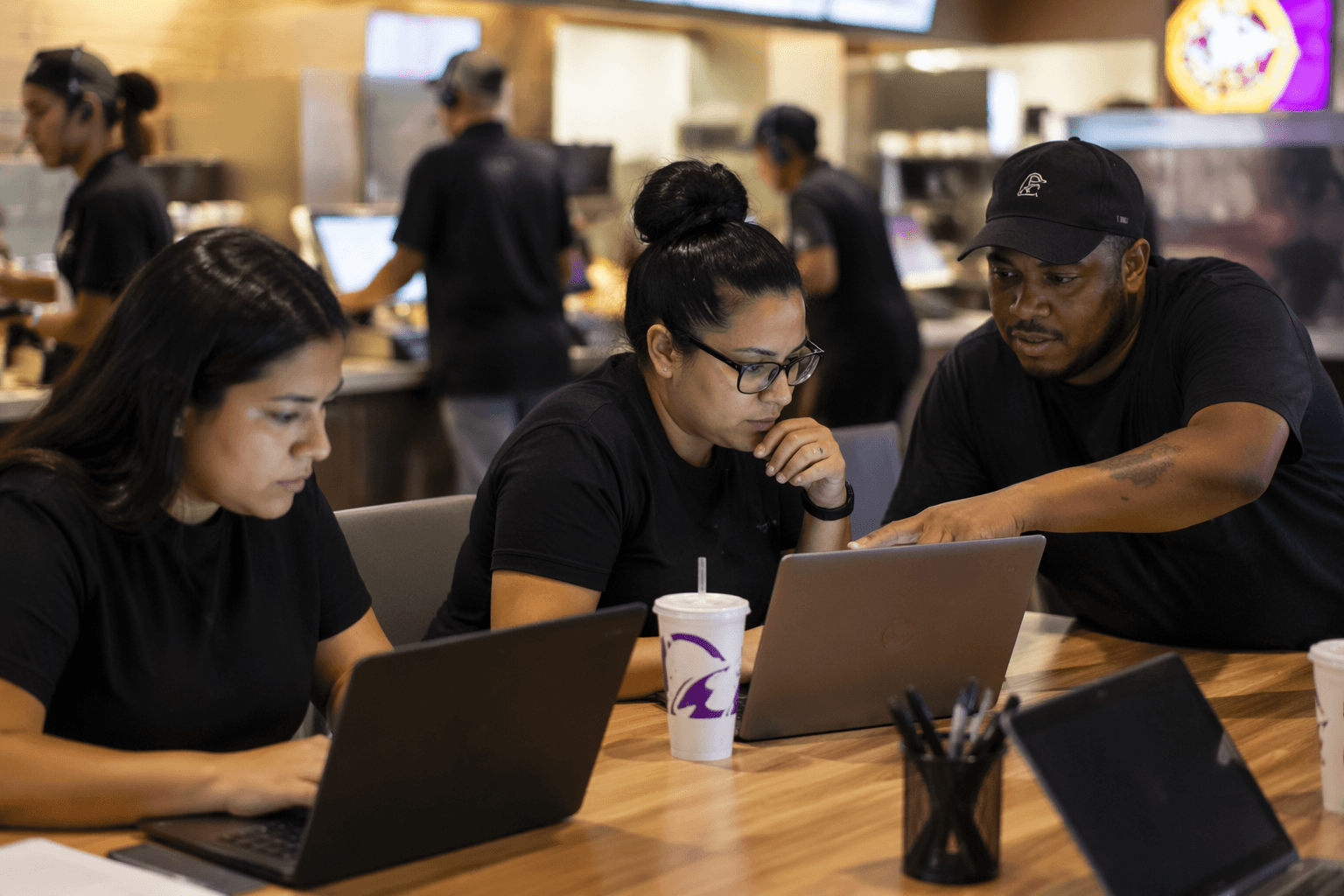
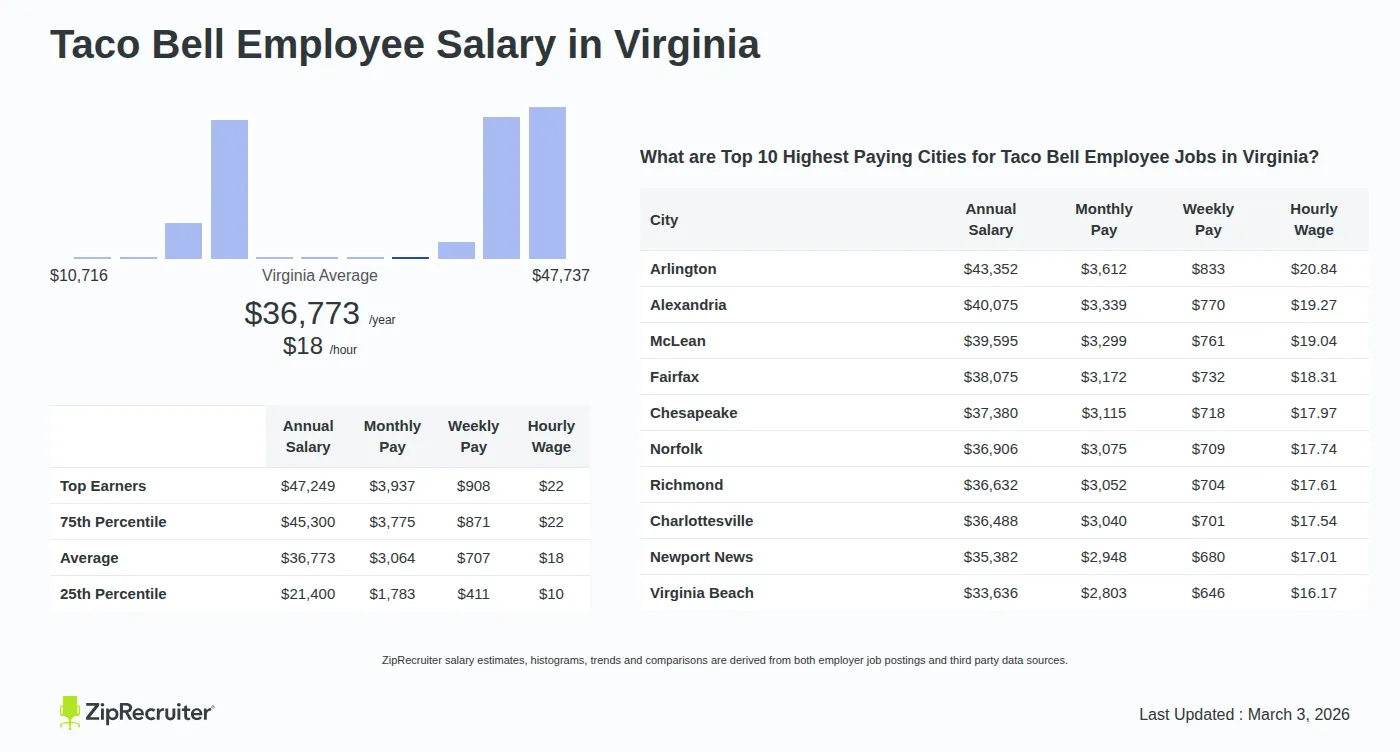
That is also where the pay conversation comes in. Taco Bell workers already live inside debates about minimum wage, hours stability, and whether a store’s labor model matches the pace of the work. Compact formats make those questions more urgent, because every hour on the schedule has to do more, and every team member is expected to move between tasks faster. If the company asks for airport-level precision in a smaller footprint, the staffing plan has to support that reality.
What shift managers and restaurant managers should take from this
The Portillo’s airport debut is a warning and a roadmap at the same time. Small-format restaurants can work, but only when the operation is disciplined enough to survive peak demand without wasting labor or confusing the line. For Taco Bell, the message is especially clear because the brand has already bet on smaller builds, digital ordering, and automation to keep pace with a business that is growing fast.
- Build every shift around role clarity, not hope.
- Cross-train for the stations that get hit hardest first, especially pickup, drive-thru, and order support.
- Treat menu simplification as a staffing tool, not just a menu choice.
- Use technology to reduce repetitive work, then make sure the saved time actually shows up as better service and less burnout.
The lesson from a terminal in Dallas is straightforward: when the box gets smaller, the labor model has to get smarter. The chains that win in tight spaces are the ones that can prove their staffing holds up before the rush exposes every weak spot.
This article was produced by Prism’s automated news system from verified source data, official records, and press releases, then run through automated quality and moderation checks before publishing. The system is built and supervised by the people who set the standards it runs under. Read our full AI policy.
Did this article answer your question?