Rhode Island advances self-checkout staffing bill, labor eyes precedent
Rhode Island’s self-checkout staffing bill cleared both chambers, and labor says the 1-to-3 ratio could become a national model for retail and restaurant automation fights.

Rhode Island lawmakers have pushed through a bill that would force grocery stores with self-service checkout stations to keep at least one manual lane open for every three self-service kiosks. The substitute version of Senate Bill 2342 also requires at least one manual station to meet ADA standards and says any worker assigned to watch self-checkout must be relieved of all other duties while doing it.
The measure has now cleared both the Rhode Island House and Senate and is headed to Gov. Dan McKee, a sequence labor supporters are treating as a signal that lawmakers are willing to write staffing rules around automation rather than leave them to management. UFCW says the bill would be the first statewide self-checkout staffing ratio in the United States. The union also says retail theft cost Rhode Island $17.1 million in lost sales taxes in 2022 and claims thefts were 16 times more likely at self-checkouts than at employee-managed cash registers.
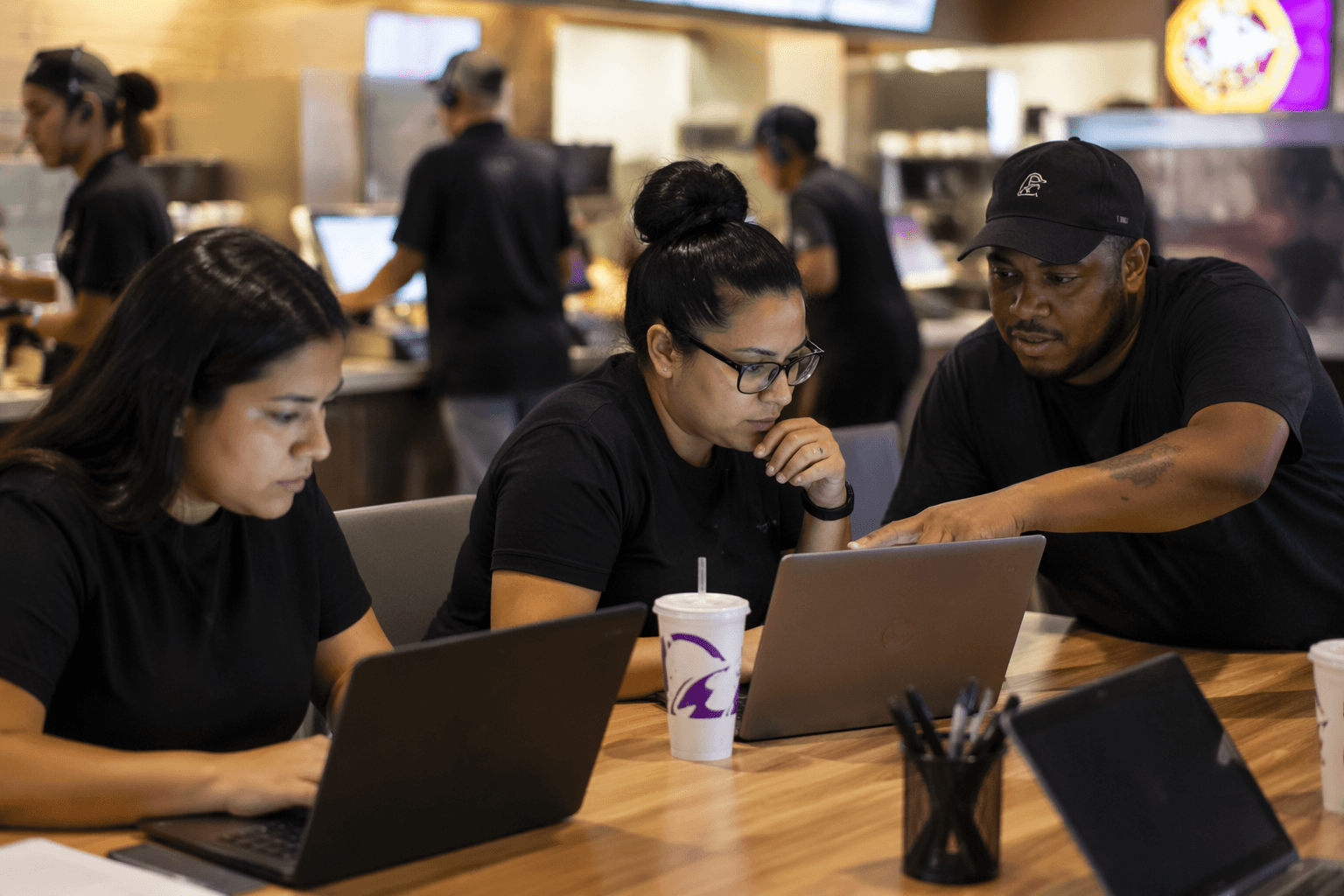
For Taco Bell operators, that matters because the same argument is already moving through quick service in a different form. Yum! Brands said in July 2024 that Voice AI was already running in more than 100 Taco Bell U.S. drive-thrus across 13 states, with hundreds of locations targeted by the end of 2024. The company said the goal was to improve back-of-house operations, order accuracy, wait times and the experience for team members and customers. Taco Bell’s official newsroom also describes self-service ordering kiosks as part of its customer experience strategy.
That puts the brand in the middle of the same basic fight Rhode Island is now having over grocery lanes: whether self-service technology is a convenience layer or a labor decision that changes who has to be on the floor and how much help customers get when something goes wrong. In a Taco Bell, that can mean fewer minutes at the front counter and more pressure on the crew to keep orders moving, fix kiosk mistakes, handle pickup, and manage the rush without losing speed or accuracy.
It also creates a warning for franchise operators, who live and die by labor mix, store layout and service time. If lawmakers start treating self-service as a staffing issue, the debate could quickly shift from whether kiosks save money to whether they leave too few people available to serve guests, maintain accessibility and absorb the messy work that technology never fully takes off the crew’s plate. Rhode Island has given that argument a concrete template, and other states now have one more model to copy.
This article was produced by Prism’s automated news system from verified source data, official records, and press releases, then run through automated quality and moderation checks before publishing. The system is built and supervised by the people who set the standards it runs under. Read our full AI policy.
Did this article answer your question?