Self-service tech reshapes Taco Bell jobs as California wages rise
California’s $20 wage floor is pushing Taco Bell toward a different kind of efficiency. Kiosks take orders; crew time shifts to speed, cleanliness, and guest care.

Taco Bell’s self-service push is less about shrinking the crew than changing what the crew is there to do. In California, the $20 fast-food wage floor has made that shift harder to ignore, because every hour on the clock now has to justify itself in a tighter labor model.
Why the wage change matters
California’s fast-food law, AB 1228, was signed by Governor Gavin Newsom on September 28, 2023 and took effect April 1, 2024 with a $20.00 hourly minimum wage for covered fast-food restaurant employees. The law also created the Fast Food Council inside the California Department of Industrial Relations, giving the sector a body that can set future minimum wage increases and other employment standards.
That policy backdrop matters because it changes the calculus for operators. When labor gets more expensive, the instinct is not always to cut headcount; often it is to make every worker more productive by shifting repetitive work to kiosks, apps, and other self-service tools. In other words, the job gets redesigned around throughput and service quality, not just order-taking.
What machines absorb, and what people still do
The easiest task to hand off is the one that is most standardized: taking orders. Kiosks and digital channels can capture the customer’s request, route it into the system, and reduce the pressure on the front counter during rushes.
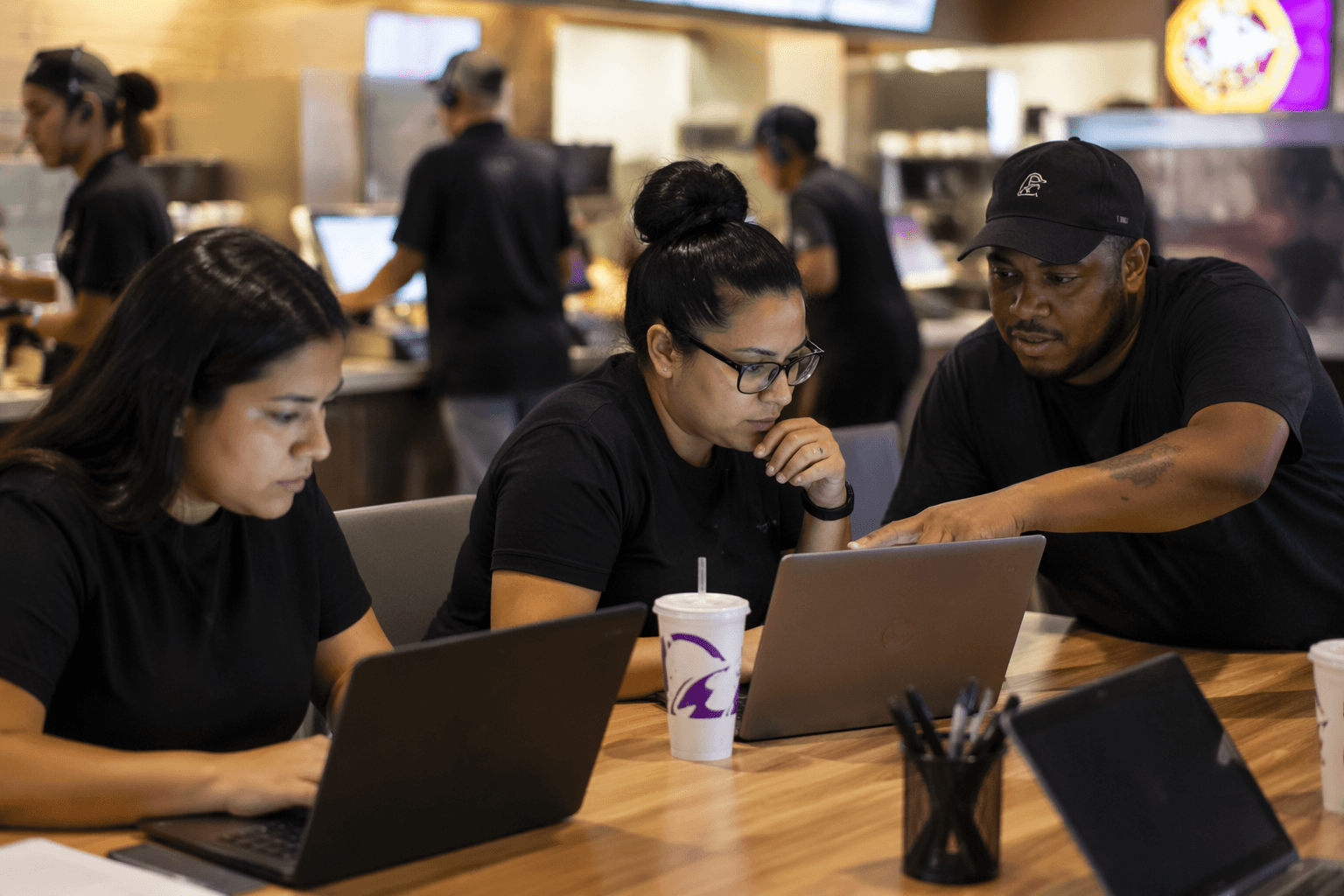
What they do not replace is the work that keeps a Taco Bell running cleanly and fast. Front-counter roles still include bagging food, cleaning, answering questions, checking accuracy, and handling the floor tasks that shape the guest experience. The research notes are clear on this point: self-service can remove the routine order-taking part of the shift, but people still have to do the manual, hands-on work that affects food quality, cleanliness, and hospitality.

That distinction is the real story for crew members. If the hardware is doing the repetitive task, the human value moves to speed, line discipline, recovery from mistakes, and keeping the restaurant feeling organized when the rush hits.
Why Taco Bell is unusually exposed to this shift
Taco Bell has been moving in this direction for years, so California’s wage pressure is meeting an existing operating model rather than forcing a brand-new one. In Yum! Brands’ 2023 annual report, Taco Bell’s digital sales mix reached about 31%, an all-time high, up seven percentage points year over year. Yum! said kiosk sales were a large driver of that increase.
The company’s 2024 annual report kept that direction front and center by describing Taco Bell’s strategy as leaning into “More Digital.” That matters because Taco Bell already has a business built around digital ordering, drive-thru speed, and high-volume flow. For a brand like this, self-service is not a side experiment. It is becoming part of the core labor model.
The Defy concept shows what that looks like in physical form. Taco Bell Defy opened in Brooklyn Park, Minnesota on June 7, 2022, with four drive-thru lanes, three of them dedicated to mobile or delivery pickups and one traditional lane. The design was built to speed up service for digitally ordered food, and it underscored the company’s belief that the future of fast food is not just about taking orders faster, but about separating order intake from handoff and fulfillment.
What this means for crew schedules
If you work the line or make the schedule, the practical effect is simple: more of the labor plan has to be built around where people add value after the order is already placed. That often means fewer shifts that are pure counter duty and more cross-trained shifts that blend register support, order accuracy, bagging, prep, cleaning, and guest recovery.
It also changes the rhythm of the day. A store with strong self-service has to staff for the back half of the experience, the part that begins after the order is entered: finishing food correctly, moving it out quickly, keeping the lobby and line clean, and handling the guest who needs help. The work does not disappear; it gets redistributed, and that can be a better job if managers use the time wisely.
But the risk is real if the same crew is simply handed more responsibilities without any change in expectations or staffing. A labor-saving tool can make a shift smoother, or it can turn into a pressure cooker if managers assume tech will absorb the work and people can absorb everything else. The difference is whether leadership treats self-service as a way to free people up, or just as a reason to squeeze more out of them.
What managers should expect now
For restaurant managers, the message is not to chase automation for its own sake. It is to use tech intentionally, so the hardware handles repetitive ordering and the humans handle hospitality, accuracy, and the moments that protect the brand. That means training matters more, not less, because a crew that understands app orders, kiosk flow, and digital pickups can keep the line moving without letting the restaurant feel mechanical.
California’s wage floor has intensified a debate that was already underway, and Taco Bell is one of the clearest examples of how it is playing out. The stores that adapt best will not be the ones with the fewest people on the floor. They will be the ones that use technology to shift labor toward the work machines cannot do: keeping service fast, the food right, and the guest experience intact.
This article was produced by Prism’s automated news system from verified source data, official records, and press releases, then run through automated quality and moderation checks before publishing. The system is built and supervised by the people who set the standards it runs under. Read our full AI policy.
Did this article answer your question?