Taco Bell managers face costly payroll risks from overtime mistakes
One missed punch or unpaid closing task can turn a Taco Bell shift into overtime liability, and manager titles do not override the wage rules.
Why a Taco Bell shift can turn into wage liability
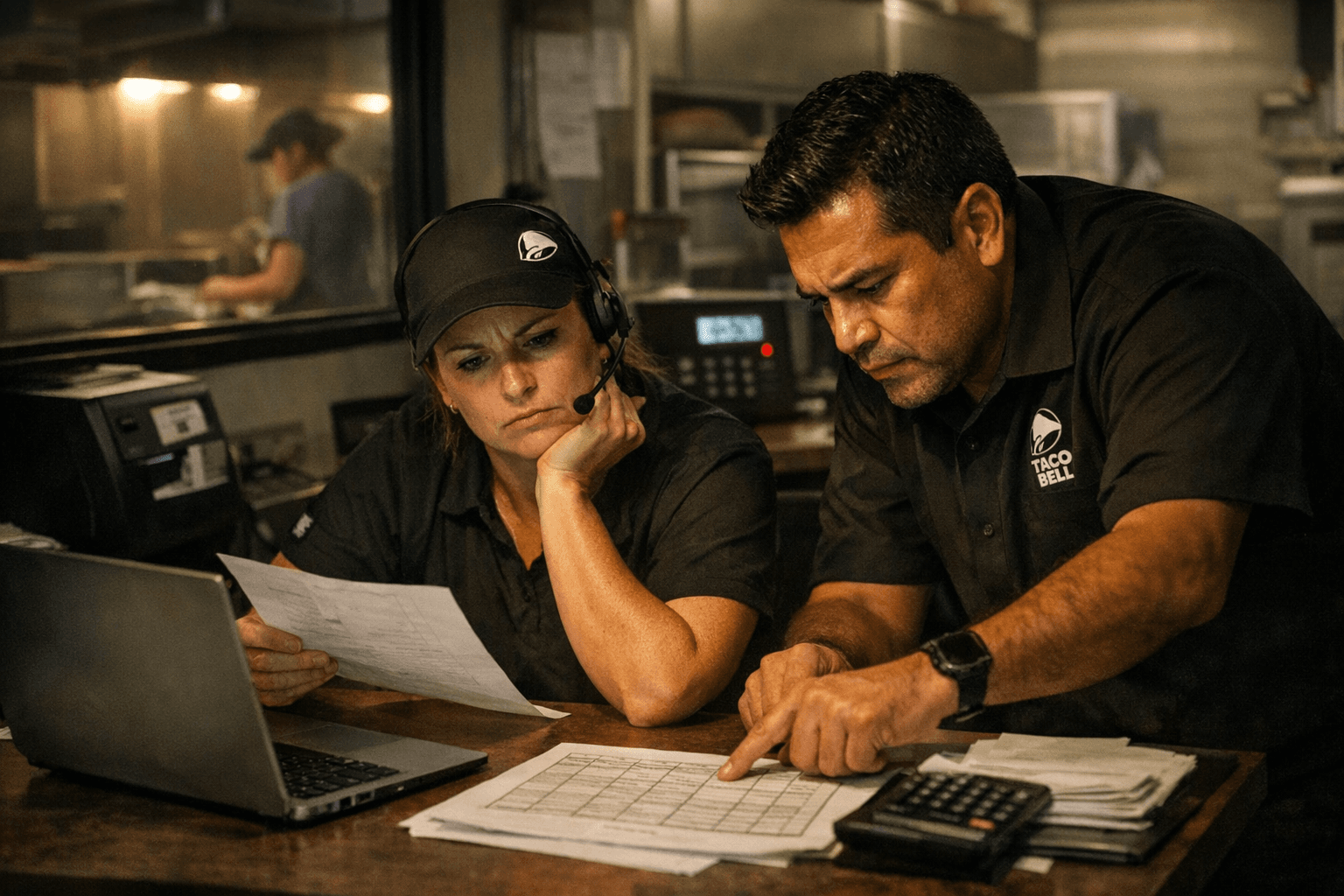
A few extra minutes at the end of a closing shift can be the start of a payroll problem. Under federal wage law, covered nonexempt employees must be paid for all hours worked, and overtime generally kicks in after 40 hours in a workweek at not less than one and one-half times the regular rate. The Department of Labor also makes clear that an employer who requires or permits overtime work generally has to pay for it, which is why a late inventory count, a register handoff, or an after-hours text thread can create exposure fast.
Federal law also sets a floor under the conversation: the current minimum wage baseline is $7.25 an hour, though many states require more. That matters in a Taco Bell store because payroll errors rarely stay in one bucket. A missed hour can affect straight-time pay, overtime, and the employee’s trust in the manager who approved, edited, or ignored the punch.
Where managers get misclassified
The biggest mistake is assuming the title on a badge controls the pay status. The Department of Labor says job titles do not determine exempt status, and that an exemption depends on the employee’s actual duties and salary meeting the regulatory test. For executive, administrative, professional, computer, and outside sales exemptions, the salary basis requirement is part of the analysis, and the department’s current enforcement position references a minimum salary level of $684 per week.
That distinction is critical for shift managers and assistant managers who spend most of the day doing the same work as crew, ringing orders, filling gaps on the line, closing the store, or covering inventory instead of exercising real exempt-level authority. If the role is mostly operational and the person is paid like hourly labor, the store cannot simply relabel that employee as exempt and stop counting overtime. In practice, the duties test, not the name of the position, decides whether the paycheck can legally avoid overtime.
The most common traps are the ones that feel routine
In fast-food restaurants, overtime exposure usually does not start with a dramatic policy decision. It starts with small habits: asking someone to stay late to finish prep, expecting a manager to answer messages after clocking out, letting closing work spill past the scheduled end of shift, or telling staff to take care of “one more thing” without fixing the time record. If the work is required or permitted, the time generally has to be paid.
The same risk shows up when managers try to clean up the schedule after the fact. Editing punches without a clear explanation, shaving a few minutes off a closing shift, or assuming a break was fully unpaid when the employee was still working can all turn into wage claims later. The DOL’s overtime guidance makes the central point plain: covered nonexempt workers are owed premium pay for hours over 40, and restaurants are on the hook when they let work happen off the clock.
For Taco Bell teams, this is where the pressure becomes practical:
- If a shift manager keeps the crew moving after clock-out, that time should be captured.
- If an assistant manager stays to count inventory or finish a close, it counts as hours worked.
- If a leader responds to texts about staffing, delivery, or opening tasks after leaving, that can be work time.
- If a punch is changed, the reason needs to be documented, not guessed later.
Why recordkeeping protects both paychecks and the store
The IRS tip guidance is a useful reminder that restaurant payroll lives or dies on clean records. Even though tips are not the normal structure at most Taco Bell locations, the IRS still requires employees who receive tips to keep a daily tip record, report tips to the employer unless the monthly total is under $20 per employer, and keep records of cash, electronic, pooled, and even noncash tips. The point is broader than tips alone: disciplined records protect workers and the business at the same time.
That same discipline should carry over to hours, pay rates, and any payroll adjustments made during the week. If a worker is asked to stay for one more task after closing, that time should be entered. If a manager is correcting an off-the-clock issue, it should be fixed before it becomes a pattern. The store that keeps clean records is also the store that can answer a complaint without guessing.
What Taco Bell managers should do before a mistake becomes a claim
The safest Taco Bell payroll systems are not built on trust alone. They are built on habits that match the law: classify employees by duties, not title; pay nonexempt workers for every hour worked; track closing and opening stretch time; and make sure no one is pushed into unpaid work just because the shift feels almost over. The federal rule is straightforward, but the restaurant floor is not, which is why managers need to treat every late task as a payroll decision, not just an operational one.
For workers, that means missed minutes matter. For managers, it means a sloppy punch edit, a habit of off-the-clock texting, or a wrong exempt classification can become a wage complaint, a back-pay bill, or a trust problem that spreads through the whole store. In a Taco Bell kitchen, payroll accuracy is not an admin detail. It is lawsuit prevention and paycheck protection.
Know something we missed? Have a correction or additional information?
Submit a Tip