Taco Bell managers face youth labor rules as teen worker issue grows
Taco Bell’s teen-heavy workforce turns child labor compliance into a floor-level job: age checks, school hours, and late closes can create risk fast.
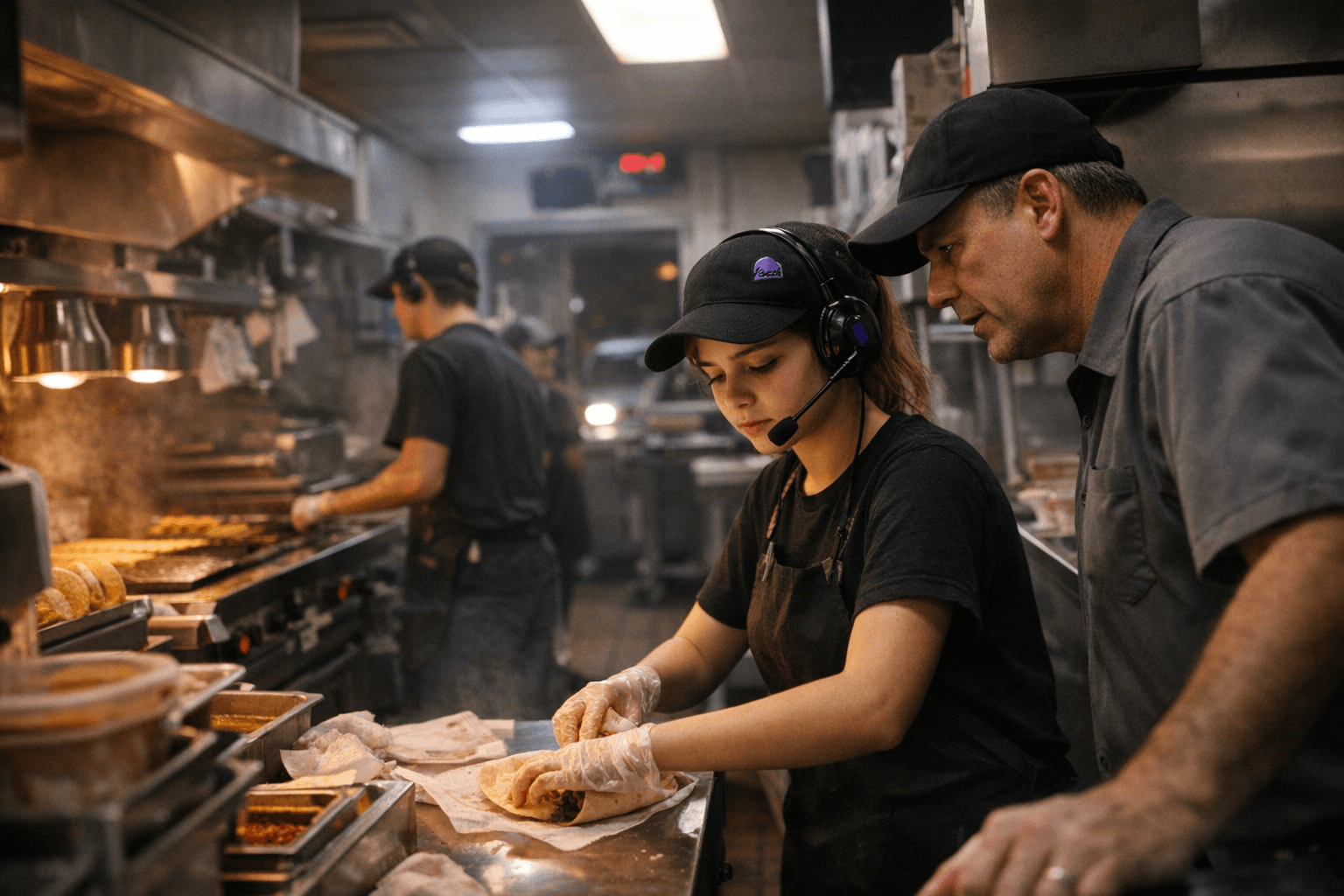
Taco Bell’s reliance on teen workers turns youth labor rules into a daily operations issue, not a paperwork exercise. In restaurants and eating-and-drinking businesses nationwide, 11.6 million people work in the sector and nearly 30 percent are under 20, which means managers are often scheduling minors into the same fast, hot, physically demanding environment that already runs on tight labor. When the line is thin and the close runs late, the compliance mistakes usually start with the schedule.
What managers need to know before a teen ever hits the floor
The U.S. Department of Labor’s YouthRules guidance is built around a simple idea: young workers need positive, safe work experiences, and employers need clear information on federal and state labor laws. For Taco Bell managers, that means youth labor compliance starts before orientation, with a check on age, school schedules, and the specific worksite rules that apply to that store.
Federal child labor rules for restaurants and quick-service establishments are covered in the Department of Labor’s Fact Sheet #2A. The rules are meant to protect young workers’ health, well-being, and educational opportunities, which is why the law does not treat a 14-year-old like a seasoned closer and does not treat a 17-year-old like an adult employee with unrestricted duties.
Here is the basic line managers have to respect:
- 14- and 15-year-olds may work only in ways that do not interfere with schooling, health, and well-being.
- 16- and 17-year-olds are still subject to hazardous-occupation limits.
- Federal law sets both hours rules and occupational standards for youth workers.
- If state law is stricter than federal law, the more protective rule controls.
That last point matters at store level. A manager who knows the federal baseline but ignores a stricter state rule has not solved compliance, only postponed the problem.
Scheduling is where risk starts
In a Taco Bell store, the schedule is often where the first compliance error happens. A teen can be perfectly capable of learning register basics or prep tasks, but that does not mean the store can plug them into any open shift, especially not one built around late-night closes or an understaffed dinner rush.
The safest approach is to confirm age eligibility before assigning hours, then build the week around school time, work time, and rest time. That sounds routine until a manager is trying to cover a call-out on a Friday close. In practice, the stores that get into trouble are often the ones that treat a minor like a flexible extra hand instead of a worker whose hours are legally limited.
Taco Bell says hiring age can vary by location, so managers cannot rely on a single chainwide assumption. Local minimum-age rules matter, and applicants should check the requirements for the specific restaurant. That makes store-level verification essential, especially in franchised settings where practices can drift from one location to the next.
Station assignments should match experience, not just urgency
Quick-service kitchens reward speed, but youth labor compliance punishes improvisation. A teen who is new to the job often needs closer supervision, simpler station assignments at first, and a gradual build-up of responsibility. That is not just a training preference. It is how managers reduce the chance that a rushed close, a busy fryer area, or a high-pressure equipment station becomes a safety problem.

The practical rule is straightforward: do not assume that because a station is common, it is automatically appropriate for a minor. Federal rules still place hazardous-occupation limits on older teens, and those limits are exactly why managers need to verify task assignments before someone is sent to work alone. If the store is short-handed, that is a reason to slow down the assignment process, not speed it up.
For a Taco Bell operation, the best sequencing is usually:
1. Confirm the worker’s age and any local limits.
2. Match the schedule to the school calendar and allowed hours.
3. Start with simpler, closely supervised tasks.
4. Add responsibility only after the worker shows consistency and the assignment is clearly allowed.
5. Keep a written record of the training, scheduling, and supervision decisions.
That last step is not busywork. A store with clean records is in a much better position if there is ever a complaint or an audit.
Supervision mistakes are where legal exposure grows
Youth labor problems rarely show up as one dramatic violation. More often, they grow from small management failures: a teen left to close too much of the store without enough oversight, a shift leader who assumes another manager checked the age rule, or a schedule built to cover labor pressure rather than legal limits. In a fast-food setting, those mistakes can pile up quickly because the work is repetitive, the pace is relentless, and the staff turnover is high.
OSHA says adolescent workers are protected by both the Fair Labor Standards Act and the Occupational Safety and Health Act. That means youth labor compliance is not just about wages or schedules. It is also about whether the store has created a working environment where a young employee can actually do the job safely.
Managers should treat supervision as part of the legal control system, not a courtesy. A teen worker who is still learning the line needs a manager who can watch task placement, correct mistakes, and stop the assignment if it stops fitting the rules. The stores that skip that step tend to learn the hard way, usually after a complaint, injury concern, or wage-and-hour review.
The compliance checklist Taco Bell managers can use every week
- Verify the employee’s age before writing the schedule.
- Check whether local minimum-age rules are stricter than the federal baseline.
- Build shifts around school hours and legal hour limits.
- Keep younger workers off assignments that may fall under hazardous-occupation restrictions.
- Give new teen workers simpler station work first, then add complexity slowly.
- Do not use short staffing as a reason to ignore supervision.
- Document training, age checks, and shift approvals clearly.
- Recheck state and federal rules whenever the store adds a new manager, changes hours, or expands late-night coverage.
Taco Bell stores run on speed, but youth labor compliance runs on discipline. The managers who understand that difference protect their crews, keep their stores operational, and avoid turning an ordinary schedule into a legal problem.
This article was produced by Prism’s automated news system from verified source data, official records, and press releases, then run through automated quality and moderation checks before publishing. The system is built and supervised by the people who set the standards it runs under. Read our full AI policy.
Did this article answer your question?