Taco Bell managers face engagement gap as AI rollout perceptions diverge
Leaders said workers were excited about AI. Workers said otherwise, by a wide margin, as Taco Bell’s drive-thru tech rollout met a 76%-31% perception gap.
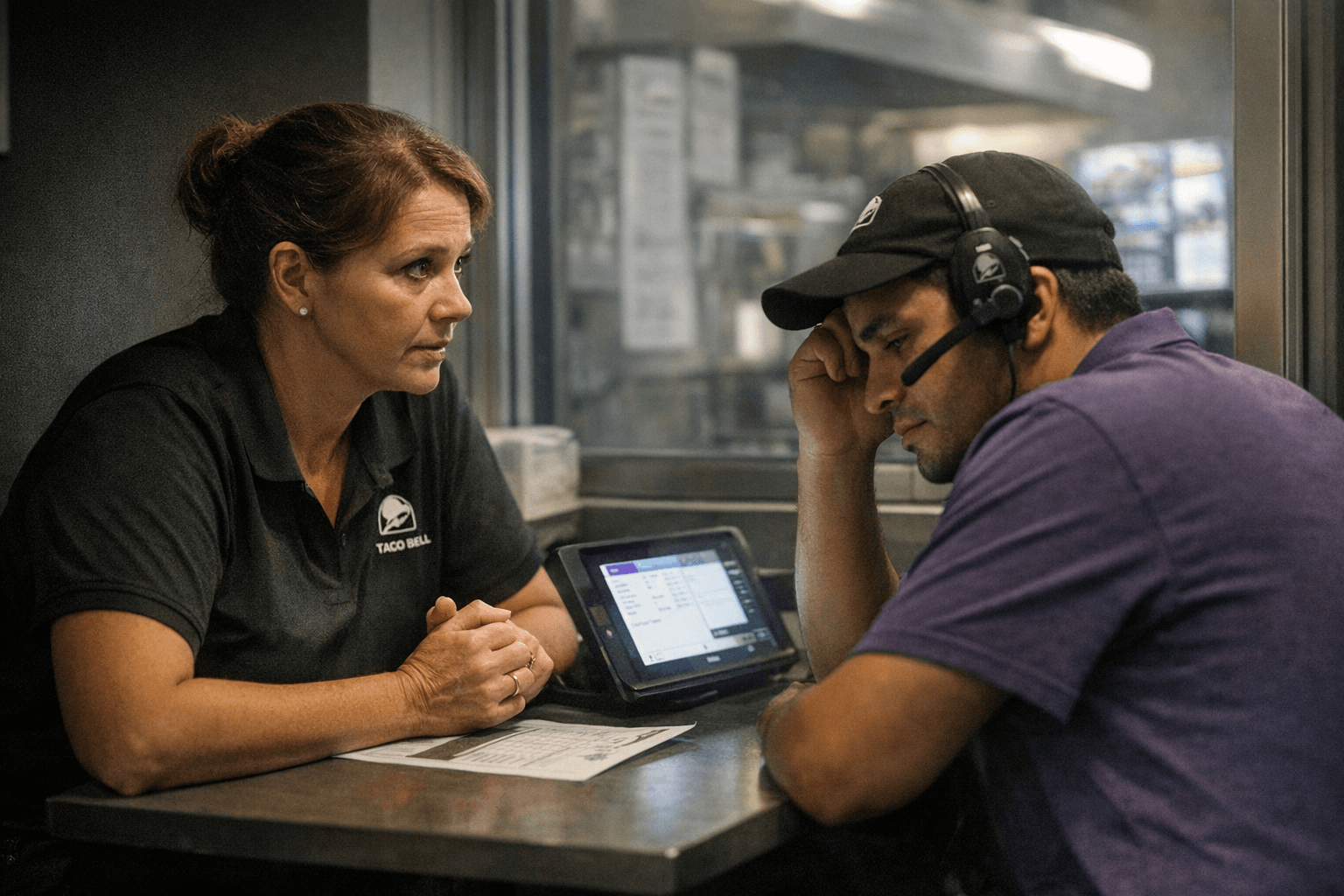
Taco Bell’s AI problem is not the software. It is the trust gap between managers who see efficiency and crew members who experience the technology through schedules, monitoring, training and the pace of a shift. People Element’s April 21 engagement report put that divide in sharp relief: 76% of executives said employees were excited about AI, while only 31% of employees agreed.
That mismatch landed in a workforce where engagement reached 59% in 2025, a recovery from earlier lows but still far from the 70% level People Element links to stronger profits, productivity and well-being. The report drew on feedback from more than 94,000 employees and said the three biggest drivers of engagement have stayed the same for years: communication and employee voice, growth and value, and leadership effectiveness. That is a warning for Taco Bell operators who may treat AI as a technology rollout instead of a people change.
The company’s own deployment shows why that distinction matters. On July 31, 2024, Yum! Brands said Voice AI was already live in more than 100 Taco Bell U.S. drive-thrus across 13 states, with hundreds of stores targeted by the end of that year. The stated goal was familiar corporate language, but the operational meaning was concrete: ease team members’ task load, improve order accuracy, deliver a consistent friendly experience and reduce wait times. In February 2025, Yum! broadened the pitch with Byte by Yum!, an AI-driven restaurant technology platform for Taco Bell and its sister brands. In March 2025, Yum! said it was partnering with NVIDIA to speed up AI innovation in restaurants.

For managers on the floor, the message is less about whether AI is coming than how it is introduced. A voice system in the drive-thru, a scheduling tool that changes hours or a digital workflow that shifts accountability can feel like help from the top and pressure from the counter at the same time. People Element also warned that lower voluntary turnover can hide disengagement, which matters in a business where a store can keep people on payroll and still lose culture if workers feel unheard. Taco Bell said in 2025 that team-member retention in its company-owned portfolio improved 17% year over year and that general managers average 10 years with the brand, but retention alone does not tell the full story.
The practical takeaway is simple: employee voice has to be treated like an operating metric, not a soft extra. If Taco Bell leaders are changing how shifts are assigned, rolling out AI ordering or retraining crews on new systems, the rollout has to explain the why, show how the job changes and close the loop on feedback. Otherwise, the same technology meant to lighten the load can widen the engagement gap instead.
This article was produced by Prism’s automated news system from verified source data, official records, and press releases, then run through automated quality and moderation checks before publishing. The system is built and supervised by the people who set the standards it runs under. Read our full AI policy.
Did this article answer your question?