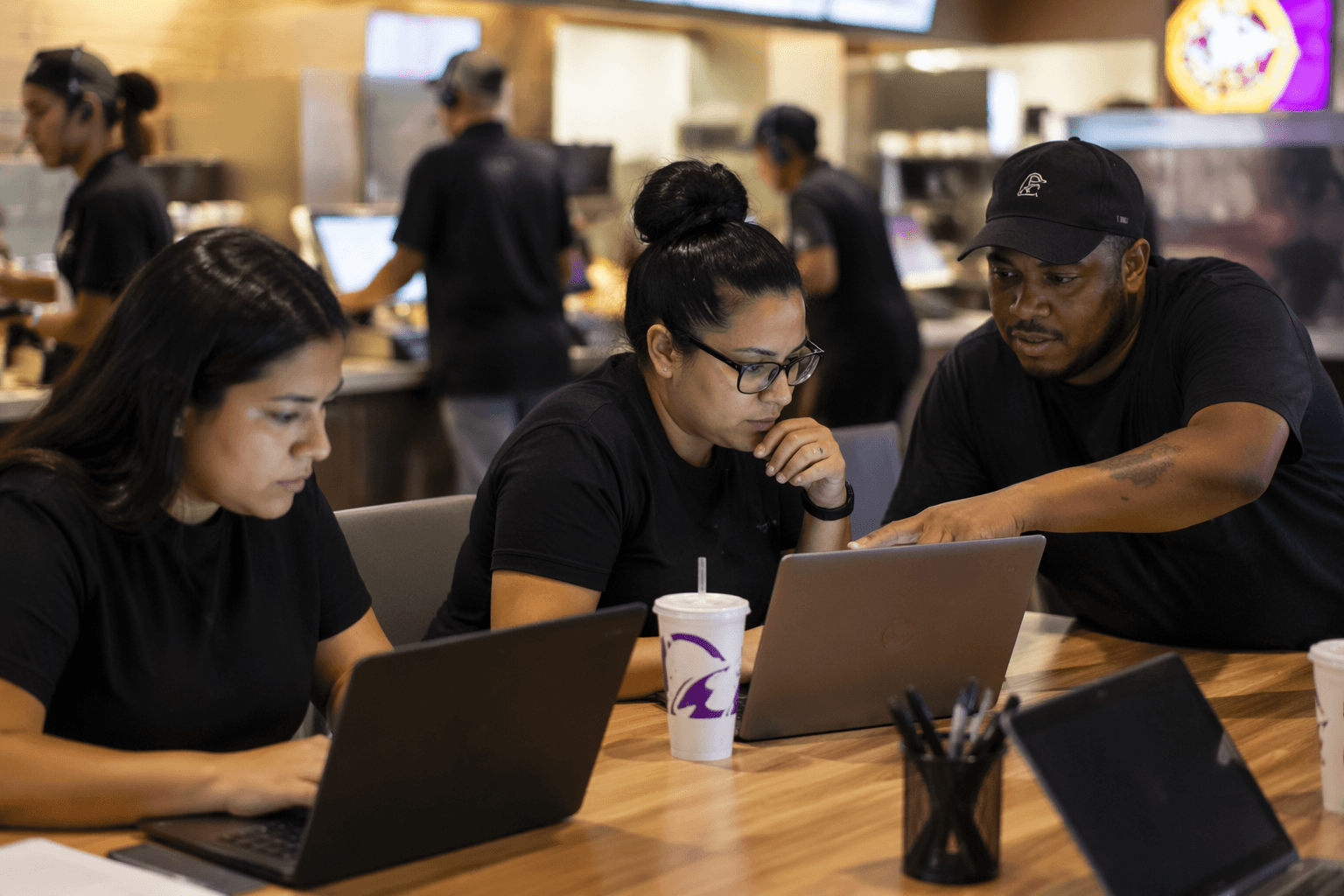
Taco Bell managers face stricter teen worker rules under federal law
Teen crew can solve a staffing gap, but one bad schedule or equipment assignment can turn a Taco Bell shift into a child labor violation.

A Taco Bell franchise owner in Washington was fined nearly $120,000 in August 2018 for repeated teen worker law violations at six Western Washington restaurants. Federal child labor rules for restaurants draw hard lines around when younger workers can be scheduled, how long they can stay on the clock, and which machines they cannot touch, and state law can be stricter still. For a shift leader, every teenager on the roster is a compliance decision, not just a staffing choice.
What the federal rulebook covers
The Department of Labor’s Fact Sheet #2A applies to restaurants and quick-service establishments that employ workers under 18. That makes it directly relevant to Taco Bell, where teen workers often show up in after-school and summer coverage and where the pressure to keep lines moving can blur the rules fast. When state and federal rules differ, the stricter law wins under the DOL’s state child labor summary, updated as of July 15, 2025, so managers cannot stop at the federal baseline.
Young workers are generally entitled to the same minimum wage and overtime protections as older adults, so teen labor is not a cheaper exception class.
The hours trap for 14- and 15-year-olds
The biggest scheduling mistake is usually the simplest one: assuming that a teenager who wants hours can legally take them. For 14- and 15-year-olds, work must stay outside school hours and generally between 7 a.m. and 7 p.m., with the evening limit extended to 9 p.m. from June 1 through Labor Day. They may work up to 3 hours on a school day, 18 hours in a school week, 8 hours on a non-school day, and 40 hours in a non-school week.
For a Taco Bell manager, that means the school-night close is where compliance often breaks down. A teen can help cover after school, but the clock matters more than the rush, and a schedule that looks fine on the labor budget can still fail the federal test if it runs too late or too long. Once a worker turns 16, federal law allows any hours, but that does not erase hazardous-job limits or stricter state rules.
Tasks minors cannot do on the line
The more dangerous assumption in fast food is that if a young worker can do a task safely in practice, then the task must be allowed legally. Minors under 18 generally cannot operate or clean power-driven meat processing machines, including meat slicers, meat saws, and meat choppers, even when those machines are being used on cheese or vegetables. They also generally cannot set up, operate, assist with, clean, oil, adjust, or repair power-driven bakery machines.
That restriction reaches the equipment managers sometimes overlook during a busy close or a cleanup push. Minors under 18 generally cannot load, operate, or unload balers and compactors, aside from limited exemptions for certain scrap paper equipment. The DOL’s employer self-assessment identifies these as among the most common compliance problems in restaurants, and a “YES” answer on those questions likely means the restaurant is not in compliance.
Where Taco Bell managers most often make mistakes
A manager short on labor may put a younger worker on a late shift, assume the worker can stay until the store is fully closed, or hand off cleanup equipment without checking whether the task is restricted. Another common mistake is treating an experienced teen like an adult because the person knows the line, knows the headset, and can keep up with a rush. Federal law does not use skill or reliability as the test.
The safest stores build the age check into the weekly schedule, the station assignment, and the closing checklist. If a worker is 14 or 15, the shift has to fit the hour limits first, then the task list has to stay inside the permitted duties. If a worker is 16 or 17, the manager still has to rule out the hazardous machines and still has to watch for state law that may be tighter than the federal standard.
What enforcement looks like when managers miss the basics
Washington’s enforcement history shows how expensive those mistakes can become for a franchise operator. The Washington State Department of Labor & Industries counted six investigations over three years and fines totaling $119,450 at six Western Washington restaurants.
In one investigation, Washington found 11 youth worked more than three hours without a rest break 59 times, and nine minors worked more than four hours without a rest break on 20 occasions. Washington also found more than two dozen Taco Bell managers and human resources staff members were trained during earlier investigations.
A shift manager’s compliance checklist
The cleanest way to run teen labor at Taco Bell is to treat it as a weekly compliance pass, not a last-minute fix. Verify the worker’s age before assigning the first shift, then map the schedule against school days, school hours, and the summer window. After that, check the station list against the machine bans and make sure no one under 18 is put anywhere near the covered equipment.
This article was produced by Prism’s automated news system from verified source data, official records, and press releases, then run through automated quality and moderation checks before publishing. The system is built and supervised by the people who set the standards it runs under. Read our full AI policy.
Did this article answer your question?