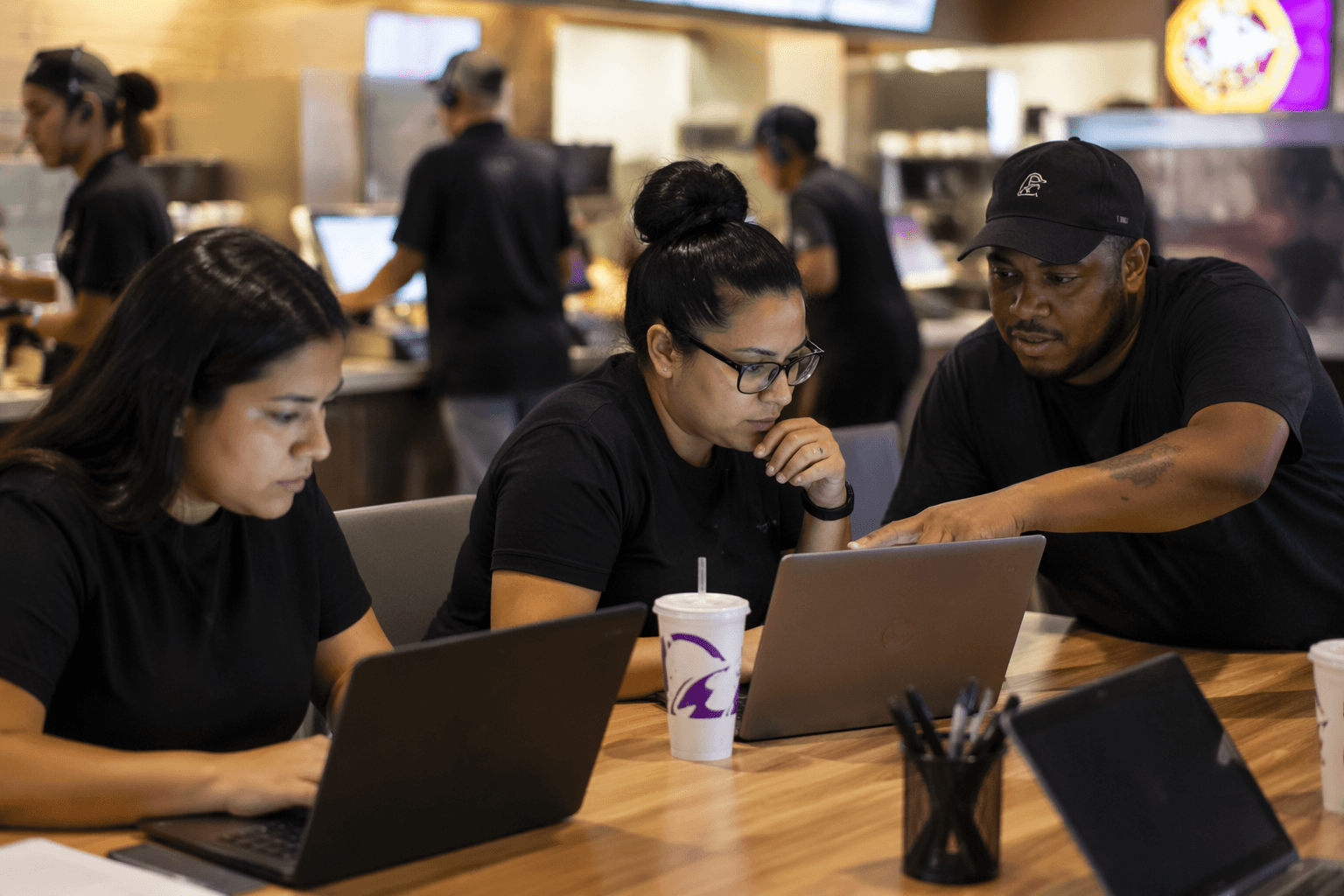
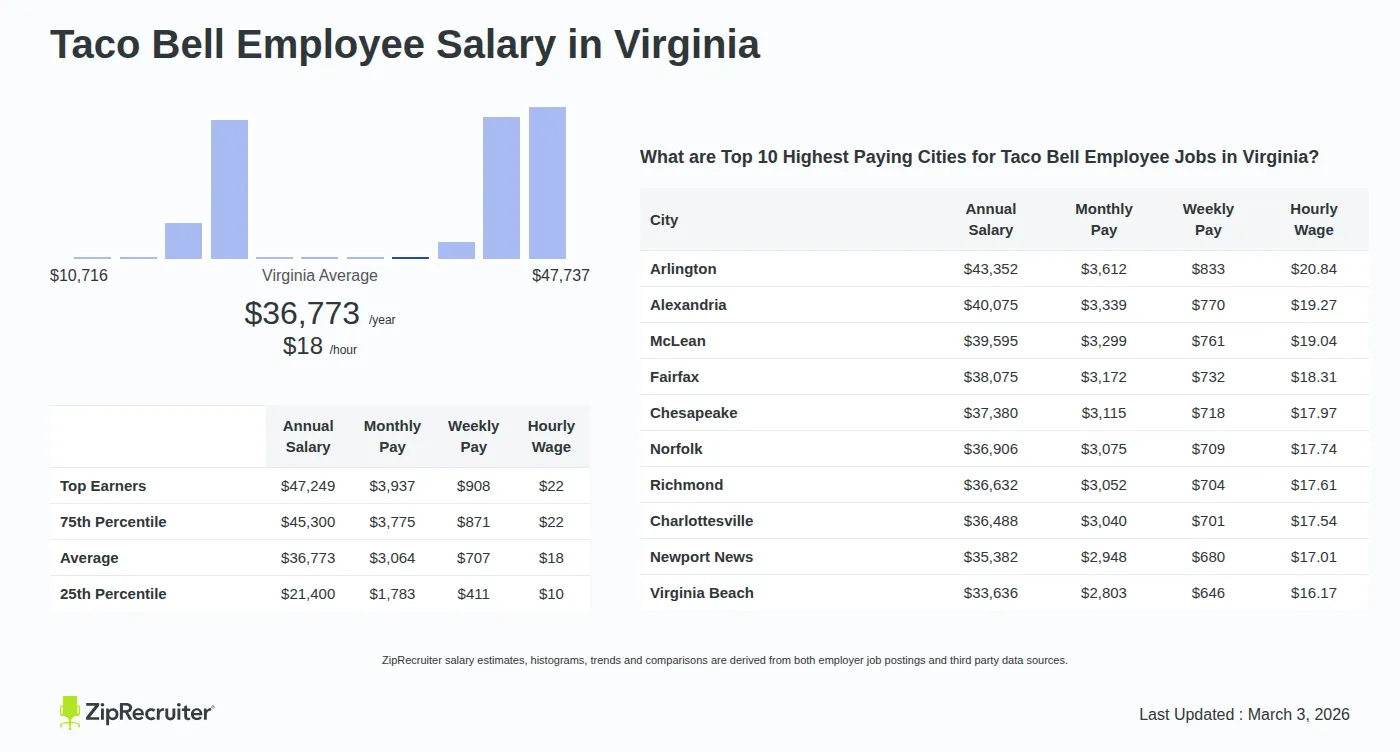
Taco Bell Managers Get a Practical Fair Workweek Compliance Checklist
Fair Workweek laws are hitting fast-food chains with seven-figure fines — here's the 10-step compliance checklist every Taco Bell manager needs right now.
Taco Bell operates in some of the most aggressive Fair Workweek enforcement markets in the country. New York City regulators have fined restaurants $5 million for violating various scheduling restrictions, and jurisdictions that have passed predictive scheduling laws often have aggressive administrative agencies enforcing them, with agencies already recording seven- and eight-figure settlements. If your restaurant sits in any covered city, getting the schedule wrong is no longer just an HR headache; it's a direct cost-of-operations problem.
This checklist is written for Taco Bell crew members, shift managers, and restaurant managers who need an operational, compliance-focused primer on predictive scheduling, sometimes called Fair Workweek laws, advance notice requirements, and manager best practices.
What "Fair Workweek" Actually Means
Predictive scheduling refers to employment laws that require employers to provide work schedules to employees a minimum number of days in advance. Also known as "Fair Workweek" or "Secure Scheduling" laws, these regulations aim to give workers more stability and predictability in their work schedules, allowing them to better plan their lives, arrange childcare, pursue education, and manage additional jobs.
Fair Workweek has become more common over the past decade, with Oregon being the first, and so far only, state to pass such a measure in 2017. But even before that time, local jurisdictions such as New York City and San Francisco enacted fair workweek laws. Today, predictive scheduling laws have been enacted in several jurisdictions across the United States, including cities like Berkeley, Chicago, Emeryville, Los Angeles, New York City, Philadelphia, San Francisco, San Jose, and Seattle.
For Taco Bell, these laws are not abstract. Fast food employers with at least 30 locations nationally must follow NYC's Fair Workweek rules. Philadelphia's ordinance applies to businesses in the retail, food and hospitality industries with 30 or more locations nationwide, including franchises and chains, and 250-plus employees. In other words, Taco Bell as a chain almost certainly clears coverage thresholds wherever these laws exist.
Step 1: Determine Whether You Are a "Covered Employer"
The first action for any restaurant manager is to determine if your business is a "covered employer" under the predictive scheduling law of your jurisdiction. This is not a one-size-fits-all question. Although the stated purpose of these various laws is similar, they vary significantly in terms of which employers are covered, the specific requirements, and the penalties for making last-minute schedule changes. This means that you may have multiple locations subject to very different predictive scheduling requirements.
If you operate multiple restaurant locations in different jurisdictions, it is essential to understand which laws apply and who is covered by these laws at each of your store locations. While regulation can differ from city to city and state to state, most Fair Workweek laws apply to part-time hourly workers in hospitality, retail, or food service industries, with businesses that have at least 50 employees. Confirm your coverage status with your franchisee legal team or Yum! Brands compliance resources before assuming you're exempt.
Step 2: Develop Policies and Forms Specific to Your Jurisdiction
Once you've confirmed coverage, develop policies and forms specific to the predictive scheduling law applicable to your business. A generic corporate template is not enough. This patchwork of legislation means employers with locations across multiple jurisdictions may need to juggle different rules, depending on where the business operates. Each city's ordinance has its own notice windows, predictability pay formulas, and employee rights, so policies must be tailored accordingly.
Step 3: Provide a Written Schedule Estimate at Hire
Maintain a written estimate of each employee's anticipated work schedule at the time of hire. This is a foundational requirement across most active jurisdictions. While nearly all jurisdictions require employees to receive a "good faith estimate" of their hours and schedule at time of hire, the detail required and the standard for changing an employee's good faith estimate can vary substantially among jurisdictions. For NYC fast food locations specifically, covered fast-food employers must provide newly hired fast-food employees with a good faith estimate of the employees' workdays and hours, on or before their first day of work, and thereafter schedules must be provided at least 14 days in advance of the beginning of the relevant workweek.
Step 4: Train Managers to Facilitate and Document Compliance
Train managers on the laws to ensure they can facilitate and document compliance. This step is often skipped or done superficially, which is precisely where violations accumulate. Most operators have not built the procedural layer into their manager training. It is not optional. Training should cover not just the notice rules but also how to process schedule change requests, how to document consent for close-in-time shifts, and how to log offers of additional hours to existing staff.
Step 5: Post Schedules at Least 14 Days in Advance
Give employees adequate advance notice of work schedules, generally at least 14 days in advance. This benchmark holds across most active jurisdictions. Oregon's law applies to employers in retail, hospitality, and food industries with 500 or more employees worldwide and requires employers to provide written work schedules at least 14 calendar days in advance. Fast food employers under NYC's Fair Workweek Law must also provide a scheduling estimate when hiring a new employee, as well as a 14-day notice of schedules.
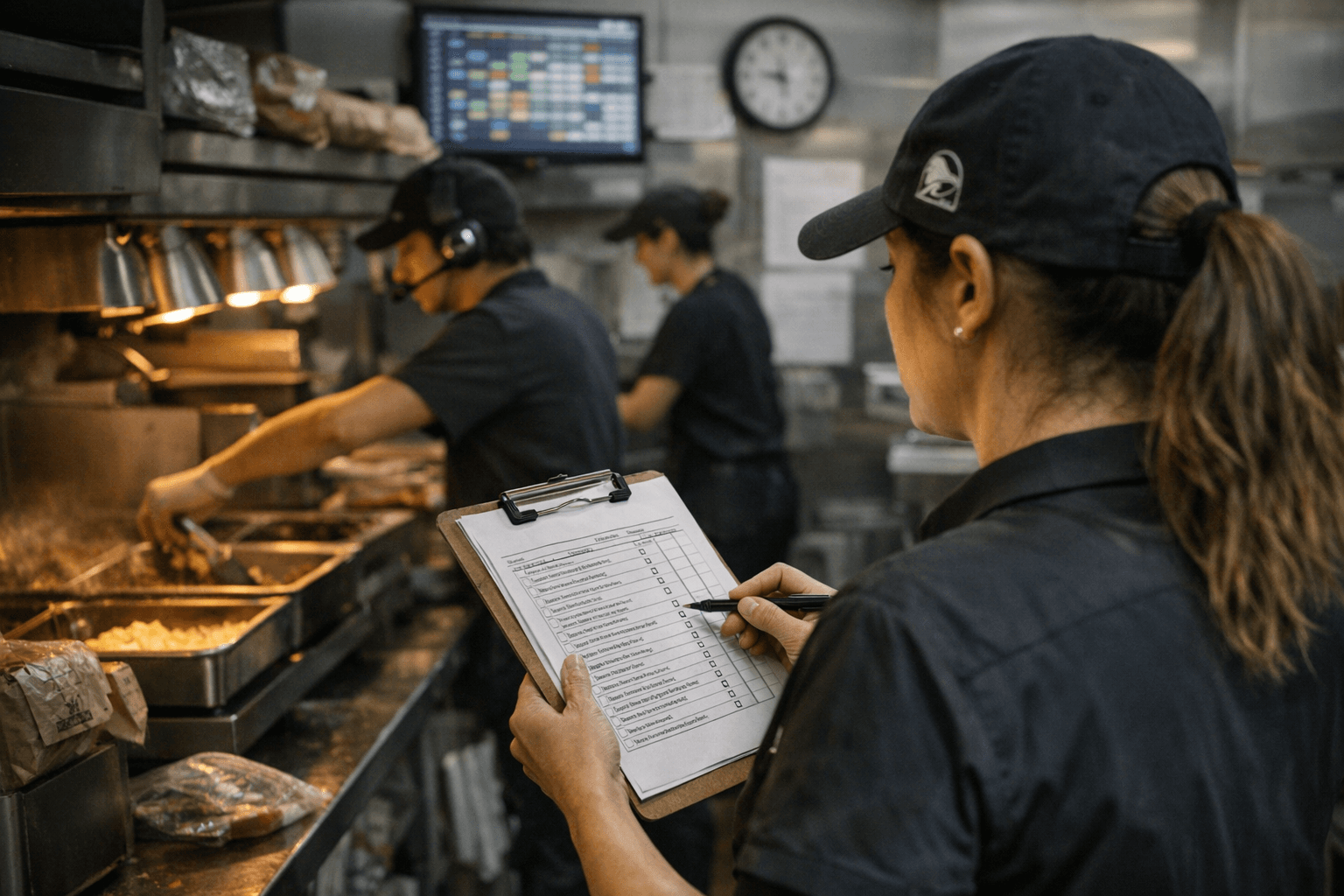
When changes happen inside that 14-day window, predictability pay kicks in. If changes are made within this two-week window, employers must compensate employees with "predictability pay," generally amounting to one hour of pay at the employee's regular rate for each shift change made with less than the required notice. For cancelled shifts, the cost is steeper: pay for canceled hours and shifts amounts to 50 percent of pay for the entire shift when done with less than 24 hours' notice.
Step 6: Enforce Right-to-Rest Protections and Prevent "Clopenings"
Implement a right-to-rest requirement to prevent "cloning" and amplify pay for close-in-time work shifts. In practice, this means eliminating the "clopening" scenario, a scheduling pattern most Taco Bell managers recognize immediately. Scheduling an employee to close up late at night, only for them to return a few hours later to open the next morning, is a practice known as "clopening," and it highlights the complexities and challenges of creating work schedules that balance operational needs with employee well-being.
The penalty structure for clopenings varies but is real. Employees are entitled to at least 11 hours between shifts on consecutive days. If a manager wants an employee to work a clopening, it must get that employee's consent in writing and pay them $100 in addition to their regular earnings under NYC rules. In Chicago, employees have the right to decline shifts that start less than 10 hours after the end of the previous shift, and employees who do work such shifts must be paid at a rate of 1.25 times their regular rate of pay.
Step 7: Offer Additional Hours to Current Part-Time Employees Before Hiring
Offer additional hours to current part-time employees before hiring a new employee. This is not just best practice; it is law in most covered jurisdictions. In many jurisdictions, employers are required to first offer vacant shifts to existing employees before hiring new employees or using temporary or on-call workers. This requirement is designed to promote stable and predictable work schedules.
Under NYC rules specifically, when shifts become available, your employer must offer them to current employees or anybody who's been laid off recently before hiring someone new. If a shift becomes available, the employer must post an announcement in the restaurant and send an email offering it to current employees. Every time a shift is available, there may be a penalty up to $300 for each employee who isn't notified.
Step 8: Build a Records System Proportional to Your Compliance Volume
Create and maintain a system for storing documents and data based on the volume of records required for compliance. For a multi-unit operator, this means more than a shared drive. Records required typically include posted schedules, advance notice acknowledgments, predictability pay logs, consent forms for close-in-time shifts, and records of hours offered to current employees before new hires were brought on. San Francisco's predictive scheduling law requires covered employers to retain schedules, as well as payroll records, for at least three years. Other jurisdictions carry their own retention requirements, so verify the specific window for each market.
Step 9: Audit Compliance Regularly
Audit compliance regularly to ensure policies are respected and documents are managed appropriately. Audits should not wait for a complaint or investigation. Unions are using noncompliance with these laws as a talking point in unionization drives, and the plaintiffs' bar is also getting into the game, scoring several seven-figure settlements. A quarterly internal audit of posted schedules, change notifications, and predictability pay calculations is the minimum standard for any restaurant in a covered market.
Step 10: Use Scheduling Technology to Anticipate Needs and Avoid Predictability Pay
Use scheduling software to anticipate future staffing needs, reduce the likelihood of unanticipated changes, and avoid predictability pay. Tools purpose-built for compliance, such as TimeWellScheduled, are designed specifically to flag scheduling conflicts before they generate liability. Predictive scheduling gives employees enough notice to be ready for their shifts, and it gives employers time to make sure the right people are staffed for each shift and its unique challenges. When a manager can see seven to 14 days of projected staffing against expected traffic, last-minute scrambles that trigger predictability pay become far less frequent.
The Business Case, Beyond Compliance
Compliance with these regulations can pose challenges, but the operational upside is real. While compliance requires initial adjustments, predictive scheduling can improve employee retention, reduce turnover, and boost workplace morale. Scheduling issues rank among the top five reasons why restaurant employees quit their jobs. For a brand where crew continuity directly affects throughput speed and guest experience, a predictable schedule is also an operational asset.
Even if you aren't yet affected by existing Fair Workweek laws, you might be soon. There's an ongoing campaign for more predictive work schedule laws at a federal level. Getting the systems, policies, and training infrastructure right now, before a new ordinance lands in your market, is substantially cheaper than retrofitting compliance under the pressure of enforcement.
This article was produced by Prism’s automated news system from verified source data, official records, and press releases, then run through automated quality and moderation checks before publishing. The system is built and supervised by the people who set the standards it runs under. Read our full AI policy.
Did this article answer your question?