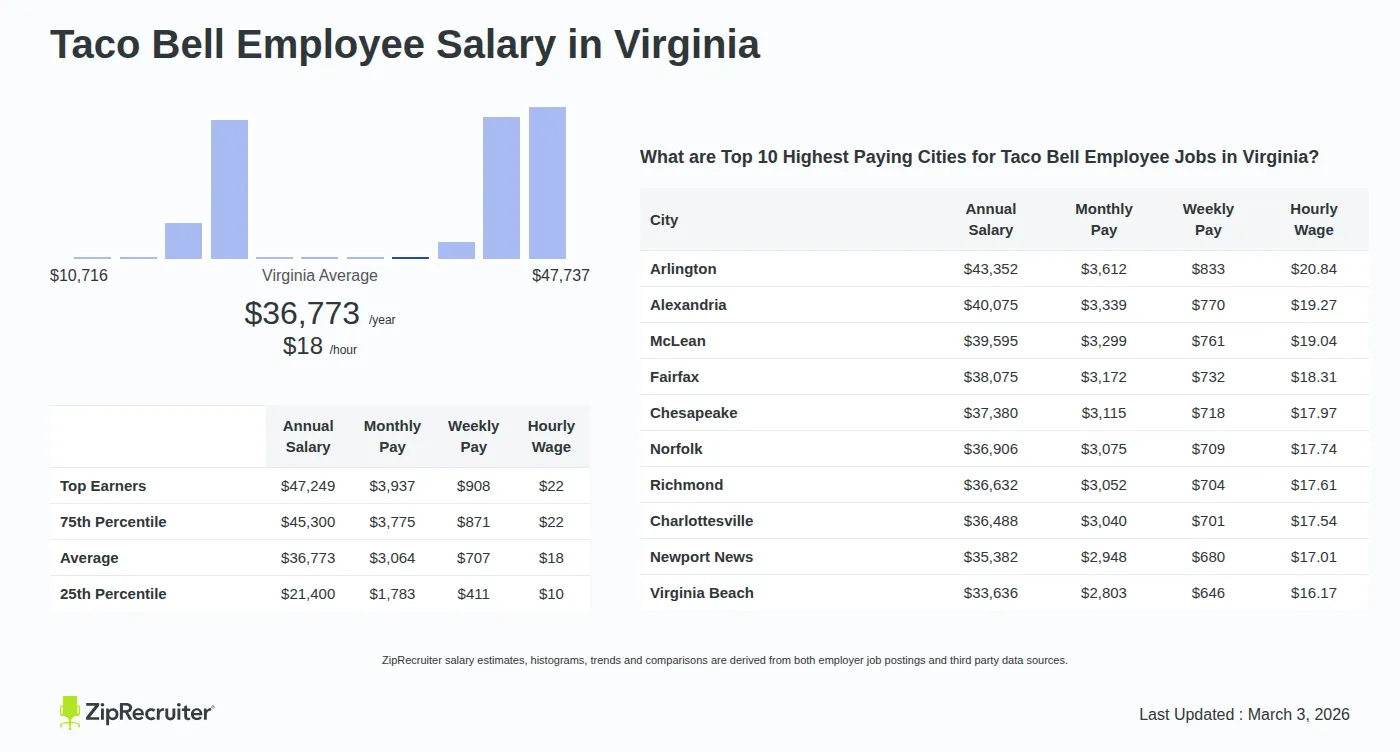
Taco Bell Managers Must Update Payroll as 2026 Minimum Wages Rise
More than 30 states now exceed the frozen federal minimum of $7.25; Taco Bell managers must audit payroll by location before the next check clears.
Years of state-level and city wage legislation have finally converged into a genuine compliance test for Taco Bell payroll managers. More than 30 states now set minimum wages above the federal floor of $7.25 an hour, a rate that has not moved since 2009, and dozens of cities and counties layered on their own increases at the start of 2026. For anyone running a Taco Bell across a multi-state footprint, the first question of every pay period is no longer just whether hours are logged correctly but which rate actually applies at that address.
The sharpest edge of that question sits in California, where the state's Fast Food Council sets a separate wage floor that applies specifically to large quick-service chains. Taco Bell locations in that state fall within scope of those sector-specific rules, which means store managers must comply with a rate that sits above even the statewide minimum, alongside accompanying scheduling obligations. Crew members at those locations should confirm their base rate reflects the fast-food council figure, not just the broader state floor.
Tipped wage rules introduce a second compliance layer that is easy to miscalculate mid-pay-period. Some states prohibit employers from claiming any tip credit at all, requiring full payment of the state minimum regardless of what employees earn in tips. Others permit a lower cash wage as long as tips bridge the worker to the minimum. For the relatively rare Taco Bell locations that carry tipped or service-charge roles, a mid-period rate change in the wrong direction can produce underpayment that does not surface until a crew member compares their stub to the posted wage notice on the wall.
The most common underpayment trap of pay season is a rate change that takes effect partway through a pay period. If a new local minimum kicked in January 1 but payroll software was not updated until the following week, the first several days of hours processed at the old rate. Managers auditing the most recent period should confirm the exact effective date of any local ordinance and check that the rate-change timestamp in the payroll system matches it. A split-jurisdiction store, one that sits on a city-county line where two different floors apply, carries the additional risk that the wrong rate is applied by default.
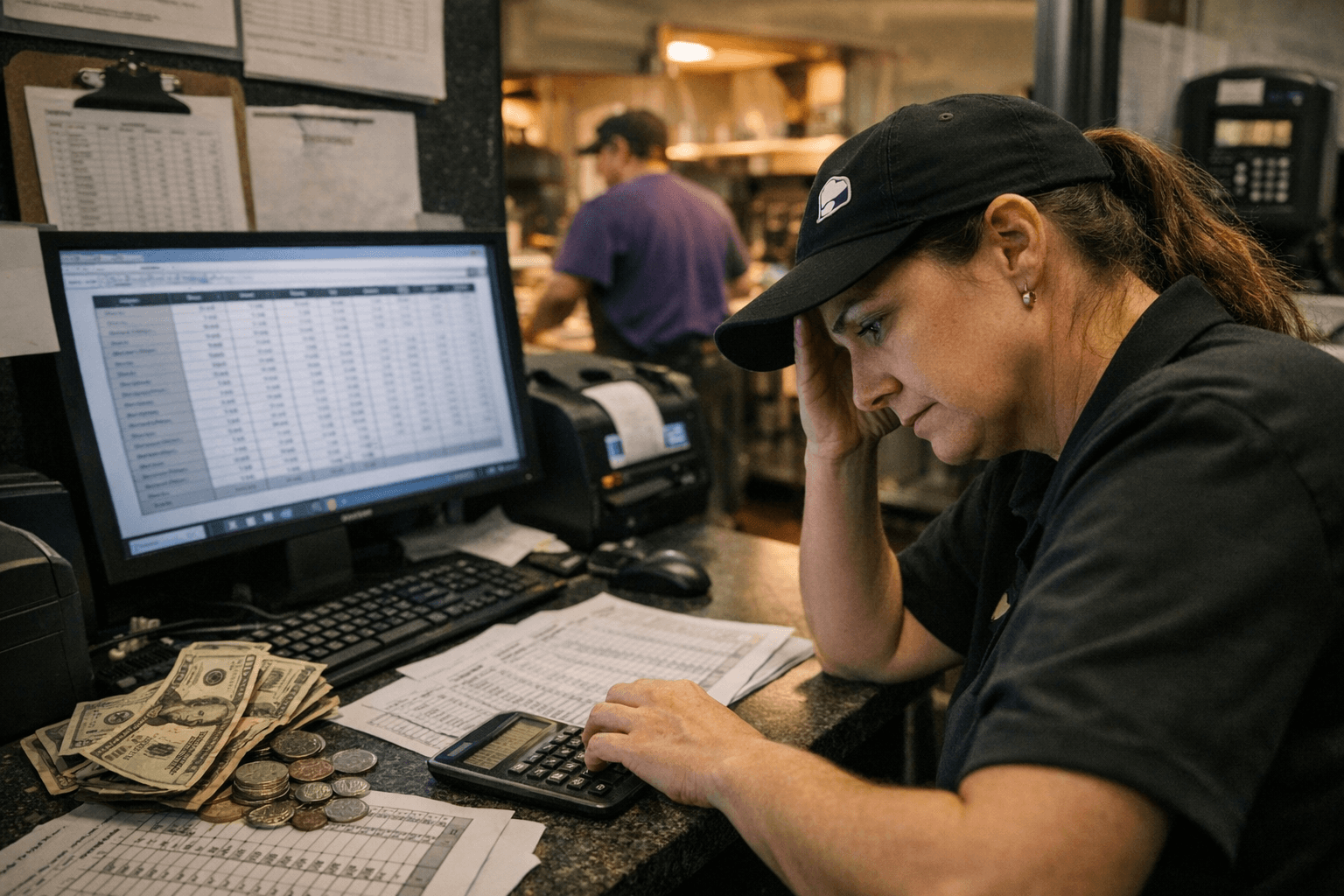
When a crew member spots a discrepancy on their stub, the documentation comes first: write down the hours worked, the rate printed on the check, and the rate posted on the store's required wage notice. Bring that paperwork to a shift manager or the store's HR contact and ask for a corrected check on the next cycle. If the correction does not appear on the following check, the appropriate escalation is the state labor agency or, in cities with their own enforcement offices, the municipal wage board. Most states accept wage claims filed online, and complaints that cite specific pay-period dates and dollar figures move through processing faster than general grievances.
California's Fast Food Council has signaled continued rate reviews, and several municipalities have scheduled additional increases for later in 2026. The payroll audit that managers run this week is not a one-time correction; it is the start of a reconciliation process that will need to repeat itself every time a local ordinance moves the floor.
This article was produced by Prism’s automated news system from verified source data, official records, and press releases, then run through automated quality and moderation checks before publishing. The system is built and supervised by the people who set the standards it runs under. Read our full AI policy.
Did this article answer your question?