Taco Bell Managers Need to Know These Tipped Wage and Tip Credit Rules
A federal court killed the 80/20/30 rule in the Fifth Circuit, but most Taco Bell operators still face a patchwork of state tip-credit laws that can flip the math on every tipped shift.
Taco Bell runs on hourly wages. Most crew members never see a tip jar, and the brand doesn't operate on the full-service restaurant model where tipped wages define payroll. But that doesn't mean tip-credit law is irrelevant to your operation. The Department of Labor's Wage and Hour Division Fact Sheet Number 2 lays out how the Fair Labor Standards Act applies specifically to restaurants and fast food operations, covering minimum wage, overtime, tip credit and tip pooling, and recordkeeping. The guidance matters to Taco Bell employees and managers because it defines when employers may claim a tip credit, how overtime must be calculated for tipped workers, and the protections younger workers receive. Whether you run a corporate-owned store in a high-minimum-wage metro or a franchise cluster that spans multiple states, fluency in these rules is table stakes.
What a Tip Credit Actually Is
The Fair Labor Standards Act establishes a federal minimum wage of $7.25 but offers a caveat for paying tipped employees. The FLSA defines tipped employees as workers who regularly receive more than $30 monthly in tips. Employers can use what's known as a tip credit for these workers' wages. A tip credit allows employers to pay a lower cash wage with the expectation that the employee will earn enough in tips to reach minimum wage. The sum of the cash wage and the tip credit must equal the minimum wage.
The federal minimum wage for tipped employees is $2.13 per hour in direct cash wages. Employers can claim a tip credit of up to $5.12 per hour, meaning tips must bring the employee's total compensation to at least $7.25 per hour. The critical piece most managers miss: where a worker's combined cash wage and gratuity don't add up to at least the state minimum wage, the employer needs to pay the remainder. The tip credit is not a subsidy to the employer. It is a bookkeeping offset that evaporates the moment tips fall short.
Businesses also can't apply tip credits to service charges, as these are considered part of the business's income and not the employee's earned wages. That distinction matters if your location handles catering orders or charges delivery convenience fees: those aren't tips, and treating them as such creates legal exposure.
The 80/20 Rule: A History That Still Has Teeth
This is where things get messy. The 80/20 rule was enacted during the Obama administration, rolled back during the Trump administration, and then brought back under the Biden administration with updated clarifications about what constitutes tipped work and what does not. The Biden-era version added a 30-minute provision: under the 80/20 rule, employers lose the tip credit for the time spent performing non-tipped side work if an employee spent more than 20% of their time performing tasks like rolling silverware into napkins, cleaning and setting tables, and making coffee. The DOL also added a provision that raises more challenges for employers: an employer loses the tip credit for a tipped employee who performs "directly-supporting work" for a continuous period that exceeds 30 minutes. This is true even if the continuous time spent on this work amounts to less than 20% of the employee's total work for the week.
Then a federal appeals court drew a geographic line through the rule. The 80/20 labor rule was struck down by the Fifth Circuit Court of Appeals for being "both arbitrary and capricious" and contrary to the Fair Labor Standards Act. Following the Restaurant Law Center decision vacating the 80/20/30 rule, the DOL withdrew the rule and updated its guidelines for investigators.
The 80/20 rule remains in effect in most states but was struck down in Texas, Louisiana, and Mississippi. That's a meaningful carve-out for Taco Bell's footprint: Texas is home to one of the largest concentrations of Yum! Brands franchise operators in the country. If your restaurants fall inside the Fifth Circuit's jurisdiction, it appears clear that both the 80/20 and 80/20/30 rules are dead, and employers must comply only with the "dual jobs" rule. These employers no longer have to meticulously track the amount of time tipped employees perform their various job duties, so long as the duties are part of their tipped occupation. Outside those three states, the old 20% threshold and the 30-consecutive-minute cap are still the standard you are measured against.
The Three Categories of Work: Where the Line Gets Drawn
The DOL's framework for what counts as "tipped work" has three tiers. These categories are: tip-producing work, such as serving or bartending; directly related work, such as rolling silverware or refilling condiments; and unrelated work, such as maintenance or deep cleaning. Only the first two categories qualify for the tip credit.
Currently, both the regulations and guidelines note that an employer may pay an employee a tipped wage when the employee is performing duties that are related to the tipped occupation, such as a server setting tables, without any apparent time limitation. The same employee, however, may not be paid a tipped wage for the time spent working in a different non-tipped job, such as a role performing maintenance work.
For QSR context: if a crew member who normally handles front-counter orders or drive-through service is reassigned to scrub the parking lot or deep-clean kitchen equipment, that time cannot support a tip credit regardless of what state you're in. When salaried or managerial employees occasionally perform tipped work, such as delivering catering orders, their exemption status can be affected. These cases should be reviewed carefully with HR or legal counsel.
Tip Pooling: Who Can Be In, Who Must Stay Out
Tip pooling is permitted, but managers and supervisors cannot share in tips if a tip credit is claimed. If a restaurant pays full minimum wage with no tip credit, it can include back-of-house employees in a tip pool, but must follow specific record-keeping requirements.
Supervisors or staff members with supervisory responsibilities cannot receive tips unless the tip is for services they directly and solely provide. They must not participate in tip pooling. That means a shift lead who also handles drive-through orders during a rush occupies a legally ambiguous position. The safest policy: keep managerial employees out of pooled tip arrangements entirely when any tip credit is being claimed for other workers at the location.
The State Patchwork Every Multi-Unit Operator Must Track
Federal law sets the floor. States can and do go higher, and many ban tip credits entirely. Ten states ban tip credits entirely and require the full minimum wage before tips. Washington state does not allow tip credits. Under Washington law, tips, gratuities, and service charges paid to employees must be in addition to, and may not be counted toward, an employee's minimum wage. California follows the same model: California requires employers to pay all employees $16.50 per hour before tips are factored in.
Operators should verify that each location's tip credits, pay rates, and role classifications are up to date. Differences in local law can lead to compliance issues even for multi-unit operators using standardized practices. A payroll policy built for a Texas franchise cluster will not transfer cleanly to a New York City or Seattle location.
The "No Tax on Tips" Provision: What It Means for Your Team
A major development in 2025 came through the One Big Beautiful Bill (OBBB), which introduced the No Tax on Tips provision. For tax years 2025 through 2028, this creates a temporary income tax deduction of up to $25,000 per year for qualified tips received by individuals in occupations where tipping is regular and customary.
Service charges or automatic gratuities do not qualify. Service charges are wages, even if distributed to staff. Only voluntary tips qualify. Tips are still subject to FICA, Medicare, and likely state and local taxes. The exemption applies only to federal income tax. For Taco Bell crew members who receive tips through delivery or catering scenarios, this is a real take-home benefit at tax time. Managers can help tipped employees capture it by ensuring tips are accurately reported through payroll, including cash tips.
The Compliance Actions That Actually Protect You
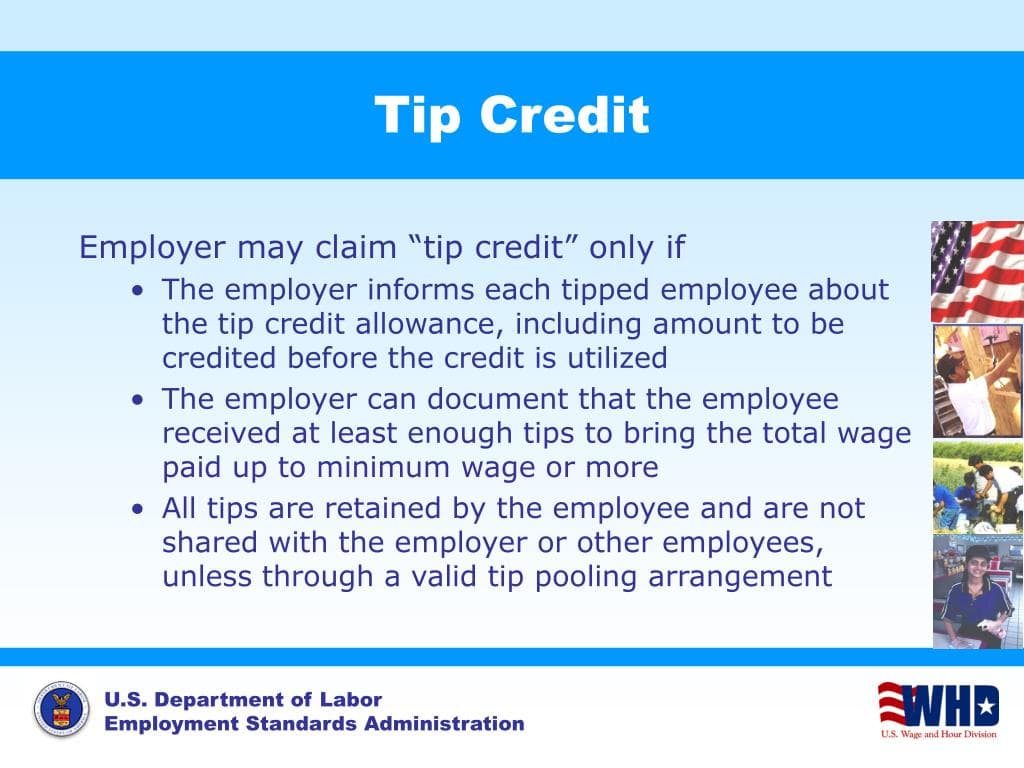
All employers that utilize the tip credit, regardless of location, risk losing it altogether if they do not provide proper notice to employees. Although not required, it is best practice to provide this notice to your tipped employees in writing and have them acknowledge receipt.
The most practical steps for Taco Bell managers and operators:
- Use timekeeping systems that clearly distinguish between tipped, directly related, and non-tipped duties.
- Provide written tip credit notices to every tipped employee. Maintain detailed records showing hours worked, tips received, cash wages paid, and total compensation. During audits, documentation is your only defense: without it, you'll owe back wages, penalties, and attorney fees.
- Typical payroll problems flagged in DOL investigations include misapplied tip credits, failure to pay overtime, improper deductions from paychecks, and incorrect recordkeeping.
- If you are changing any pay practice, communicate it in advance before the change goes into effect. Employees should be informed, preferably in writing, in advance, because even if the change is legally permitted, there could be a contract law claim if you alter pay without advance notice.
While the 80/20 rule remains active in most jurisdictions, more legal challenges are expected. The DOL may seek to revise or clarify its guidance depending on how courts rule in ongoing cases. For a brand with thousands of locations across jurisdictions with wildly different rules, the one constant is documentation. The law will keep shifting. Your records are what protect you when it does.
This article was produced by Prism’s automated news system from verified source data, official records, and press releases, then run through automated quality and moderation checks before publishing. The system is built and supervised by the people who set the standards it runs under. Read our full AI policy.
Did this article answer your question?