Taco Bell managers urged to keep humans in AI people decisions
Taco Bell’s AI tools are already shaping shifts and drive-thrus, but managers are being told fairness depends on a human still owning the final call.
AI is already inside Taco Bell’s daily operations
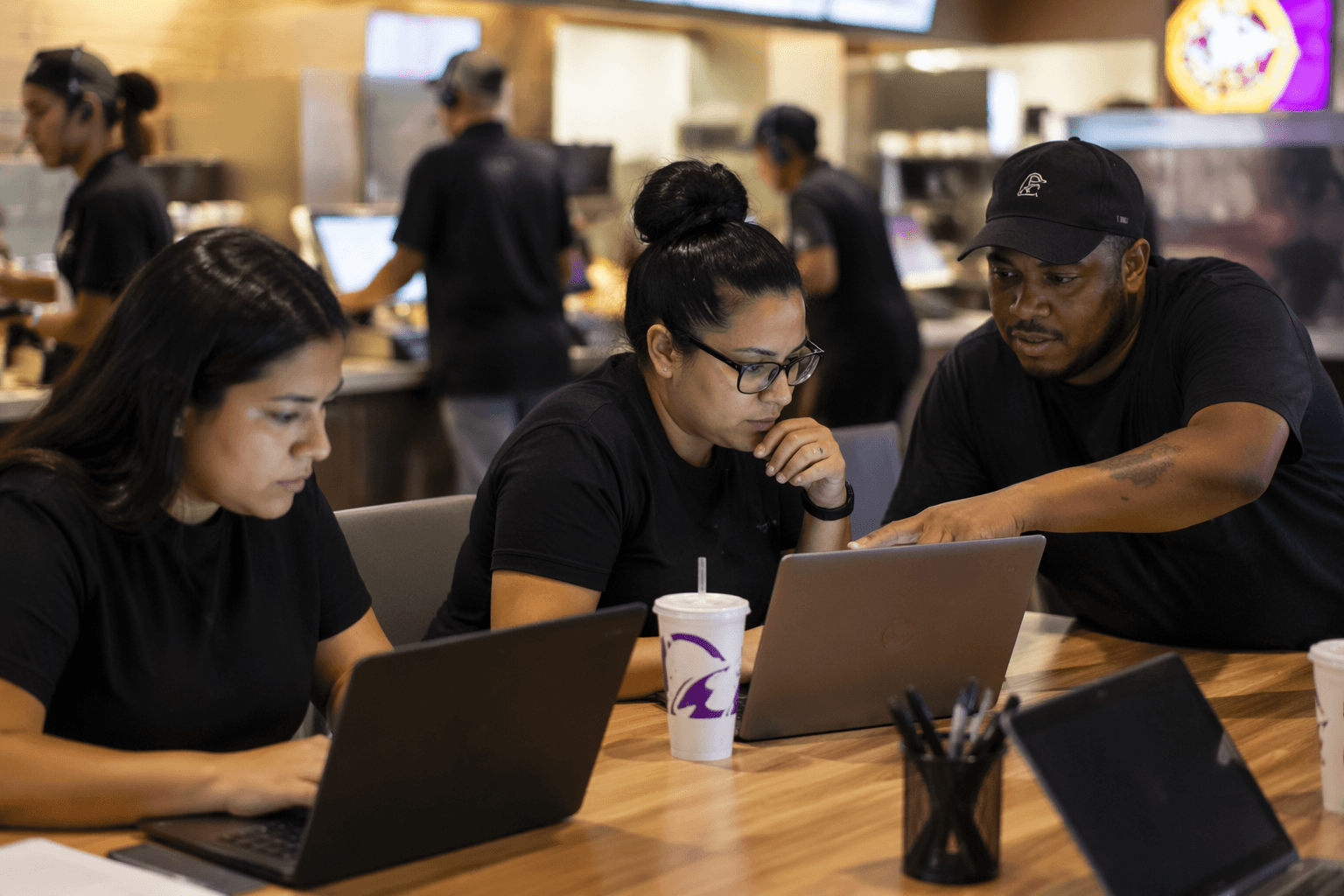
The question for Taco Bell is no longer whether AI will reach the restaurant floor. It already has, through voice technology in drive-thrus, labor scheduling, inventory tools, and a broader Yum! Brands push to build AI into restaurant operations across the system. That makes this a management issue as much as a technology one: once AI affects who works, when they work, and how they are trained, the people running the store are still responsible for the outcome.

Yum! Brands said on July 31, 2024 that it would expand Voice AI across Taco Bell drive-thru locations in the United States, with a target of hundreds of stores by the end of 2024. Yum also said Taco Bell was using AI for labor scheduling in 5,000 U.S. restaurants, and later introduced Byte by Yum! on February 6, 2025 as a proprietary AI-driven SaaS platform for KFC, Taco Bell, Pizza Hut, and Habit Burger & Grill. On March 18, 2025, Yum said it was partnering with NVIDIA to accelerate AI development for its restaurants. The scale of that rollout means Taco Bell managers are not experimenting at the edges. They are managing people through systems that can influence almost every part of the shift.
Where unfairness enters first
Seramount’s framework for inclusive AI adoption is a useful warning label for restaurant leaders because it starts from a simple premise: AI can widen gaps if it is dropped into old processes without guardrails. The framework centers on five ideas, build AI fluency, embed inclusion where decisions are made, make the learning curve more equitable, define human accountability early, and put AI to work in moments that matter. For Taco Bell, that means the real issue is not whether AI can save time. It is whether the tool changes who gets seen, heard, and advanced.
The risk is especially high in restaurants because so many decisions are repeated every day. Scheduling tools can shape who gets the best shifts and who gets stuck with the least flexible hours. Automated screening can decide which applicants make it to a manager’s desk. AI-generated training can determine who gets access to the register, the drive-thru, or the next step up to shift lead. In a business where crew members often depend on every hour they can get, a bad scheduling model can hit paychecks long before anyone notices a pattern.
Fairness problems also tend to hide inside convenience. A tool that looks neutral on paper can quietly disadvantage people with caregiving duties, school schedules, language differences, or less comfort with digital systems. That matters at Taco Bell, where teams are often diverse by age, background, language, and schedule flexibility. If no one tests the tool against those realities, the technology can end up rewarding the workers who fit the system best instead of the workers who need the job most.
What a manager should watch for before the system becomes the decision-maker
The clearest warning sign is when a manager cannot explain why the software made a decision. If the answer to a scheduling cut, a hiring pass, or a training assignment is simply “that is what the system gave us,” the human checkpoint has already failed. AI can sort information quickly, but it cannot understand store-level context such as a worker’s language skills, transportation limits, class schedule, or the fact that one crew member has already been overloaded for weeks.
Managers should also watch for patterns that look efficient but feel unfair on the floor. If one group keeps losing prime shifts, if training opportunities cluster around the same faces, or if new hires from a particular background never make it onto the path to promotion, the algorithm may be repeating old bias faster than a person would have. In a restaurant where trust matters, those patterns are not just morale issues. They shape retention, attendance, and the willingness of crew members to ask for help.
A practical checklist for Taco Bell managers looks like this:
- Know exactly where AI is being used, whether in hiring, scheduling, inventory, guest ordering, or training.
- Keep a named human owner for every people decision the tool influences.
- Review outputs for patterns by shift, store, role, language, and schedule flexibility.
- Make sure workers can challenge mistakes without being punished for doing so.
- Test whether training materials and scheduling interfaces work for workers with different levels of digital comfort.
- Check whether the tool is helping reduce admin burden or simply speeding up old inequities.
That last point matters because restaurant workers do not need a system that is merely faster. They need one that is clearer, more consistent, and less arbitrary than the last one.
The legal environment now expects more than trust in the machine
Managers at Taco Bell are also operating in a tougher compliance environment. The Equal Employment Opportunity Commission says federal employment discrimination laws protect workers when AI systems discriminate on the basis of race, color, religion, sex, sexual orientation, pregnancy, national origin, age 40 or older, disability, or genetic information. That matters in fast food because hiring, scheduling, and promotion decisions are all employment decisions, even when software helps make them.
The EEOC has been building this focus for years. In 2021, Chair Charlotte A. Burrows launched an agency-wide initiative centered on software, including AI and machine learning, used in hiring and other employment decisions. In April 2023, the EEOC, the Department of Justice Civil Rights Division, the Consumer Financial Protection Bureau, and the Federal Trade Commission issued a joint statement on bias and discrimination in automated systems. Then the EEOC’s 2024-2028 Strategic Enforcement Plan made discriminatory recruitment and hiring practices involving AI and machine learning an enforcement priority. In September 2024, the U.S. Department of Labor added its own AI and Inclusive Hiring Framework to help employers reduce unintentional discrimination and accessibility barriers.
For restaurant managers, the legal takeaway is blunt: AI does not move responsibility away from the store. It can create records, but it cannot absorb liability for a bad decision. If the tool screens out workers unfairly, or if a scheduling system creates unequal access to hours, the manager still has to answer for how the decision was reviewed, who approved it, and what workers were told.
What inclusive implementation looks like on the restaurant floor
Seramount says employee resource groups can be an important source of feedback on AI implementation and workplace fairness, and that is especially relevant for a chain like Taco Bell, where store teams reflect a wide mix of backgrounds and life situations. Employee feedback is not a soft add-on here. It is one of the few ways to see whether a system that looks efficient from a dashboard is actually fair in a crew room.
PwC has argued that AI, with the right guardrails and accountability, can help minimize human bias in recruitment, promotion, and talent mobility. In practice, that means AI should be used to support managers, not replace the judgment that keeps a store running fairly. The best use of it at Taco Bell would be to reduce scheduling friction, improve clarity around training, and help managers spot problems earlier, while still leaving room for local knowledge and human correction.
That balance matters even more because Taco Bell sits inside a larger Yum! Brands system that is building these tools at scale. Corporate can set the platform, but fairness is determined in the store, one schedule, one interview, and one training assignment at a time. When AI is used well, it can make work more predictable and less chaotic. When it is used carelessly, it can turn old favoritism into automated policy. The managers who keep a human in the loop will be the ones who keep the technology from deciding more than it should.
This article was produced by Prism’s automated news system from verified source data, official records, and press releases, then run through automated quality and moderation checks before publishing. The system is built and supervised by the people who set the standards it runs under. Read our full AI policy.
Did this article answer your question?