Taco Bell Operators Get Practical Guide to Reduce Workplace Violence
Workplace violence is a real risk in fast food. Here's what Taco Bell operators need to know to protect their teams.
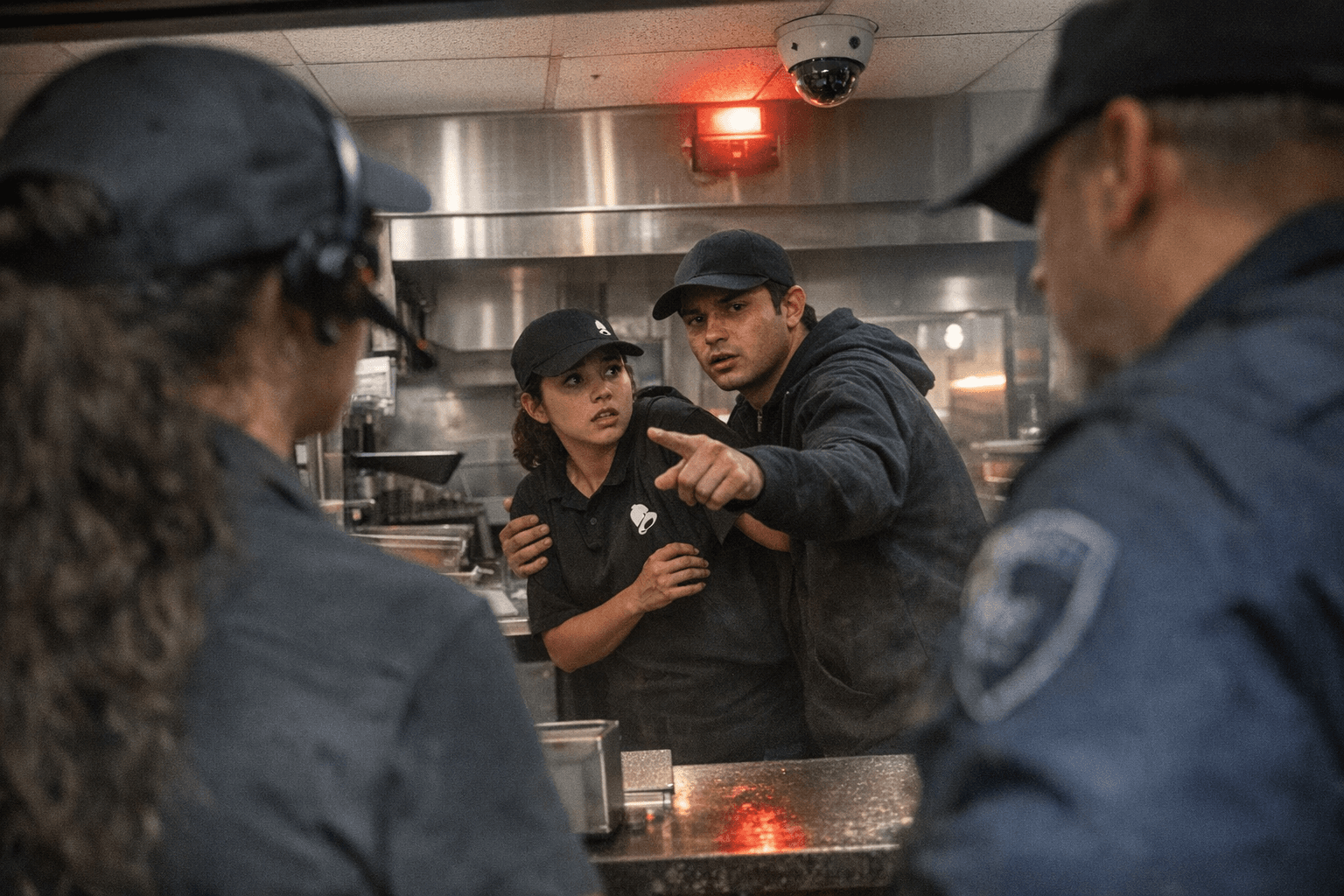
Violence in quick-service restaurants is not a rare outlier. It is a documented, recurring hazard that plays out at drive-through windows, front counters, and parking lots across the country. For Taco Bell operators managing high-volume locations, often late-night hours, and a young workforce, the stakes are especially concrete. The following guide draws on authoritative best practices in workplace safety and de-escalation to give operators and HR teams a working framework they can actually use.
Understanding the risk environment
Fast-food restaurants sit at the intersection of several conditions that elevate violence risk: cash handling, extended hours, high customer turnover, and frequent interactions with frustrated or agitated guests. Taco Bell locations are no exception. Drive-throughs, which process hundreds of transactions per shift, create compressed, high-pressure exchanges where conflicts can escalate quickly. Understanding that violence is an environmental and operational risk, not just a matter of individual behavior, is the starting point for building any effective prevention program.
Workplace violence in restaurant settings generally falls into four categories: customer-on-employee incidents, employee-on-employee conflicts, robbery-related violence, and domestic violence that spills into the workplace. Each type calls for a different prevention strategy, and operators benefit from addressing all four rather than focusing exclusively on the most visible threat, which is typically the aggressive customer.
Building a prevention-first culture
The most effective safety programs start long before an incident occurs. Operators should establish a written workplace violence prevention policy that is distributed to every employee at onboarding and reviewed regularly. This policy should define what constitutes threatening behavior, explain how employees can report concerns without fear of retaliation, and spell out the consequences for violations.
Hiring and scheduling practices also play a role. Ensuring adequate staffing during peak hours reduces the pressure that can trigger conflicts between employees and customers. Fatigue and understaffing are consistent contributors to volatile situations in restaurant environments. Managers who are stretched too thin are also less able to identify early warning signs before a situation deteriorates.
Physical environment and operational safeguards
The layout and design of a Taco Bell location can either reduce or amplify risk. Operators should conduct a physical security audit that examines sight lines, lighting, access points, and the placement of cash registers and safes. Poor lighting in parking lots and blind spots near dumpsters or side entrances are common vulnerabilities in QSR settings that are often overlooked until an incident occurs.
Practical measures worth implementing include:
- Installing visible security cameras at entrances, drive-through windows, dining areas, and parking lots, and ensuring employees know how to flag footage after an incident
- Using a time-delay safe and posting signage indicating that managers cannot open it on demand, which reduces robbery motivation
- Keeping cash drawer amounts low throughout the shift and making regular drops
- Ensuring all exterior doors that are not in active use remain locked during overnight hours
- Installing panic buttons or direct-line communication to local law enforcement at the front counter and drive-through station
The drive-through window deserves particular attention. It is the point of most frequent customer contact and one of the harder environments to monitor. Operators should establish clear protocols for closing the window and stepping back when a customer's behavior escalates, rather than expecting employees to manage aggressive individuals alone through an open window.
De-escalation training that actually works
Training is the most direct investment an operator can make in employee safety, and it works best when it is specific, repeated, and practiced rather than completed once at onboarding and forgotten. Effective de-escalation training for QSR environments typically covers how to recognize escalating behavior before it becomes physical, how to use calm and non-confrontational language to reduce tension, when to disengage rather than continue engaging, and how to summon help quickly.
A core principle in de-escalation is that employees should never be expected to win an argument with a customer. The goal is resolution, not victory. Training should reinforce that letting a customer vent, acknowledging their frustration without agreeing that the complaint is valid, and offering a concrete next step, such as a refund or a replacement item, defuses the majority of conflicts before they reach a dangerous threshold.
Role-play exercises are significantly more effective than lecture-based training. Operators who run scenario drills during team meetings, even brief 10-minute exercises, report stronger retention and faster response times when actual incidents occur. Managers should be trained first so they can lead these sessions at the location level.
Reporting systems and post-incident response
One of the most common gaps in restaurant safety programs is the absence of a functioning reporting system. Employees who witness or experience threatening behavior often do not report it because they do not know how, believe nothing will happen, or fear that raising the issue will make them a target. An effective reporting system is anonymous, accessible, and visibly taken seriously by leadership.
Operators should log every incident, including near-misses and verbal threats, in a written record. This log serves multiple purposes: it identifies patterns at a specific location, supports insurance and legal documentation if a situation escalates, and provides data for deciding whether to escalate security measures.
Post-incident response is equally important and frequently neglected. After a violent or threatening incident, employees need to be debriefed, not just sent back to work. Acknowledging that something serious happened, checking in on those who were directly involved, and communicating what steps are being taken in response all matter for employee trust and retention. Locations that handle incidents poorly see higher turnover in the weeks that follow, compounding an already difficult staffing environment.
Manager accountability and leadership role
Managers are the linchpin of any safety program. They set the tone for how seriously safety policies are treated, model de-escalation behavior for their teams, and make real-time decisions when situations develop on shift. Operators should include safety performance as a component of manager evaluations, not as an afterthought but as a concrete measure tied to incident rates, training completion, and employee reporting activity.
General managers in particular should conduct regular walkthroughs of their location with safety explicitly in mind, checking that cameras are functioning, lighting is adequate, and that employees know the protocol for escalating a situation. A monthly five-minute safety check is a low-cost habit that closes gaps before they become liabilities.
The practical reality is that most workplace violence in fast-food settings is preventable or at least reducible in severity. The locations that see the worst outcomes are typically those where no plan existed, employees had no training, and managers had no clear authority to act. Building that infrastructure takes time and organizational commitment, but for operators running locations where people work late shifts, handle cash, and interact with hundreds of strangers every day, it is among the most consequential investments available.
This article was produced by Prism’s automated news system from verified source data, official records, and press releases, then run through automated quality and moderation checks before publishing. The system is built and supervised by the people who set the standards it runs under. Read our full AI policy.
Did this article answer your question?