Taco Bell pairs AI and bag tags to manage menu growth
Taco Bell is betting on voice AI and bag tags to keep new menu launches from slowing stores, with fewer mistakes and less front-line chaos.

Taco Bell is trying to solve a problem every shift manager recognizes: how do you keep menu buzz coming without turning the kitchen into a bottleneck? The company’s answer is a Live Más Service model built around three goals, meaningful moments, accuracy, and seamless experiences for both customers and employees. That matters because Taco Bell wants to lift average unit volumes from $2.2 million to $3 million by 2030, which makes execution on the line as important as the next big launch.
A growth plan that starts with operations
The real message in Taco Bell’s approach is that menu innovation only works if stores can absorb it. Every limited-time offer adds another layer of production knowledge, prep discipline, and order checking, and that is exactly where crews feel the pressure first. A launch can bring more traffic, but it can also expose weak spots in training, handoff speed, and consistency if the restaurant is not ready.
That is why the Live Más Service model is built as an operating system, not just a customer-service slogan. Meaningful moments are not limited to a friendly greeting or a scripted smile. In Taco Bell’s framing, a meaningful moment also means the guest gets the right order, the visit feels smooth, and the team can keep pace without losing control of the restaurant.
For crew members, that is a useful distinction. Fast food often gets judged on speed alone, but Taco Bell is explicitly tying speed to accuracy and consistency. If the company really expects unit sales to climb toward $3 million by 2030, then the stores doing that volume will need systems that reduce rework, not just systems that make the line look busy.
How voice AI is meant to ease the rush
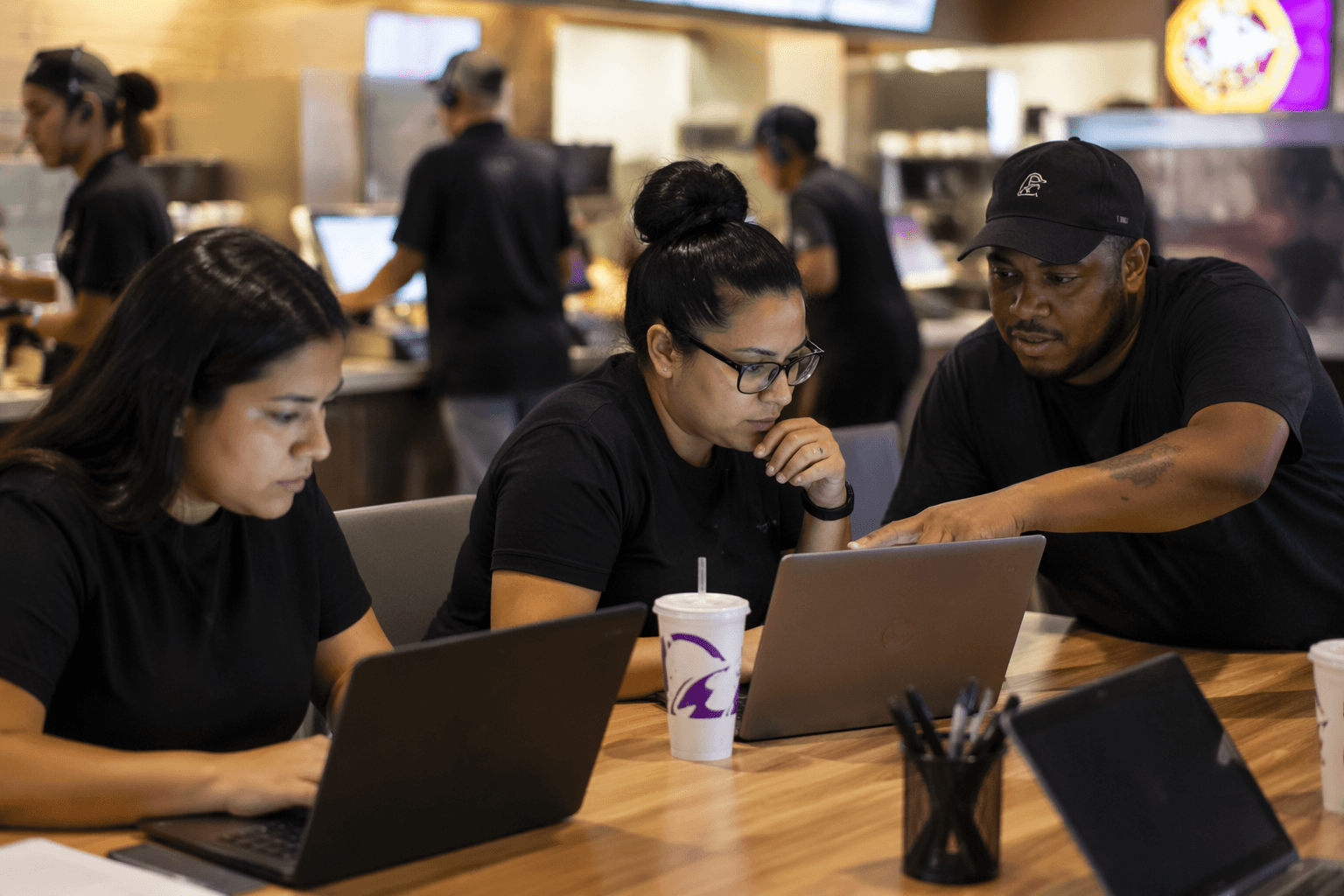
One of the biggest changes is voice AI, which Taco Bell had rolled out at about 500 restaurants when the company described the program. The promise is not that technology replaces workers. The pitch is that it gives employees more room to focus on personal interactions at the window or front counter while the system handles part of the ordering load.
That is a meaningful shift for the people working the rush. Anyone who has taken orders during a peak period knows the stress is not just the volume of customers, but the constant switching between listening, confirming, repeating, and correcting. If voice AI can take even a slice of that pressure off the team, it could free up attention for the tasks that still require a human touch, like fixing an issue before it becomes a complaint or keeping the handoff moving.
The practical test is whether the tech actually reduces friction during the busiest hours. A system can sound impressive in a corporate rollout and still fall short if it slows down a drive-thru lane, confuses a guest, or creates more cleanup work for the crew after the order is taken. Taco Bell’s own framing suggests it understands that balance: tech is supposed to support the team, not get in the way of service.
Bag tags and line printers are the quiet tools that matter most
The less flashy part of Taco Bell’s playbook may be the most useful for restaurant managers. The company has deployed line printers at more than 80 percent of the system, and it uses bag tags that list what should be in an order before an employee performs a final check. That is a simple control, but in a high-volume restaurant, simple controls often do the most work.
Bag tags give the team a visible checklist at the exact moment mistakes are most likely. When a launch adds new ingredients, new build steps, or more customization, the risk is not only slower service. It is also a higher miss rate, and every remade order adds pressure to the line. A printed reminder of what belongs in the bag can cut down on those errors before they leave the building.
For shift leaders, this kind of tool is only valuable if it is used consistently. A printer or tag system does not help much if the team treats it like decoration instead of a final verification step. But when crews lean on it during a rush, it becomes part of the store’s quality control, especially when training new employees or bringing a new product into the mix.
What this means when the next launch hits
Taco Bell’s menu strategy depends on the same tension that defines most fast-food operations: more excitement usually means more complexity. Each new item creates more to learn, more prep to manage, and more chances for something to go wrong at the handoff. The company’s answer is to make the operating system clearer so stores are not improvising under pressure every time a launch lands.
That is where the Live Más Service model becomes a coaching tool, not just a brand message. Managers can use it to set priorities during a rush: keep the experience smooth, keep the order accurate, and keep the service human even when technology is helping behind the scenes. In a Taco Bell store, that can mean reminding the team that speed without accuracy is still a failure, and friendliness without control will not hold up when the line gets long.
For workers, the payoff should be fewer preventable errors and less chaos when the next promo drops. For managers, the benefit is a clearer playbook for getting through high-volume periods without sacrificing guest experience or wearing the crew down. Taco Bell is making a straightforward bet: if it can simplify the work enough, it can keep menu growth from overwhelming the store.
This article was produced by Prism’s automated news system from verified source data, official records, and press releases, then run through automated quality and moderation checks before publishing. The system is built and supervised by the people who set the standards it runs under. Read our full AI policy.
Did this article answer your question?