Taco Bell Voice AI and Kiosk Pilots Reveal Key Operational Lessons
Voice AI and kiosks are reshaping Taco Bell shifts — here's what the pilots actually taught operators about speed, staffing, and what tech can't fix.
The fast-food industry's automation push has moved well past concept phases, and Taco Bell sits near the center of that story. Under Yum! Brands' broader digital strategy, Taco Bell has been running live pilots of voice AI ordering systems and self-order kiosks in real restaurants, with real crews navigating the results. What those pilots reveal matters far beyond corporate presentations: the operational friction, the staffing adjustments, and the gap between what automation promises and what it actually delivers on a Friday night rush are lessons every crew member, shift manager, and restaurant manager in the system should understand.
What Taco Bell Is Actually Testing
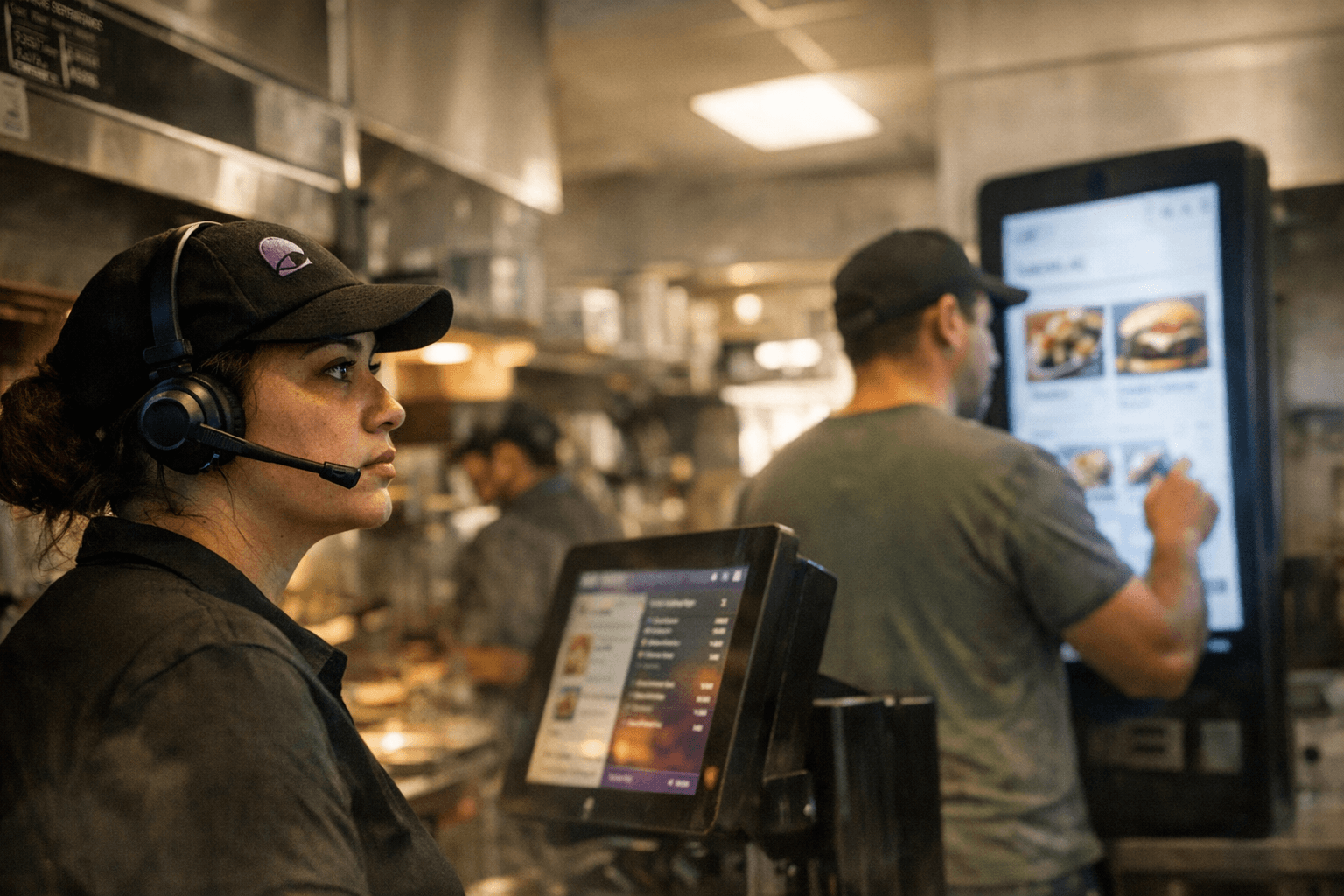
The technology under evaluation falls into two main categories. Voice AI systems handle drive-thru ordering through automated attendants, taking customer orders without a human crew member on the headset. Self-order kiosks, the touch-screen terminals increasingly common in fast-food lobbies, allow customers to build and pay for their own orders without interacting with a cashier. Taco Bell has piloted both, and Yum! Brands has framed digital ordering infrastructure as a core strategic priority across its portfolio of chains.
These aren't small-scale experiments. Yum! has invested heavily in its proprietary technology platforms, and Taco Bell's pilots feed directly into decisions about where that investment goes next. That means what happens in a pilot location today has real implications for how restaurants across the system are designed and staffed in the next two to three years.
The Drive-Thru Voice AI Pilot: What Operators Learned
Voice AI in the drive-thru sounds straightforward: replace the headset operator with software that can take an order, upsell accurately, and pass a clean ticket to the kitchen. The operational reality is more complicated. Fast-food drive-thrus are acoustically chaotic environments. Road noise, overlapping voices, and the specific shorthand customers use when ordering create consistent recognition challenges for AI systems that perform well in controlled demos.
The lesson from pilots is that voice AI performs best when the menu is constrained, the system has been trained on location-specific audio conditions, and there is a clear human override protocol in place. Crew members at pilot locations have reported that handling the exceptions — the customers the AI misunderstands, the orders with modifications the system doesn't catch cleanly — requires its own form of attention. The job doesn't disappear; it shifts. Someone still needs to monitor the AI's output, correct errors before they reach the kitchen, and manage customer frustration when the technology stumbles.
This is a significant operational lesson for shift managers: automation in the drive-thru doesn't eliminate the need for a skilled, attentive crew member in that lane. It changes what that person does, which means training has to change too.
Kiosks in the Lobby: Order Accuracy and Throughput
Self-order kiosks have shown more consistent operational benefits in fast-food environments generally, and Taco Bell's pilots align with broader industry findings. Customers ordering on kiosks tend to spend more per transaction, partly because the upsell logic is built into the interface and partly because customers feel less social pressure to keep their order simple. Average check sizes at kiosk locations have trended upward in third-party fast-food case studies, a data point Yum! has referenced in investor communications about digital ordering.
Order accuracy also improves in kiosk environments for standard orders, because the customer is entering their own customizations directly into the system rather than communicating them through a crew member. For a menu as modification-heavy as Taco Bell's — where "no sour cream," "extra beans," and protein swaps are routine — that accuracy gain is operationally meaningful. Fewer remakes means less food cost and less time pressure on the kitchen line.
The caveat is that kiosks shift labor, not eliminate it. Someone needs to manage the kiosk area, assist customers who are unfamiliar with the interface, handle payment issues, and call out orders. In practice, restaurants that have simply removed cashiers without reassigning that labor to kiosk support have seen longer wait times and lower customer satisfaction, not the efficiency gains the technology promises.
Staffing and Scheduling Implications
The most important operational lesson from Taco Bell's automation pilots may be this: technology doesn't automatically translate into labor savings, at least not in the short term. The transition period, when crews are learning new workflows, customers are adapting to new ordering methods, and managers are troubleshooting system issues, requires more attentive supervision, not less. Restaurant managers who treated pilot deployments as immediate headcount-reduction opportunities consistently reported worse outcomes than those who used the pilot period to retrain and redeploy existing crew into new roles.
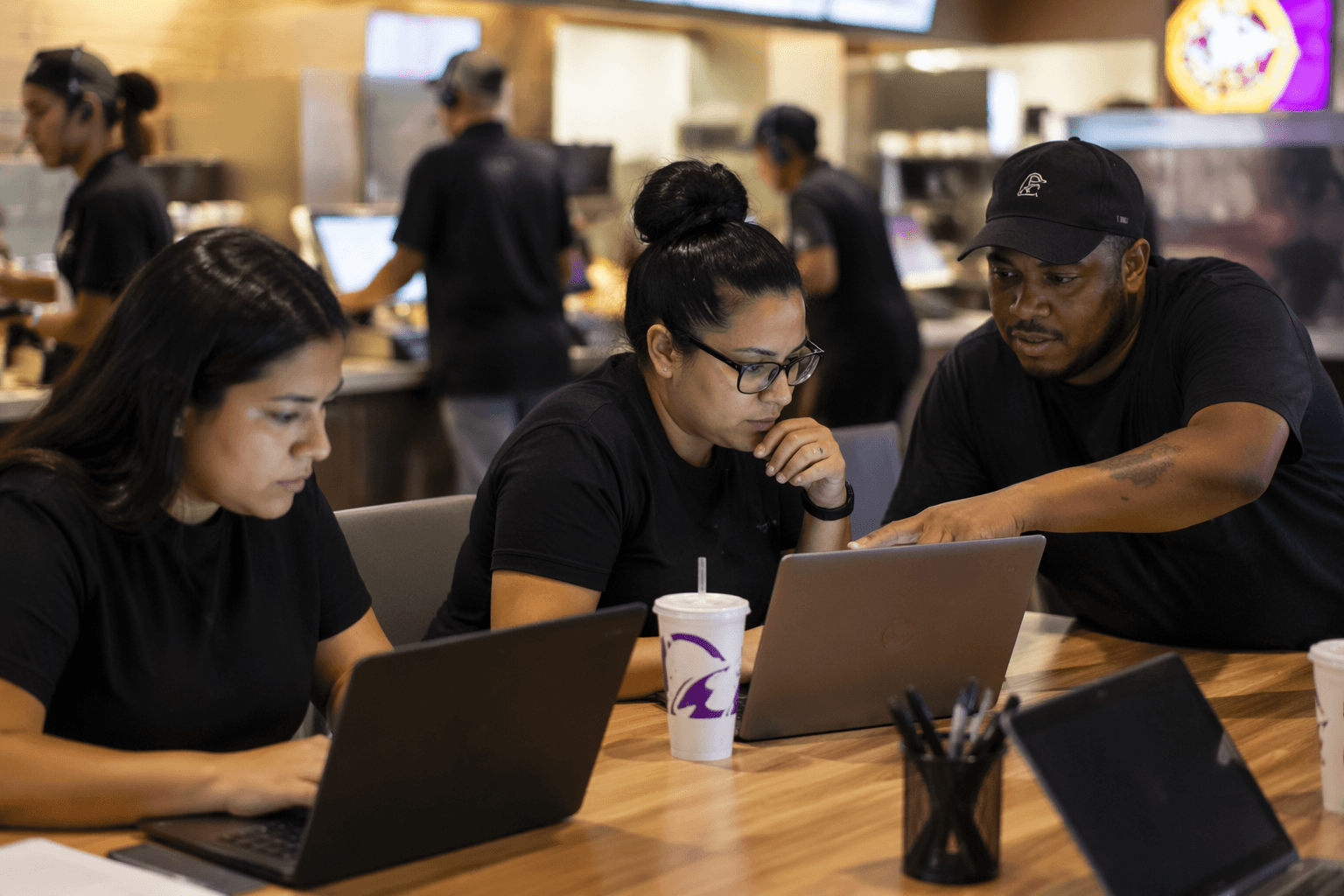
For crew members, the practical implication is that familiarity with these systems is becoming a baseline job skill. Understanding how the kiosk order flow connects to the kitchen display, knowing how to flag a voice AI error before it becomes a wrong order in a bag, and being able to guide a customer through a kiosk transaction are capabilities that shift managers will increasingly expect. These aren't abstract future skills; they're already in play at pilot locations.
The franchise dynamic adds another layer. Taco Bell's corporate locations and its franchised restaurants don't make technology investment decisions on the same timeline or budget. A franchisee running three or four locations is making a different calculation than corporate, and crew members at franchise locations may see these technologies deployed differently, more slowly, or with less support infrastructure than what pilots under direct corporate oversight provide.
Where the Technology Still Falls Short
No pilot study, internal or third-party, has produced evidence that voice AI or kiosks can handle the full complexity of a high-volume fast-food operation without meaningful human involvement. The technology handles volume well under normal conditions. It struggles with the edge cases that make up a significant portion of any shift: the customer who wants something not quite on the menu, the order that needs to be voided mid-process, the parent managing three kids and a stroller at the kiosk, the drive-thru customer who speaks at a low volume or with an accent the system hasn't been well-trained on.
These are not fringe scenarios. They happen every shift, and how a restaurant handles them determines whether automation is a net operational gain or a source of new friction for both crew and customers.
What This Means Going Forward
Taco Bell's automation pilots are generating real data that will shape staffing models, training requirements, and restaurant design across the system. The direction is clear: digital ordering is expanding, voice AI investment is ongoing, and Yum! has made technology infrastructure central to its long-term competitive strategy. What isn't settled is the pace, the specific configurations that work best in different restaurant formats, and how the labor implications get managed at the restaurant level.
For anyone working in a Taco Bell restaurant right now, the most useful frame is not anxiety about replacement but practical preparation. The crew members and managers who understand how these systems work, where they break down, and how to keep service moving when they do will be the most valuable people in the building as the technology scales. That's not a corporate talking point; it's what the operational data from the pilots actually supports.
This article was produced by Prism’s automated news system from verified source data, official records, and press releases, then run through automated quality and moderation checks before publishing. The system is built and supervised by the people who set the standards it runs under. Read our full AI policy.
Did this article answer your question?