Taco Bell workers can boost pay with AI skills and short credentials
A verified AI credential can be more than a résumé line at Taco Bell. The right short course can help crew members prove they can run scheduling, inventory, and reporting tools well enough to win the next promotion.
Why AI skills now look like a pay move, not a tech hobby
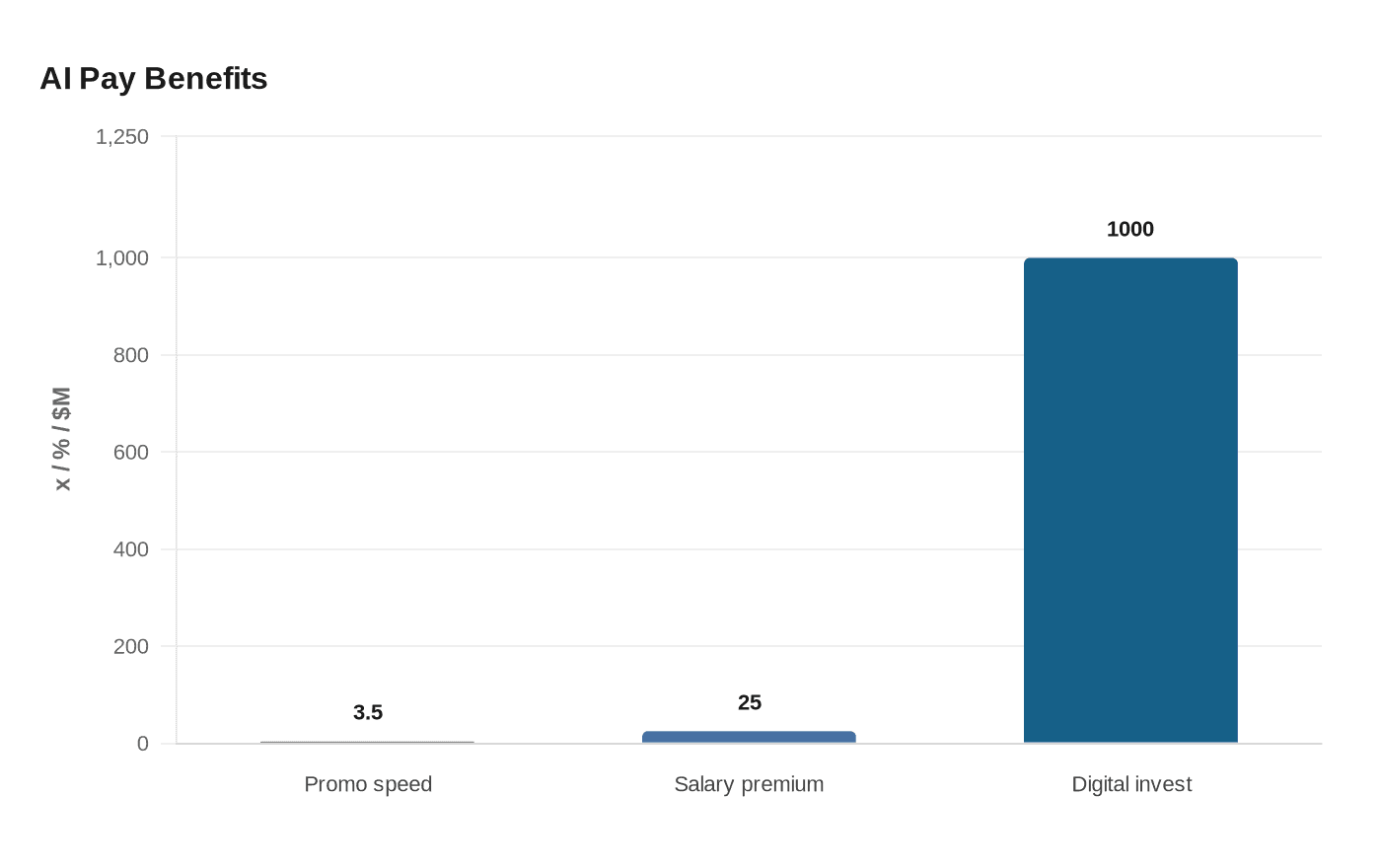
For Taco Bell workers, the fastest path to higher pay may be less about learning to code and more about proving you can run the tools that keep a restaurant moving. Randstad says workers with verified AI certifications can secure promotions up to 3.5 times faster, and entry-level talent with those credentials can command salary premiums of 25 percent.

That matters in a restaurant where the next step up is often won by operational confidence. Randstad also says AI fluency is strongest when it is paired with emotional intelligence and creativity, which is a useful reminder for a Taco Bell shift lead or assistant manager: the goal is not just to understand software, but to use it without losing control of the line, the crew, or the customer experience.

Which short courses actually help inside a Taco Bell
The credentials most likely to matter are the ones that connect directly to restaurant work. At Taco Bell, that means training that helps with scheduling platforms, inventory systems, digital ordering dashboards, reporting software, and customer experience analytics. Those are the systems that can help a crew member become the person a manager trusts when the store gets slammed, a schedule falls apart, or product counts do not line up.
Short courses are most useful when they show you can do one of three things:
- build or adjust schedules with less labor waste
- track inventory and spot supply problems before they hit the line
- read dashboards that show order flow, service speed, and customer trends
A generic AI badge that never touches those tasks will probably look thinner on paper. A credential that shows you can interpret the data behind labor planning, forecasted demand, and order routing is more likely to matter when a shift lead slot opens or when a manager is looking for someone to train for broader responsibility.
The Taco Bell ladder is already there
Taco Bell’s careers materials make the internal path fairly clear. The brand lists Team Member, Shift Lead, Assistant Manager, and General Manager as restaurant roles, and says hourly onboarding includes app-based and in-store training modules. For some roles, Taco Bell also offers Leadership Development Courses, which gives workers a concrete bridge from entry-level restaurant work to management.
There is also a corporate destination. Taco Bell points workers toward Restaurant Support Center roles, which means tech fluency and management skills do not only help on the dining room side of the job. A worker who learns to use the same digital tools as the managers may be better positioned for a support role that involves reporting, operations, training, or coordination across stores.
That ladder is important because it turns a short credential into something more than a line on a résumé. If the training helps someone move from Team Member to Shift Lead, or from Shift Lead to Assistant Manager, the credential starts to look like a pay strategy instead of a personal side project.
Why the company’s own strategy makes this more relevant
Taco Bell’s leadership has been signaling that the restaurant experience is getting more digital. On March 4, 2025, Taco Bell told investors it was pursuing a business growth plan and a more digitally enabled restaurant experience, a sign that the chain sees technology as part of how stores will run, not just a back-office add-on.
The broader Yum! Brands strategy points in the same direction. On February 6, 2025, Yum announced Byte by Yum, a proprietary AI-driven SaaS platform designed to streamline operations and empower teams across Taco Bell, KFC, Pizza Hut, and Habit Burger & Grill. A few weeks later, on March 18, Yum said it was partnering with Nvidia to accelerate AI development.
Reuters reported in March 2025 that Taco Bell was already showcasing an AI coach for fast-food managers, that Yum had invested $1 billion in digital and technology, and that Taco Bell had 500 U.S. locations with AI-enabled drive-throughs. Reuters also reported that Byte by Yum was designed to help with forecasting inventory, managing order flow, and recommending operational efficiencies.
For workers, that means the software is not theoretical. It is shaping how stores handle inventory counts, drive-through timing, and the flow of orders during peak hours. A worker who understands those systems is learning the operating system of the restaurant.
How to use a credential to move up
The smartest way to approach a short AI course is to tie it to the job you want next, not just the one you have now. A crew member aiming for Shift Lead should look for training that helps with scheduling, labor planning, and daypart operations. Someone targeting Assistant Manager should focus on reporting, inventory, customer analytics, and how to keep the store moving when demand spikes.
The key is to translate the course into store value. If you can show that a new tool helped cut missed coverage, tighten inventory counts, or make order flow more predictable, the training becomes visible to the people who decide promotions. That is where the pay increase can come from, especially in a system where verified credentials are starting to carry measurable wage and advancement advantages.
By inference, the more Taco Bell relies on AI-adjacent systems, the more valuable workers become who can troubleshoot those systems without slowing the line. The person who can calm a crew, read the dashboard, fix a scheduling issue, and keep the customer line moving is the kind of worker restaurants will keep promoting.
The bottom line for Taco Bell workers
AI certifications are not all equal. The ones worth time and money are the short, practical credentials that help you operate restaurant tools better than the next candidate, especially in scheduling, inventory, labor planning, digital ordering, and customer data. Those skills fit Taco Bell’s own ladder from Team Member to General Manager and into Restaurant Support Center jobs.
For crew members and managers, the opportunity is straightforward: in a restaurant system that is getting more automated, the people who can work both the floor and the software are the ones most likely to move up, earn more, and stay useful when the next round of technology arrives.
This article was produced by Prism’s automated news system from verified source data, official records, and press releases, then run through automated quality and moderation checks before publishing. The system is built and supervised by the people who set the standards it runs under. Read our full AI policy.
Did this article answer your question?