Taco Bell workers can learn more from Yum! Brands’ official page
Yum! Brands’ brands page shows who really shapes Taco Bell jobs. It helps workers separate parent-company tech and strategy from franchise-level pay, staffing, and daily discipline.
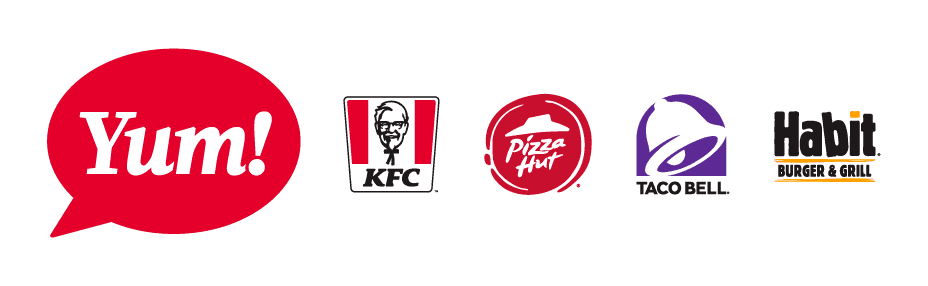
Taco Bell workers can get more out of Yum! Brands’ official brands page than a corporate family tree. The page puts Taco Bell beside KFC, Pizza Hut, and Habit Burger & Grill, which helps explain why some decisions arrive from the parent company while others are made by the franchisee running a specific store.
What the brands page tells you about the company behind the counter
Yum! Brands says it is the world’s largest restaurant company, and its 2024 annual report puts numbers behind that claim: about 1,500 franchisees operate more than 61,000 restaurants in over 155 countries and territories. Taco Bell’s own about-us page says the brand has 9,000+ restaurants in 35+ countries and territories, and that it is the largest Mexican-inspired concept in the world. Yum was spun off from PepsiCo in 1997, which matters because the company you see on a Taco Bell apron is now part of a standalone global operator, not just a single-brand chain.
That scale is not abstract. A brands page that lists Taco Bell next to KFC, Pizza Hut, and Habit Burger & Grill is showing you the structure that sits above a local store. For crew members, shift managers, and restaurant managers, that structure affects how strategy travels, how technology gets chosen, and how often decisions are made at a level far above the store office.
Why the parent-company structure matters for pay, staffing, and complaints
In a franchised system, the franchisee is the primary operator of the restaurant, while Yum sets the broader strategy and systemwide priorities. Yum’s annual report says approximately 1,500 franchisees are the primary operators of its restaurants, which is the key detail workers should keep in mind when they are trying to figure out where a decision came from.
That distinction matters in the situations that hit workers most often: pay, hours, benefits, scheduling, discipline, and payroll problems. If your paycheck is short, your schedule keeps changing, or staffing is so thin that the shift falls apart, the first question is not just what the manager said. It is whether the issue came from local management, the franchise owner, or a companywide rule that was handed down from above.
For workers, that can change the strategy. A local complaint about a shift swap belongs in one lane. A question about a training standard, a new labor tool, or a corporate policy that is being rolled out across multiple restaurants belongs in another. Understanding which layer has the power to fix the problem keeps you from being bounced around between store leadership and a parent company that may be setting the rules without showing up on the schedule.
The digital push is not just corporate jargon
Yum’s 2024 annual report calls its strategy the “Recipe for Good Growth,” and the company has kept emphasizing digital capability across its brands. That matters on the line because the tools coming from the parent company can change the pace of a restaurant just as much as a new manager can. Digital systems are not side projects in a business built on speed, volume, and standardized service.
On Feb. 7, 2024, Yum said Taco Bell helped lift the company’s full-year results and that the system had 22% digital sales growth. That is a signal that Taco Bell is not just a brand inside the portfolio, but one of the drivers of the portfolio’s financial performance. For workers, strong digital sales can mean more emphasis on app orders, handoff speed, drive-thru flow, and accuracy under pressure.
The pressure grew more concrete on July 31, 2024, when Yum announced it would expand voice AI technology to hundreds of Taco Bell U.S. drive-thru locations. That kind of rollout can change a shift in practical ways: who takes orders, how quickly lines move, how often a worker has to troubleshoot a new system, and how much retraining lands on already busy crews. It is also a reminder that a companywide tech decision can show up as a daily-floor issue long before it is described as a strategy slide.
What managers should read into Yum’s direction
The company’s leadership has been open about how much more it expects from its systems. In 2024 coverage of Yum’s transformation, analysts focused on the company’s growing use of AI and digital tools, and Yum CFO Chris Turner said, “We believe we are still only scratching the surface of the full value creation potential of our capabilities.” That is not language about one restaurant problem. It is a roadmap for more systems, more data, and more operational change across the portfolio.
For restaurant managers, that usually means the expectations keep moving upward. You are not only managing labor and food cost at the store level. You are also managing whatever new process the parent company wants to standardize, whether that is digital ordering, voice AI, training updates, or a new reporting rhythm. When those changes arrive, they usually come with corporate logic attached, even if the work lands on the shift lead at the front line.
Career mobility runs through the portfolio, not just one brand
Yum’s careers site reinforces that the company recruits across functions, which matters if you are trying to move up from crew to shift manager to restaurant manager and beyond. A Taco Bell job is one entry point into a much larger system, not the only path forward. That can open opportunities that are not obvious if you only think in terms of one store or one brand.
The portfolio matters here too. Because Yum owns Taco Bell, KFC, Pizza Hut, and Habit Burger & Grill, a worker who understands the company structure can start to see where skills transfer, where training may lead, and where internal movement might be possible across the broader business. For ambitious managers, that is often the real value of knowing the parent company name: it tells you where the ladder extends.
How to use the brands page when the job gets complicated
The simplest use of Yum’s brands page is also the most practical. It helps you separate local problems from system problems. If the issue is a missed punch, a scheduling dispute, or a crew shortage at one restaurant, the franchise operator and local management are the first place to look. If the issue is a new technology rollout, a training platform, or a brand standard that suddenly appears across stores, the parent company is probably where the pressure started.
That is why the page matters to Taco Bell workers. It does not just list names. It maps power. In a company this large, decisions do not all come from the same place, and the workers who know the difference are better positioned to push back, ask sharper questions, and find the right door when the answer is not at the counter.
This article was produced by Prism’s automated news system from verified source data, official records, and press releases, then run through automated quality and moderation checks before publishing. The system is built and supervised by the people who set the standards it runs under. Read our full AI policy.
Did this article answer your question?