Taco Bell workers face rising financial stress, new survey finds
61% of hourly restaurant workers said they skipped meals because they could not afford food, underscoring pressure that can spill into Taco Bell attendance and turnover.
.png&w=1920&q=75)
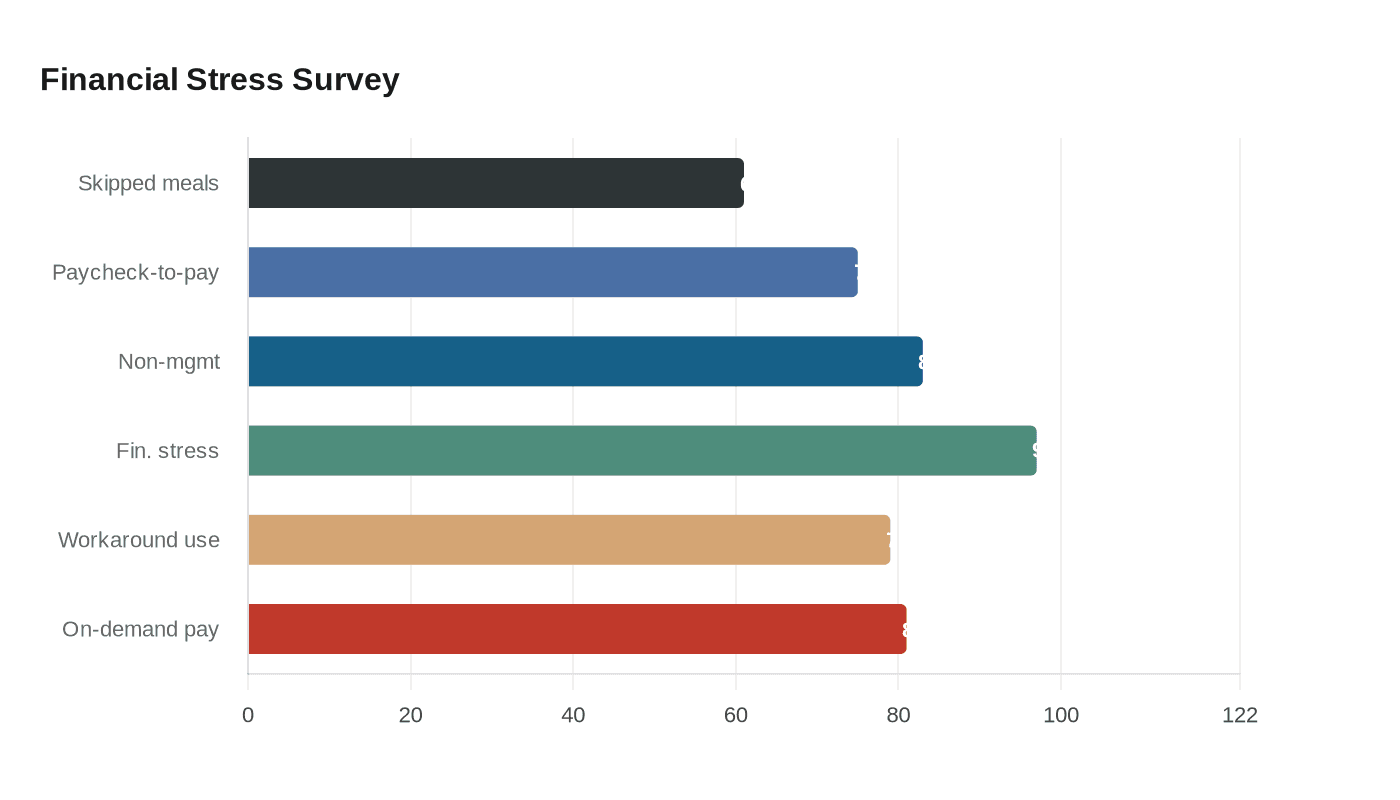
Hourly restaurant workers are running into a wall that shows up first in missed meals and late fees, then in callouts, turnover and unstable shift coverage. In a national survey of 750 hourly restaurant employees, 61% said they had skipped more than one meal a week in the past month because they could not afford food. Seventy-five percent said they were living paycheck to paycheck, and that share climbed to 83% among non-management workers. The study also found that 97% of respondents were experiencing some level of financial stress, while 79% had used at least one financial workaround in the previous three months, including payday loans, overdrafts or credit-card advances.
For Taco Bell crew members and shift managers, that kind of pressure is not abstract. It means a closer can be worried about rent or gas while still trying to keep the line moving, and it means a manager may be building the schedule around workers who are one flat tire away from a no-show. The survey found that 81% of workers believed on-demand pay should be a standard benefit, a sign that quicker access to earned wages has become a labor issue, not a perk.
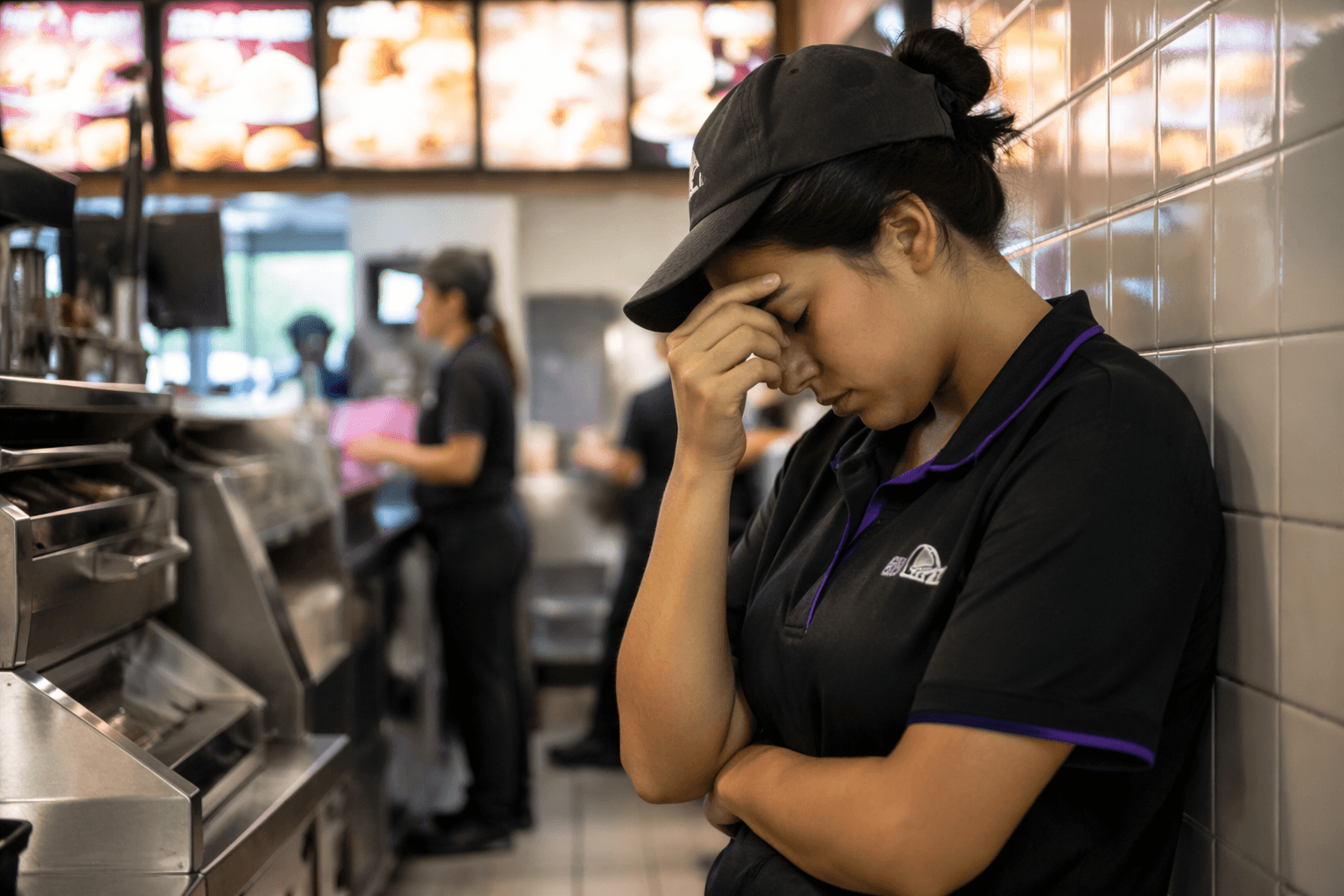
Taco Bell has tried to market itself as part of the solution, but the reality depends heavily on which owner or operator runs the store. The chain says many owners and operators offer benefits such as education assistance, health insurance, free meals, employee assistance, paid time off and retirement savings options, though those offerings vary by employer. Taco Bell also said on October 23, 2025, that it had more than 250,000 team members and had logged 20 consecutive quarters of industry-leading same-store sales growth.
Some franchise operators have already leaned into earned wage access to reduce absences and keep crews intact. MRCO Taco Bell says hourly team members averaging 30 hours a week in their first year can access up to half of earned wages on demand through the Rain app. A Tapcheck case study said one Taco Bell franchisee used earned wage access to cut absenteeism tied to workers lacking money for gas, flat tires or babysitters.
The broader labor history around Taco Bell suggests why that matters. In 2022, the U.S. Department of Labor said it recovered $56,900 for 31 assistant general managers at six Taco Bell franchise locations in North Carolina after an overtime misclassification case. A July 31, 2024 class action complaint in California also alleged meal and rest break violations at several Taco Bell franchise entities. For Taco Bell, the message from this survey is blunt: financial strain is not just hurting workers off the clock, it can decide who shows up, who stays, and which stores keep enough experienced people to survive the next rush.
This article was produced by Prism’s automated news system from verified source data, official records, and press releases, then run through automated quality and moderation checks before publishing. The system is built and supervised by the people who set the standards it runs under. Read our full AI policy.
Did this article answer your question?